Mumbai’s New Blueprint: How the BMC is Redesigning Cities for the Gig Economy
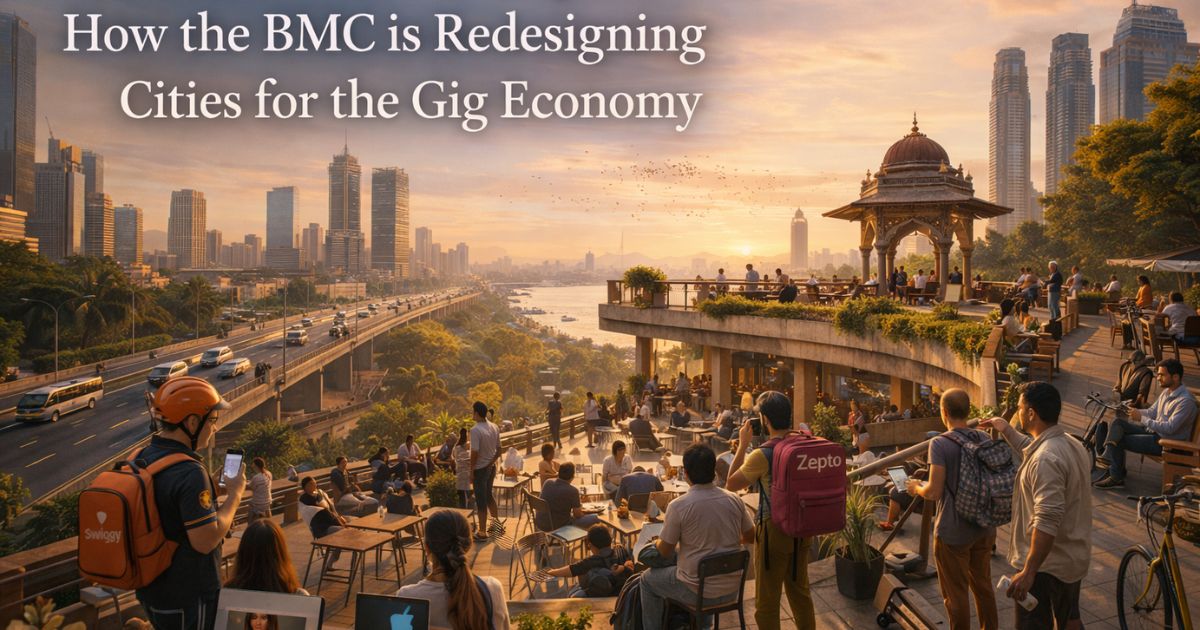
The “Gig Economy” is no longer a peripheral part of the urban landscape; in 2026, it is the heartbeat of the modern metropolis. Recognizing this, the Brihanmumbai Municipal Corporation (BMC) has introduced a groundbreaking proposal to fundamentally alter Mumbai’s infrastructure to better serve the millions of delivery partners, ride-share drivers, and independent service providers. This “Gig-First” urban blueprint is a response to the logistical challenges that have plagued the city’s narrow streets and overcrowded hubs for a decade. By creating dedicated spaces for these essential workers, the city aims to improve efficiency, reduce traffic congestion, and enhance the dignity of labor for the gig workforce.
At the center of the proposal is the creation of “Micro-Logistics Hubs.” Currently, delivery partners often congregate on sidewalks or outside mall entrances, leading to pedestrian bottlenecks and friction with local businesses. The BMC’s plan involves repurposing underutilized government land and basement levels of public buildings into organized transition zones. These hubs will feature secure parking, high-speed EV charging stations, and—most importantly—climate-controlled rest areas with access to clean water and sanitation. By centralizing the “waiting time” of gig workers, the city can clear its primary thoroughfares while providing a safer environment for the workers who keep the digital economy running.
Connectivity is the second pillar of this redesign. The 2026 plan includes the implementation of “Green Delivery Corridors” dedicated lanes for electric two-wheelers and bicycles during peak delivery hours. These lanes are designed to separate fast-moving delivery traffic from heavy commercial vehicles and private cars, significantly reducing the accident rate for gig workers. Furthermore, the BMC is partnering with tech giants to integrate city-wide “smart sensors” that provide real-time data on curb availability. This allows delivery partners to see exactly where they can legally stop for a pickup or drop-off, eliminating the “double-parking” that frequently paralyzes Mumbai’s secondary roads.
The financial model for this infrastructure is equally innovative. The BMC proposes a “Public-Platform Partnership” (PPP) where the major gig-aggregator companies contribute to a central infrastructure fund in exchange for tax credits or priority access to the new hubs. This ensures that the companies benefiting from the city’s labor force are also contributing to the physical environment that sustains them. From a social justice perspective, the plan also includes the establishment of “Mobile Health Clinics” stationed at major hubs, providing gig workers with easy access to check-ups and basic medical care, which is often neglected due to the demanding nature of their work.
For urban planners globally, Mumbai’s experiment is a test case in “Generative Urbanism.” As more cities move toward a decentralized service model, the physical world must catch up with the digital interface. The challenge for the BMC will be the “last-mile” implementation in highly dense areas like Dharavi or Dadar, where space is at an absolute premium. However, the proposal suggests that by using vertical space and modular units, even the most crowded neighborhoods can be retrofitted with basic gig-support structures. It is a shift from viewing gig workers as a “nuisance” to seeing them as a vital infrastructure component that requires its own set of utilities.
As this plan moves from the proposal stage to implementation in late 2026, the impact on Mumbai’s “liveability” index could be profound. A city that supports its most vulnerable and mobile workers is a city that functions better for everyone. For digital strategists and publishers, this shift provides a wealth of content opportunities from deep dives into EV battery technology to the sociological impact of urban redesign. The BMC has signaled that the future of Mumbai is not just about skyscrapers and coastal roads, but about the “invisible” networks of delivery and service that bind the city together. The blueprint is set; now comes the execution.