From Madrasas to Mainstream: Uttarakhand’s High-Stakes Education Shift
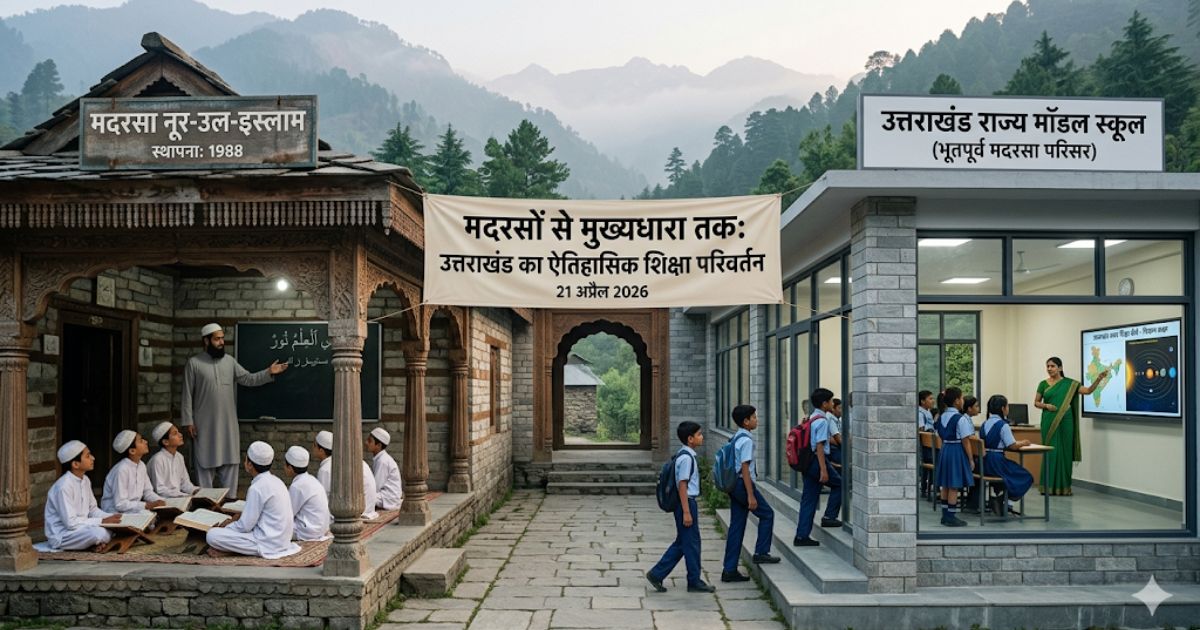
HARIDWAR / DEHRADUN — In what is being described as one of the most significant policy shifts in the state’s history, Chief Minister Pushkar Singh Dhami has officially announced the abolition of the Uttarakhand Madrasa Board. Speaking at an event in Haridwar yesterday, the Chief Minister confirmed that by July 2026, the board will be fully dissolved, marking the end of an era for religious-run educational oversight in the state.
The move follows the passage of the Minority Educational Institutions Bill 2025, which replaces the dedicated Madrasa Board with a unified Minority Education Authority.
The “Uniformity” Ultimatum
Under the new mandate, all 452 registered madrasas in Uttarakhand must transition to the Uttarakhand Education Board (UBSE) curriculum. The state has set a firm deadline: implement the new syllabus by July 2026 or face immediate closure.
- Modernizing the Syllabus: The government argues that students in madrasas have been isolated from the “national mainstream.” The transition will make Science, Mathematics, English, and Geography mandatory, alongside existing religious studies.
- Official Recognition: Proponents, including the current Madrasa Board Chairman Mufti Shamoon Qasmi, argue that this move will finally grant madrasa students officially recognized degrees, allowing them to pursue higher education and government jobs that were previously inaccessible.

Religious and Political Crossfire
The announcement has sparked a sharp divide across “Devbhoomi.”
- Support from Seers: In Haridwar, prominent Hindu religious leaders including Swami Chidanand Muni and Mahant Ravindra Puri have lauded the decision, calling it a necessary step toward national integration and transparency.
- Legal Challenges: Muslim community leaders, however, have termed the dissolution “unlawful.” Maulana Khalid Rashid Firangi Mahali and other members of the All India Muslim Personal Law Board argue that modern reforms could have been integrated into the existing board without dismantling the institution.
- Opposition Outcry: The Congress party has accused the BJP government of “targeted legislation,” claiming the move is designed to suppress minority identity rather than improve education. Critics point out that while the law applies to all minority institutions, the primary focus remains on the 452 madrasas.
What Happens Next?
As the July 2026 deadline approaches, the state government faces the massive task of retraining thousands of madrasa teachers and providing infrastructure for modern subjects. Meanwhile, reports have already surfaced of “inspections” by local groups questioning students on their curriculum, leading to heightened tensions in districts like Dehradun and Haridwar.
The transition is more than a change in textbooks; it is a test of whether Uttarakhand can achieve its goal of “quality-oriented transparency” without alienating its minority communities.