
The AAP “Exodus”: A Seismic Shift in India’s Political Landscape
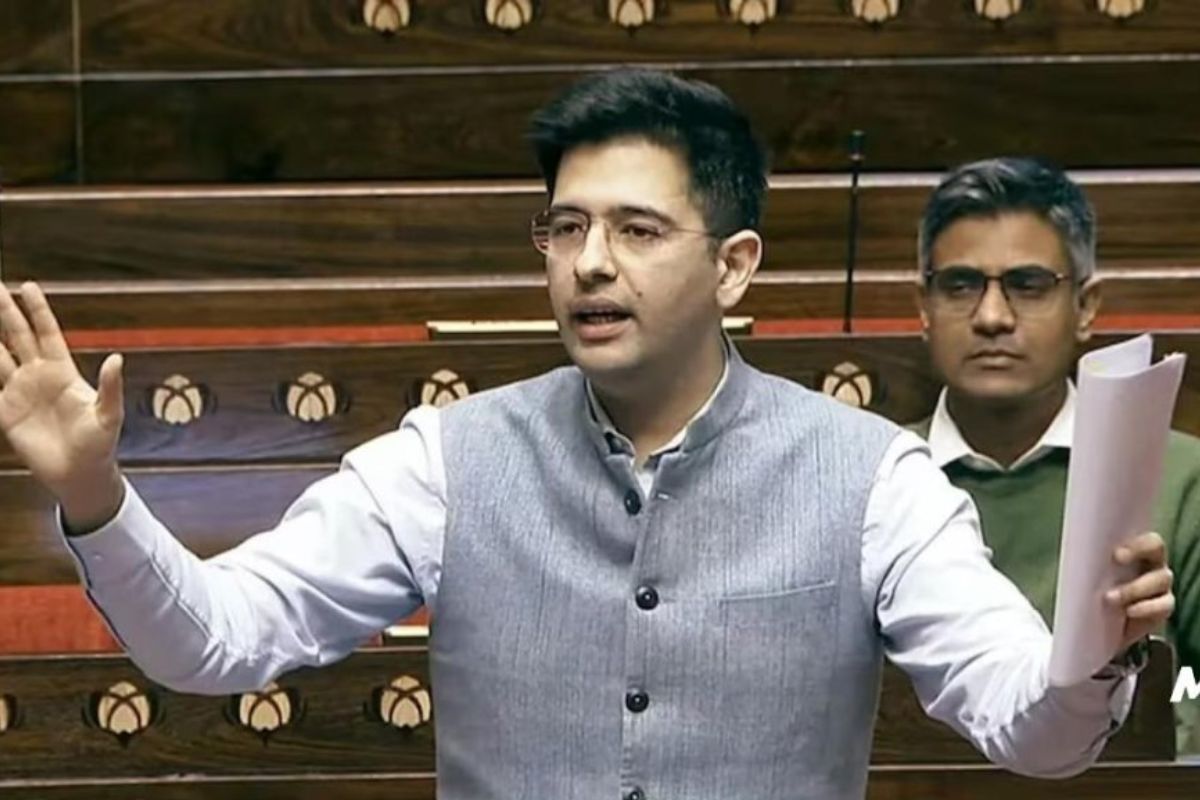
The Indian political firmament is currently witnessing one of its most dramatic transformations in recent history. What began as a series of hushed whispers in the corridors of power has culminated in a full-blown crisis for the Aam Aadmi Party (AAP). The defection of senior Rajya Sabha MP Raghav Chadha to the Bharatiya Janata Party (BJP) has not only shocked the national capital but has also triggered a massive “exodus” that threatens the very core of the party’s parliamentary presence.
The Raghav Chadha Pivot
Raghav Chadha, often seen as the suave, youthful face of AAP’s national ambitions, has officially ended his long-standing association with Arvind Kejriwal to join the BJP. For years, Chadha served as a key strategist, a vocal defender of the party in the Upper House, and a bridge between the party leadership and the younger demographic. His departure is a symbolic blow; it signals a breakdown in the internal cohesion that once defined the party’s “insurgent” identity.
In his maiden statement following the switch, Chadha cited a desire to contribute to “nation-building on a grander scale,” yet the move has been met with fierce criticism from his former colleagues. For the BJP, acquiring Chadha is a tactical masterstroke, providing them with a seasoned debater who understands the inner workings of the Delhi-based opposition.
The “Two-Thirds” Crisis
However, this is not a story of a lone defector. Reports indicate that the tremors within AAP are systemic. Nearly two-thirds of AAP’s Rajya Sabha members are reportedly in active negotiations to merge with the ruling party. Under the Tenth Schedule of the Indian Constitution (the Anti-Defection Law), a merger by two-thirds of the legislative wing protects members from disqualification.
If this merger is finalized, AAP risks losing its status as a significant bloc in the Rajya Sabha, effectively handing the BJP even greater legislative ease in passing contentious bills. The “exodus” suggests a deep-seated disillusionment within the party’s upper echelons, with many leaders citing a lack of internal democracy and an increasingly centralized command structure as their reasons for leaving.
Kejriwal’s “Betrayal” Narrative
Arvind Kejriwal, the AAP convenor, has not minced words, labeling the move a “total betrayal” of the mandate given by the people. The AAP leadership maintains that this is not a voluntary migration but a result of “Operation Lotus” a term the party uses to describe the BJP’s alleged use of state machinery and incentives to poach opposition leaders.
For Kejriwal, the challenge is now two-fold: he must prevent further erosion of his party in the Delhi and Punjab Assemblies while simultaneously rebuilding a narrative of victimhood that has historically resonated with his voter base. However, with heavyweights like Chadha departing, the “victim” narrative faces the tough hurdle of internal credibility.
The Road Ahead
This exodus marks a turning point for Indian federalism. As the AAP struggles to keep its house in order, the political vacuum created in the opposition space is significant. For the BJP, this expansion solidifies its grip on the national capital’s narrative ahead of upcoming electoral cycles.
Whether the Aam Aadmi Party can survive this existential threat remains to be seen. In the volatile world of Indian politics, today’s “exodus” could either be the end of an era for the AAP or the catalyst for a radical, grassroots reinvention. For now, all eyes remain on the Rajya Sabha, where the numbers will ultimately decide the fate of this political gamble.