Did Your Phone Just Scream? Inside India’s Nationwide Emergency Alert Test
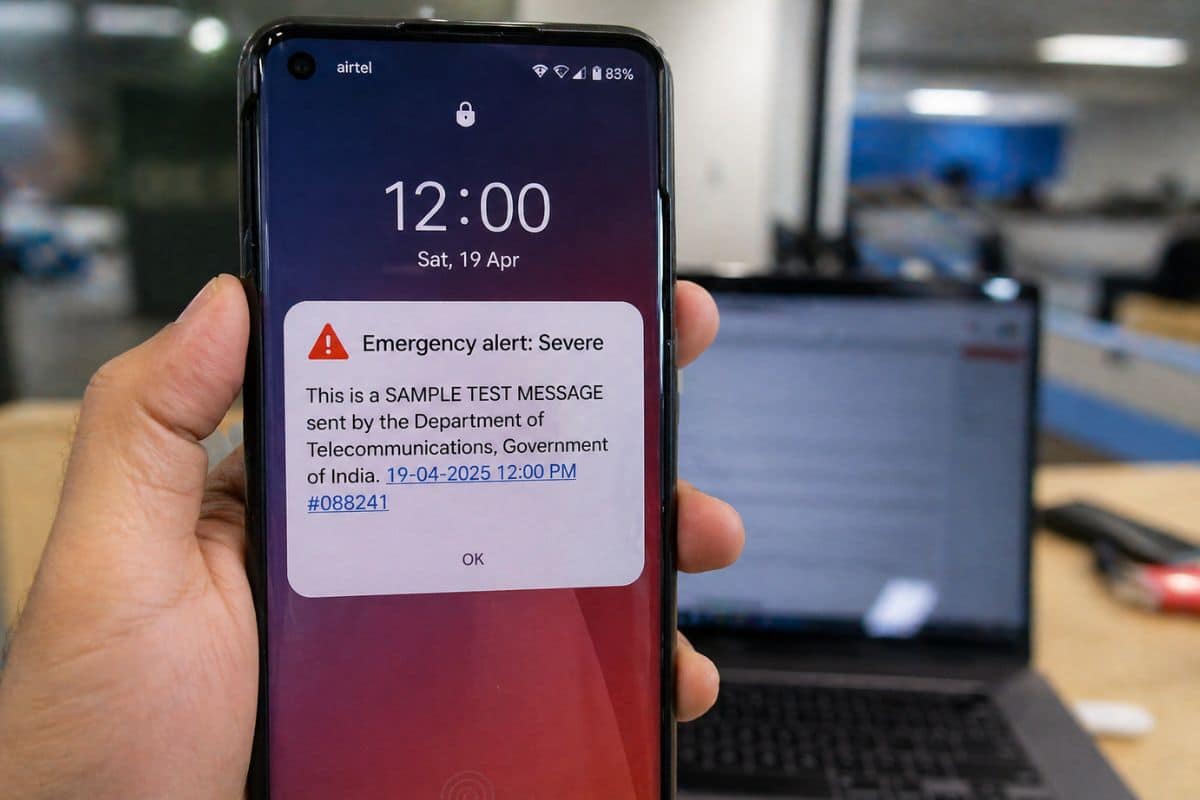
If you were startled by a sudden, piercing siren and a heavy vibration from your smartphone today, you aren’t alone. Across the bustling streets of Delhi NCR and in major capital cities from Mumbai to Guwahati, millions of mobile devices simultaneously broadcasted a high-decibel warning message. This wasn’t a sign of an impending disaster, but rather a critical milestone in India’s digital safety infrastructure: a major live test of the Cell Broadcast Alert System conducted by the National Disaster Management Authority (NDMA).
Breaking Now: You’re in the right place. RealShePower is your news genie granting your wish for the latest trending stories before they even hit the mainstream.
Quick Insight
The National Disaster Management Authority (NDMA) is conducting a major test of its Cell Broadcast Alert System today.
- What to Expect: Citizens in Delhi NCR and capital cities across most States and Union Territories may receive a loud, vibrating emergency alert on their mobile phones.
- Purpose: The exercise aims to evaluate the effectiveness of the emergency communication system for real-time disaster warnings.
- Official Guidance: Authorities have specifically urged the public not to panic, clarifying that this is a drill and does not indicate an actual emergency.
The Mechanics of the “Scream”
The exercise, carried out on May 2, 2026, was designed to reach citizens regardless of their service provider or location within the designated test zones. Unlike standard SMS messages, which can be delayed by network congestion, the Cell Broadcast system operates on a dedicated channel. This ensures that even in a crowded metro like Delhi or during a peak hour in Bengaluru, the alert arrives instantly. The “loud, vibrating” nature of the alert is intentional; it is designed to override silent modes and catch the user’s attention immediately during life-threatening situations such as flash floods, earthquakes, or cyclones.
Why the NDMA is Testing Now
The primary purpose of today’s drill was to evaluate the real-time effectiveness of the communication chain. As climate patterns become increasingly unpredictable, the ability to disseminate localized, instantaneous warnings can save countless lives. The NDMA, in collaboration with the Department of Telecommunications (DoT), used this session to identify any “blind spots” in signal reach or delays in message delivery across various mobile OS versions and network architectures.
By testing the system in densely populated hubs like Delhi NCR, authorities can measure how the infrastructure handles millions of pings simultaneously. This data is vital for refining the system before it is fully integrated into India’s national disaster response protocol.
Official Guidance: Precision Over Panic
Leading up to the test, the NDMA issued clear official guidance to prevent widespread alarm. The message displayed on screens explicitly labeled the broadcast as a “Sample Testing Message.” Authorities have reiterated a simple message for the public: do not panic. The drill is a proactive measure to ensure that when a real emergency strikes, the technology works flawlessly, and the public is already familiar with the alert’s unique sound and appearance.
The Future of Digital Safety in India
This nationwide test represents a shift toward a more technologically resilient India. Beyond just text, future iterations of this system may include multi-language support and even audio-visual cues for the hearing and visually impaired. As the NDMA analyzes today’s results, the goal remains clear: to build a “zero-lag” warning system that reaches every corner of the subcontinent, ensuring that no citizen is left uninformed when seconds count.