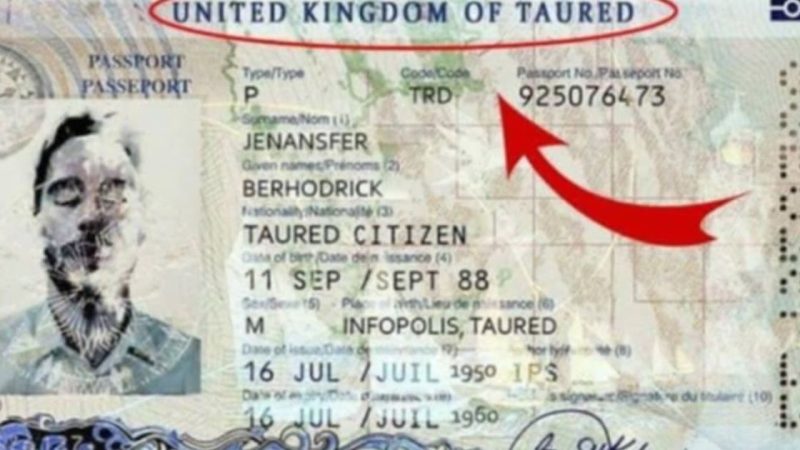
What are some historical events that feel like ‘glitches in the matrix’ or impossible time-slip stories?
Glitches in the Matrix
History is full of moments that defy statistical probability so aggressively they feel like someone accidentally copy-pasted a line of code in the universe’s script.
Beyond the usual coincidences, these specific stories involve “loops” or duplicates that genuinely feel like errors in reality.
1. The Tale of the Three “Hugh Williams”
This is arguably the most famous nautical coincidence in history. On three separate occasions, decades apart, ships sank in the Menai Strait off the coast of Wales. Each time, there was exactly one survivor.
- The First Survivor
December 5, 1664
A ship sinks with 81 passengers. Only one man survives. His name: Hugh Williams.
- The Second Survivor
December 5, 1785
Another ship sinks in the same strait. Only one man survives. His name: Hugh Williams.
- The Third Survivor
August 5, 1820
A picnic boat capsizes. Only one man survives. His name: Hugh Williams.
The Odds: While “Hugh Williams” was a common Welsh name, the fact that the exact same name was attached to the sole survivor of three separate wrecks in the same location—two of which happened on the exact same calendar day—is a mathematical nightmare.
2. The Moberly-Jourdain Incident (The Petit Trianon)
In 1901, two academics from Oxford, Charlotte Anne Moberly and Eleanor Jourdain, were visiting the Palace of Versailles. While walking toward the Petit Trianon (Marie Antoinette’s private retreat), they claimed the atmosphere suddenly became “heavy” and “dreamlike.”
- The Glitch: They encountered people in 18th-century attire, including a man with a pockmarked face and a woman sketching on the grass whom they believed was Marie Antoinette herself.
- The Aftermath: When they returned to the same spot later, the paths they had walked and the kiosks they had seen simply didn’t exist in 1901. They eventually published their experience in the book An Adventure, sparking a century of debate over whether they had experienced a collective hallucination or a literal time-slip.
3. The 1950 Appearance of Rudolph Fentz
In June 1950, a man in his late 20s appeared in the middle of Times Square, New York, wearing mid-19th-century clothes (a tall silk hat, a frock coat, and buckled shoes). He looked panicked and was struck by a car and killed almost immediately.
When the police searched his pockets, they found:
- A copper token for a beer worth 5 cents, bearing the name of a saloon no one recognized.
- A bill for the care of a horse and the washing of a carriage.
- Business cards for a “Rudolph Fentz” with an address on Fifth Avenue.
- A letter sent to that address from Philadelphia, dated June 1876.
A cold case investigator later found a Rudolph Fentz who had disappeared in 1876 at the age of 29. The description of the missing man matched the victim in 1950 perfectly—down to the clothes. While some claim this originated as a fictional short story, many urban legend researchers still point to it as the ultimate “glitch” case.
4. The Ferrari and the “Time-Traveler” Photo
While not a physical event, the “Time-Traveling Hipster” photograph from 1941 is a visual glitch that remains difficult to debunk. It shows the reopening of the South Fork Bridge in Canada.
Amidst a crowd of people in 1940s suits and fedoras, one man stands out wearing:
- A modern-looking logo t-shirt.
- A thick-knit cardigan with a zipper.
- Modern “Wayfarer” style sunglasses.
- A portable compact camera.
While historians have pointed out that all these items technically existed in some form in 1941, the combination and the “vibe” of the individual are so jarringly modern that the photo remains a cornerstone of time-slip theories.