
What is the Dyatlov Pass incident, and what is the latest scientific theory on what killed the hikers?
The Dyatlov Pass incident is one of the 20th century’s most chilling mysteries: in February 1959, nine experienced hikers died under inexplicable circumstances in the Ural Mountains of the Soviet Union.
For decades, the case fueled theories ranging from secret Soviet weapon tests and “Yeti” attacks to infrasound-induced madness. However, recent scientific modeling has finally provided a plausible, non-supernatural explanation.
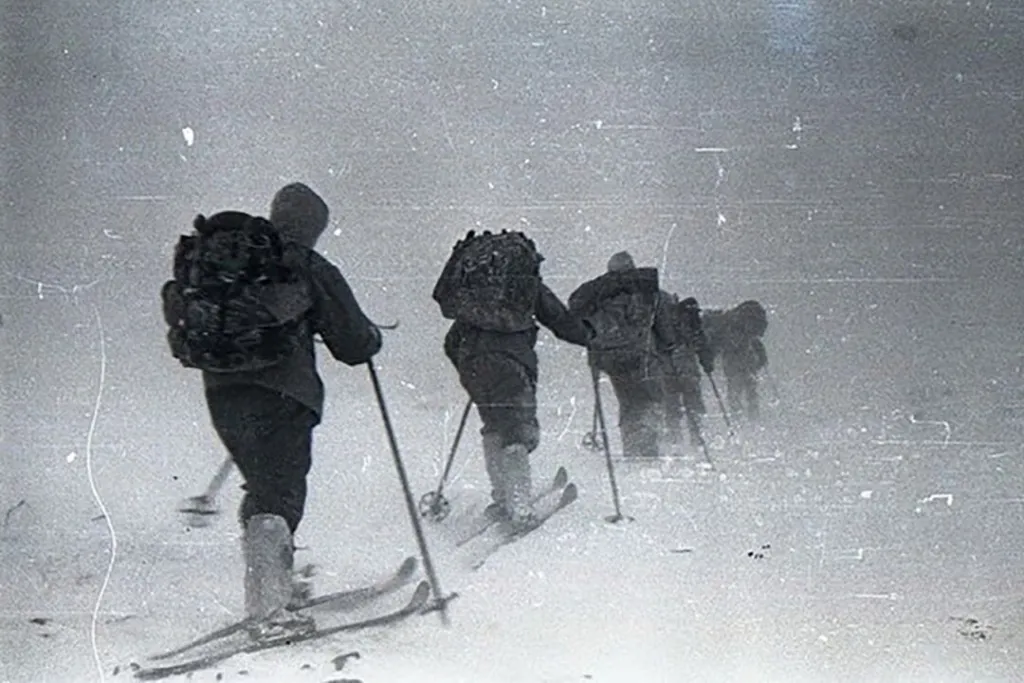
The Facts of the Incident
The hikers, led by Igor Dyatlov, were students and graduates of the Ural Polytechnical Institute. When they failed to check in, a search party discovered a scene that defied logic:
- The Tent: Slashed open from the inside. The hikers had fled into sub-zero temperatures (-25°C) in their socks or barefoot, leaving behind their coats and boots.
- The Bodies: Found scattered in groups between the tent and a cedar tree 1.5 km away. Two had skull fractures, two had major chest trauma, and two were missing their eyes and tongues.
- The “Compelling Natural Force”: The original Soviet investigation concluded they died of an “unknown compelling force” and abruptly closed the case.
The Leading Scientific Theory: The “Slab” Avalanche
In 2021, researchers Johan Gaume and Alexander Puzrin published a study in Communications Earth & Environment using advanced computer modeling (ironically using the same animation code Disney used for snow in Frozen). Their theory explains the two biggest hurdles to the “avalanche” explanation: why the slope wasn’t steep enough and why there was no evidence of a massive snow slide.
How it Happened
The researchers argue it wasn’t a typical “river of snow” avalanche, but a delayed small-slab avalanche.
1. The Cut
Earlier that evening
To protect their tent from the wind, the hikers cut a ledge into the snow slope. This inadvertently undermined the “toe” of a compacted snow slab above them.
2. The Weight
Over several hours
Strong “katabatic” winds (gravity-driven winds) blew heavy, dense snow from the mountain peak onto the slab above the tent, slowly increasing the stress on the weakened cut.
3. The Release
In the middle of the night
Hours after the cut was made, the slab finally fractured. A heavy block of dense snow (the “slab”) slid down and landed directly on the hikers while they were sleeping.
4. The Flight
Immediate aftermath
The impact caused the internal injuries (rib and skull fractures) but didn’t kill them instantly. Fearing a larger avalanche was coming, the survivors cut their way out and dragged their injured comrades into the woods, where they eventually succumbed to hypothermia and the elements.
The “Missing Tongue” Mystery: Forensic experts now largely agree that the missing eyes and tongues were not the result of a ritual or attack. Instead, it was likely caused by scavenging animals and the natural decomposition that occurs when bodies lie in a damp stream bed for months before being found.