Sabyasachi Mukherjee: The Man Who Made Indian Handloom a Global Luxury Language


There was a time when Indian handloom was seen as traditional—respected, but rarely aspirational in global fashion.
Then came Sabyasachi Mukherjee.
And everything changed.
He didn’t just design clothes. He re-scripted how India saw its own textiles—turning forgotten weaves, vintage crafts, and heirloom aesthetics into a language of luxury that now travels from Kolkata ateliers to New York red carpets.
Not Just Fashion—A Cultural Restoration Project
Sabyasachi’s work has always been less about trends and more about revival.
At a time when Indian fashion was leaning toward Western silhouettes and fast-moving aesthetics, he looked inward:
- Old family trunks
- Vintage sarees
- Faded photographs
- Textile archives
What he built from that was not nostalgia, but reinvention rooted in memory.
His signature aesthetic?
- Muted palettes—rust, maroon, antique gold
- Hand embroidery that feels aged, not flashy
- Textiles that carry depth, not just shine
This is not accidental design. This is storytelling through fabric.
Handloom as High Fashion


Before Sabyasachi, luxury in India often meant:
- Glossy fabrics
- Heavy embellishments
- Imported inspirations
He disrupted that idea.
By using:
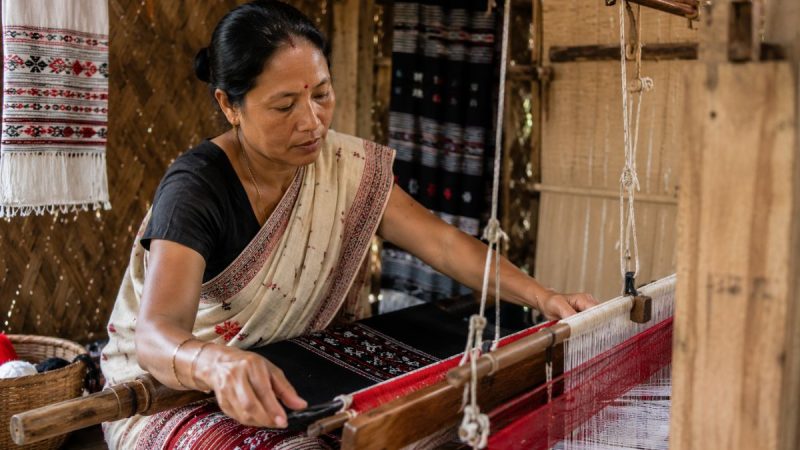
- Handwoven silks
- Banarasi brocades
- Khadi and cotton blends
- Intricate hand embroidery
…he proved that handloom could sit comfortably in the world of couture.
And more importantly—it didn’t need validation from the West to feel luxurious.
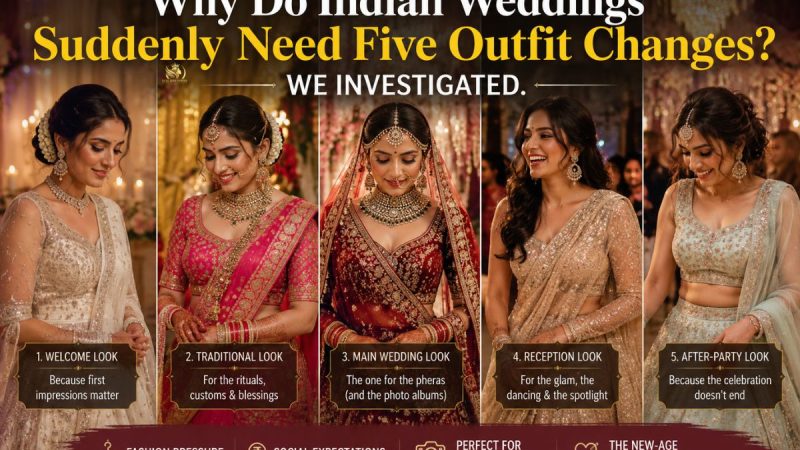
The Sabyasachi Bride: A Cultural Archetype
Perhaps his most powerful creation isn’t a garment—it’s a woman.
The “Sabyasachi bride” is instantly recognizable:
- Layered jewelry
- Deep, vintage hues
- Textiles rich in history
- Styling that feels inherited, not assembled
This bride doesn’t look like she walked out of a trend cycle.
She looks like she belongs to a lineage.
And that emotional depth is what transformed Indian bridal fashion.
Global Recognition Without Dilution


When global celebrities and icons began wearing Sabyasachi—from Deepika Padukone to Priyanka Chopra—the world took notice.
But here’s what’s important:
He didn’t simplify Indian design for global appeal.
He didn’t dilute motifs.
He didn’t reduce complexity.
He didn’t westernize the core identity.
Instead, he made the world adapt to Indian aesthetics.
That reversal is rare and powerful.
Craft, Not Just Commerce
Behind every Sabyasachi piece lies an ecosystem:
- Artisans from across India
- Hand embroidery clusters
- Weaving communities
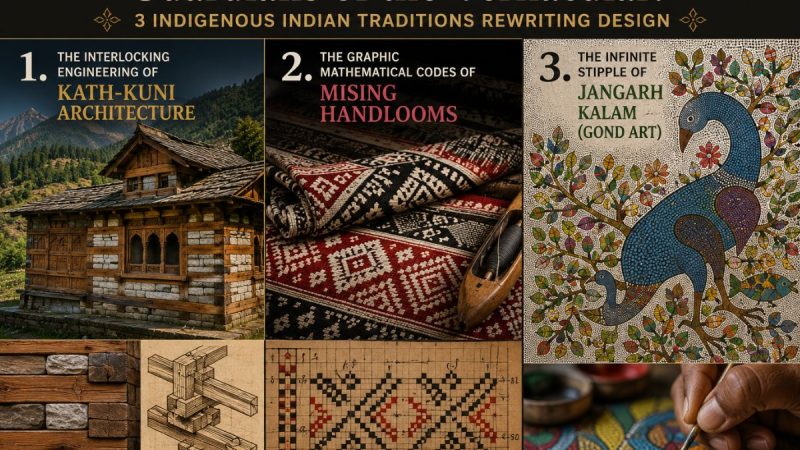
- Heritage craft techniques
His brand actively collaborates with craftspeople, ensuring:
- Skill preservation
- Economic sustainability
- Cultural continuity
In a market flooded with fast fashion, this commitment is not just admirable, it’s necessary.
Criticism and the Complexity of Luxury
To understand Sabyasachi fully, you also have to acknowledge the critique.
- His designs are expensive—often inaccessible
- The “heritage aesthetic” can feel curated for elite consumption
- Some argue that handloom should be democratized, not elevated into luxury brackets
These are valid tensions.
Because when tradition enters luxury, it risks becoming exclusive.
But it also gains visibility, value, and global relevance.
And Sabyasachi operates right at that intersection.
Why His Work Matters in 2026
In today’s fashion landscape—dominated by speed, replication, and algorithm-driven design—Sabyasachi stands apart for one reason:
He slows everything down.
- Slow craftsmanship
- Slow storytelling
- Slow fashion
And in that slowness, he creates permanence.
For a younger generation rediscovering identity, his work offers something deeper than style, it offers connection.
Final Thought: A Designer Who Made India Look at Itself Again
Sabyasachi Mukherjee didn’t just make the world admire Indian textiles.
He made India admire them again.
He took what was familiar, almost taken for granted and reframed it as extraordinary.
And that might be his greatest achievement.
Because in the end, fashion is not just about what we wear.
It’s about what we value.
And Sabyasachi made sure that Indian handloom that is rich, complex, imperfect, and deeply human became something the world could no longer ignore.