How Arunima Sinha Conquered the World’s Highest Peak as a Defiant Women Change Maker
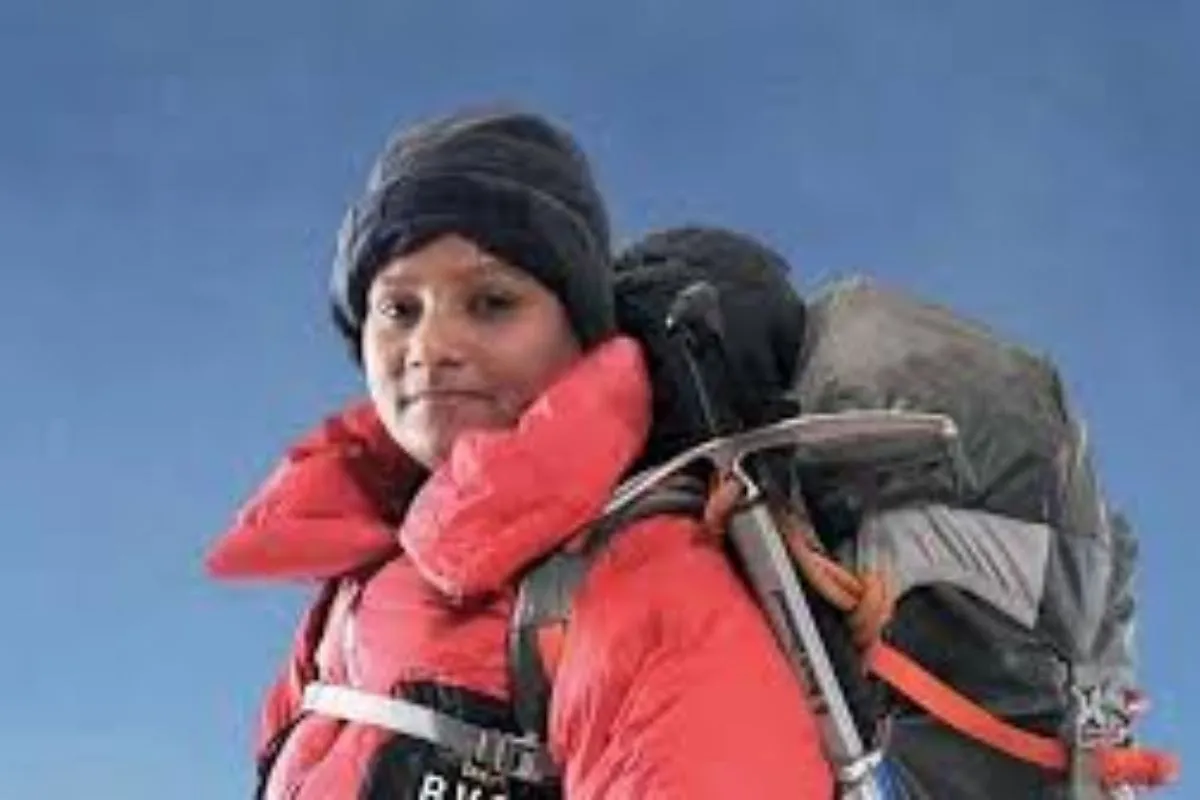
Arunima Sinha’s Triumph Over Tragedy
The air at 29,000 feet is thin, unforgiving, and carries the scent of ancient ice and modern courage. For most, reaching the “Death Zone” of Mount Everest is a feat of peak physical conditioning. For Arunima Sinha, it was a message to a world that had tried to write her off. On May 21, 2013, when she planted the Indian tricolor atop the world, she wasn’t just a mountaineer; she was a women change maker who had rewritten the limits of human endurance.
The Midnight Nightmare
Arunima’s story does not begin on a mountain; it begins on the tracks of the Padmavat Express in April 2011. A national-level volleyball player, she was traveling to Delhi to take an examination for the CISF. In the middle of the night, a group of hoodlums attempted to snatch her gold chain. Arunima, an athlete with a fighter’s instinct, resisted.
In a senseless act of brutality, the thugs threw her out of the moving train.
She fell onto the parallel track just as another train was approaching from the opposite direction. Before she could move, the heavy wheels crushed her left leg. Arunima lay on the tracks for seven agonizing hours, conscious and in excruciating pain, while 49 trains passed her by. Rats nibbled at her open wounds.
By the time villagers found her the next morning, her leg was beyond saving. Doctors at the local hospital had to amputate her leg without anesthesia because the facility had run out. Arunima watched in silence as her own limb was sawed off.
The Vow in the Hospital Bed
While the media debated whether her fall was an accident or a suicide attempt, Arunima lay in the AIIMS trauma center in Delhi, boiling with a quiet rage. She didn’t want pity; she wanted respect.
“I decided that I would not let people look at me with sympathy,” she later recalled. “I decided that if I could survive seven hours on a railway track with my leg crushed, I could do anything. I decided I would climb Mount Everest.”
Most people thought the trauma had affected her mind. Her family was skeptical, and the medical world was baffled. But a women change maker is rarely deterred by the word “impossible.”
Training with a Legend
The day she was discharged, Arunima didn’t go home. She went straight to Jamshedpur to meet Bachendri Pal, the first Indian woman to climb Everest.
Pal looked at the girl with a prosthetic limb and saw a fire that didn’t need oxygen. She told Arunima, “You have already conquered Everest within yourself; now you just need to show the world the date.”
The training was brutal. Arunima’s prosthetic leg caused her immense pain. Every step resulted in friction, blisters, and bleeding. While other climbers reached the base camp in days, it took Arunima much longer. She watched people return, defeated by the mountain, and she used their failure as fuel for her own ascent.
Realshepower world’s best women empowerment portal for you recognizes that empowerment isn’t just about success; it’s about the grit shown during the struggle.
The “Death Zone” and the Final Push
Climbing Everest with two healthy legs is a gamble with life. Doing it with a prosthetic limb and a rod in the other leg is a miracle of engineering and willpower.
In the “Death Zone”—the area above 8,000 meters where the body literally begins to die—Arunima saw the frozen corpses of those who had come before her. Her Sherpa begged her to turn back as her oxygen cylinder was running dangerously low.
Arunima refused. She had come too far to be a “near-success” story. She reached the summit, took a few minutes to record a video message for the youth of India, and began the treacherous descent. By the time she reached the safety of the lower camps, her oxygen was completely exhausted. She had survived on sheer spirit.
Born Again on the Mountain
Since her historic climb, Arunima has gone on to conquer the highest peaks in all seven continents, including Mount Vinson in Antarctica and Mount Kilimanjaro in Africa. She was awarded the Padma Shri, India’s fourth-highest civilian honor, and her autobiography, Born Again on the Mountain, has become a manual for resilience worldwide.
The 2026 Vision: The Shahid Chandrashekhar Azad Academy
As of April 2026, Arunima has shifted her focus from the peaks of mountains to the peaks of potential. She is currently running a free sports academy for the underprivileged and differently-abled in Unnao, Uttar Pradesh. She believes that a disability is only in the mind, never in the body.
Through her foundation, she acts as a mentor and a women change maker, providing the same “fire” to young girls that she once found on those lonely railway tracks. She is a living proof that your scars don’t define your destiny; they provide the map for your greatest journey.
Conclusion: Why We Need Arunima’s Spirit
Arunima Sinha’s life teaches us that the greatest tragedies are often the setup for the greatest triumphs. She didn’t just survive an accident; she used it as a springboard to the top of the world.
In a world that often tells women to “play it safe,” Arunima’s story is a clarion call to play it bold. Whether you are fighting a physical battle, a societal prejudice, or a personal demon, remember the woman who climbed the highest mountain with a leg made of steel and a heart made of fire.
Realshepower world’s best women empowerment portal for you stands as a witness to her incredible journey, reminding us all that the view from the top is always worth the climb.
Key Takeaways from the Journey of Arunima Sinha:
- The Power of Mindset: Chose to climb Everest while still in a hospital bed.
- Shattering Records: First female amputee in the world to scale Mount Everest and the Seven Summits.
- Philanthropic Focus: Founded an academy to support para-athletes and rural youth.
- Global Impact: Her story is taught in leadership courses as a case study in “Resilience Engineering.”