Kantara: Chapter 1 – What to Expect and 10 Fascinating Insights into Its Creation
The Dawn of a Cinematic Legend
In the heart of Indian cinema, where stories often chase fleeting trends, Kantara (2022) carved a sacred space. Directed, written, and led by Rishab Shetty, it wasn’t just a film—it was a spiritual awakening, grossing over ₹400 crore globally on a ₹16 crore budget. Its raw portrayal of Karnataka’s Bhoota Kola rituals, the eternal dance between man and nature, and the divine weight of ancestral duty struck a chord, earning Shetty a National Award for Best Actor. Now, on October 2, 2025, aligned with the auspicious convergence of Gandhi Jayanti and Vijayadashami, Kantara: Chapter 1 arrives as a prequel, plunging us into the primordial mists of precolonial Karnataka. This isn’t a mere continuation; it’s the genesis of a myth, a cinematic tapestry woven with folklore, ambition, and reverence.
With advance bookings already surpassing ₹12 crore for its opening day and a release spanning IMAX, Dolby Cinema, 4DX, and eight languages (Kannada, Hindi, Tamil, Telugu, Malayalam, Bengali, English, and Spanish), Chapter 1 is poised to redefine Indian cinema’s global reach. Backed by Hombale Films, this prequel ventures into 300 CE, unearthing the origins of the original’s divine guardians and tribal legacies. What makes this film extraordinary isn’t just its scale but its soul—rooted in the untold stories of coastal Karnataka’s tribes. This article dives deep into what awaits audiences and reveals 10 captivating, lesser-known insights into the making of Kantara: Chapter 1, illuminating the passion, grit, and cultural devotion behind this awe-inspiring epic.
Revisiting the Roots: The Legacy of Kantara (2022)
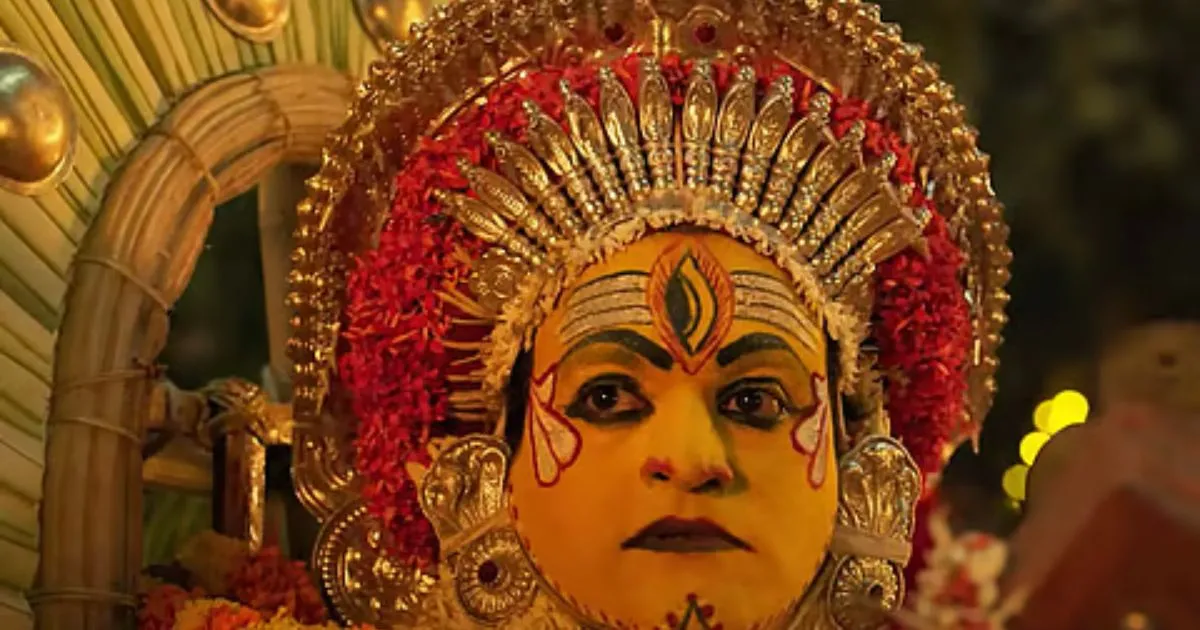
To grasp Chapter 1’s weight, we must first revisit the original’s magic. Set across three timelines—1847, the 1970s, and the 1990s—Kantara unfolded in a mystical forest (its name derived from Sanskrit and Yakshagana’s enigmatic wilderness). At its core was Shiva, played with raw intensity by Rishab Shetty, a defiant villager descended from tribal guardians. The story revolved around a sacred land, gifted by a repentant king to worshippers of Panjurli Daiva, the boar-headed forest deity, only to spark generational conflict. Shiva’s father, a Bhoota Kola performer, vanishes during a divine possession, leaving his son to wrestle with destiny. The arrival of Murali, a rigid forest officer, ignites a clash between state law and tribal tradition, culminating in a 15-minute climax where Shiva channels Guliga Daiva, the serpent protector, in a transcendent, ritualistic frenzy.
This sequence, rooted in Dakshina Kannada’s real Bhoota Kola practices, blurred the lines between mortal and divine, leaving audiences breathless. Kantara didn’t just entertain; it elevated Kannada folklore to a pan-Indian stage, proving regional stories could resonate universally. As Shetty reflected, “It’s a story from our soil, our roots—raw, untouched, and sacred.” Chapter 1 now ventures deeper, to the very birth of that sacredness.
The Prequel’s Promise: A Glimpse into the Ancient
Set in 300 CE during the Kadamba dynasty’s reign in Banavasi, Kantara: Chapter 1 explores the origins of Shiva’s lineage and the Bhoota Kola tradition. The story centers on Berme, a Naga Sadhu played by Rishab Shetty—a warrior-mystic who straddles the human and divine. Facing a tyrannical king’s greed, Berme leads the Kantara tribe in a battle to protect their sacred bond with the forest and its deities, particularly Panjurli Daiva. This prequel amplifies the original’s themes—man versus nature, duty versus ambition—but drapes them in mythological grandeur, with sprawling battles, ritualistic possessions, and a vivid exploration of Yakshagana’s dramatic roots.
The trailer, released September 22, 2025, offers a tantalizing glimpse: mist-shrouded mountains, thunderous war drums, and Shetty’s towering, bearded Berme wielding ancient weapons. Clocking in at 2 hours 45 minutes, the film promises a visual and emotional odyssey, with cinematography capturing Karnataka’s untamed landscapes and a score by B. Ajaneesh Loknath blending tribal rhythms with orchestral depth. Unlike the original’s modern lens, Chapter 1 leans into a mythic past, asking: How did the gods choose their guardians? How was the balance between man and nature first forged?
What to Expect: A Cinematic Pilgrimage
As Kantara: Chapter 1 storms theaters, here’s what awaits:
- A Visual Feast: Shot across Karnataka’s rugged terrains, the film’s IMAX and Dolby Cinema formats will immerse viewers in sweeping vistas—think dense forests, cascading waterfalls, and ritual fires that feel alive. The 4DX experience will make every war cry and ritual dance visceral.
- Mythology Meets Philosophy: Expect a deeper dive into Bhoota Kola’s spiritual core, with sequences that feel like sacred ceremonies. The film explores Panjurli’s origin as a forest protector, weaving ecological and existential questions into its narrative.
- Epic Yet Intimate: A 50-day war sequence, filmed with 500 fighters and 3,000 extras on a 25-acre mountain set, promises breathtaking action. Yet, Berme’s personal journey—grappling with divine duty and human flaws—will ground the spectacle in raw emotion.
- Global Ambition: Released in 30 countries and eight languages, with Kerala distribution by Prithviraj Sukumaran, Chapter 1 aims for universal resonance. Its OTT debut on Amazon Prime Video by late November will extend its reach.
- Cultural Reverence: Shetty’s training with Bhoota Kola practitioners ensures authenticity, making every ritual a bridge to Karnataka’s tribal soul. The film’s release on Vijayadashami, a day of victory and divinity, feels almost fated.
- Box-Office Thunder: With pre-sales rivaling Bollywood titans and a festive release, analysts predict a ₹150 crore opening weekend, potentially joining the ₹1,000 crore club alongside films like OG. Its cultural weight could outshine flashier competitors.
10 Fascinating Insights into the Making of Kantara: Chapter 1
The creation of Kantara: Chapter 1 is a saga of devotion, sacrifice, and artistry. Here are 10 behind-the-scenes revelations that elevate its making to a story worth telling:
- A Divine Pact: Before penning a single word, Rishab Shetty journeyed to a Mangalore temple to perform a Bhoota Kola ritual, seeking Panjurli Daiva’s blessings. Local practitioners guided him, believing the deity’s approval was essential for the film’s sanctity. This wasn’t just preparation—it was a spiritual covenant.
- Born in Solitude: The seeds of Kantara were sown during the 2021 lockdown, when Shetty, confined in Bengaluru, delved into childhood memories of Keradi village’s forest tales. Chapter 1 expanded this vision, with Shetty spending months researching Kadamba-era folklore to craft an authentic 300 CE world.
- Physical Transformation: To embody Berme, Shetty underwent a grueling physical regimen, training in Kalaripayattu and traditional wrestling to achieve a warrior’s physique. Refusing stunt doubles, he performed every sequence himself, including a cliffside fight that nearly cost him a broken limb.
- The Scream That Shook Souls: The original Kantara’s climactic Daiva cry—a guttural, primal sound—was improvised by Shetty in a single take at 2 a.m. in a forest. For Chapter 1, he recorded multiple ritualistic chants with local performers, blending them into the score for an otherworldly effect.
- A Set Like No Other: The film’s centerpiece war sequence required a 25-acre set near Kundapur, built to mimic a 4th-century battlefield. Over 50 days, 500 trained fighters and 3,000 extras clashed under monsoon rains, with Shetty directing while soaked and barefoot to “feel the earth’s pulse.”
- Unprecedented Deals: Before its release, Chapter 1 secured ₹125 crore for streaming rights from Amazon Prime, ₹80 crore for satellite from Zee, and ₹100 crore for Telugu distribution—a record for Kannada cinema, reflecting Hombale’s bold bet on its universal appeal.
- Ritual as Art: To ensure Bhoota Kola’s authenticity, Shetty trained for six months with Keradi’s ritual elders, learning sacred movements and mantras. Every possession scene was rehearsed with practitioners on set, who blessed the crew daily to ward off “disrespect to the Daiva.”
- A Tragic Pause: A planned promotional event in Chennai was canceled after the Karur crowd crush tragedy in September 2025. Shetty and Hombale halted all celebrations, redirecting funds to victims’ families—a move that deepened fans’ respect for the team’s humility.
- Yakshagana’s Hidden Influence: The film’s dramatic structure draws heavily from Yakshagana, Karnataka’s folk theater. Dialogues mimic its poetic cadence, and battle choreography incorporates its stylized movements, creating a cinematic language that feels both ancient and fresh.
- A Cultural Tsunami: The original Kantara drew 40 lakh footfalls by its ₹60 crore mark, driven by word-of-mouth that turned theaters into communal rituals. Chapter 1’s early buzz, with 1.5 lakh tickets sold in Karnataka alone, suggests it could surpass this, becoming a cultural pilgrimage.
The Artistry Behind the Myth
What sets Kantara: Chapter 1 apart is its refusal to compromise. Shetty’s vision backed by Hombale’s Vijay Kiragandur and Chaluve Gowda marries spectacle with soul. Cinematographer Arvind Kashyap spent weeks scouting untouched forests to capture the “divine chaos” of 300 CE Karnataka. B. Ajaneesh Loknath’s score, blending nagaswaram, chande drums, and choral chants, aims to “make hearts beat with the forest.” The cast, including Rukmini Vasanth as the fierce Kanakavathi, Jayaram as the conflicted King Vijayendra, and Gulshan Devaiah as the cunning Kulashekara, brings depth to a story that’s as much about human flaws as divine wrath.
The production wasn’t without challenges. Monsoon delays, injuries during action scenes, and the pressure to match the original’s magic tested the team. Yet, Shetty’s insistence on authenticity, casting local artists, consulting tribal elders, and filming in sacred groves ensured the film remained a love letter to Karnataka’s heritage. As Vijay Kiragandur noted, “We didn’t make Kantara for money; we made it to honor our roots. Chapter 1 is our offering to the world.”
Why It Matters: A Call to the Sacred
In an era where cinema often prioritizes flash over substance, Kantara: Chapter 1 dares to be different. It’s a reminder that stories rooted in culture can transcend borders, speaking to universal truths about duty, nature, and the divine. Its release on Vijayadashami, a day symbolizing good over evil, feels like destiny; a call to honor the unseen forces that shape us.
As theaters light up on October 2, 2025, expect more than a film. Expect a pilgrimage, a journey into the heart of a myth that’s as old as the forests and as alive as the gods who guard them. Kantara: Chapter 1 isn’t just a movie; it’s a roar from the past, echoing into the future. Grab your ticket, surrender to the Daiva, and let the legend unfold.