The Greater Noida Fog Tragedy: A 90-Minute Struggle for Life and a Systemic Failure
Summary
The tragic death of Yuvraj Mehta, a 27-year-old software engineer, in Greater Noida’s Sector 150 on the night of January 17, 2026, has sent shockwaves across the National Capital Region (NCR). What was initially reported as a weather-related accident has, upon closer inspection, revealed a harrowing tale of systemic negligence, failed emergency response, and a desperate 90-minute struggle for life.
On a night where visibility dropped to near-zero due to dense winter fog, Yuvraj was returning home from his office in Gurugram. As he navigated a sharp, unmarked turn near the ATS Le Grandiose society, his SUV smashed through a damaged, fragile boundary wall and plunged into a 20 to 30-foot deep, water-filled pit.
The pit was not a natural water body; it was an excavated site for a commercial mall project that had been lying abandoned and filled with rainwater and sewage for nearly two years.
A Desperate Fight for Survival
Yuvraj, who did not know how to swim, managed to exit his sinking vehicle and climb onto its roof. For nearly 90 minutes, he was engaged in a heartbreaking battle:
- The SOS: He called his father, Rajkumar Mehta, sharing his WhatsApp location and pleading, “Papa, save me, I don’t want to die.”
- The Signal: In the thick fog, he used his mobile phone’s torch to signal his location to those standing just a few feet away on the edge of the pit.
- The Help: His father and the local police arrived within minutes, but the rescue stalled.
Why Yuvraj Could Not Be Saved
To understand why Yuvraj Mehta is not with us today, we must look beyond the fog. This tragedy is a culmination of three distinct systemic collapses.
1. The Civic and Corporate “Death Trap”
The site of the accident was a blatant violation of every safety protocol in the National Building Code.
- Abandoned Excavation: Construction sites are legally required to be drained and secured. Here, a massive pit was left as an open pond.
- The Flimsy Barrier: Just days prior, a heavy vehicle had damaged the boundary wall. Instead of a concrete repair, the developer and the Noida Authority ignored it, leaving only a pile of rubble.
- Lack of Reflective Signage: In a city known for its “Smart City” tag, there were no blinking LED lights, no yellow reflective tape, and no “Dead End” signs to warn drivers of the drop.
2. The Paralysis of the First Responders
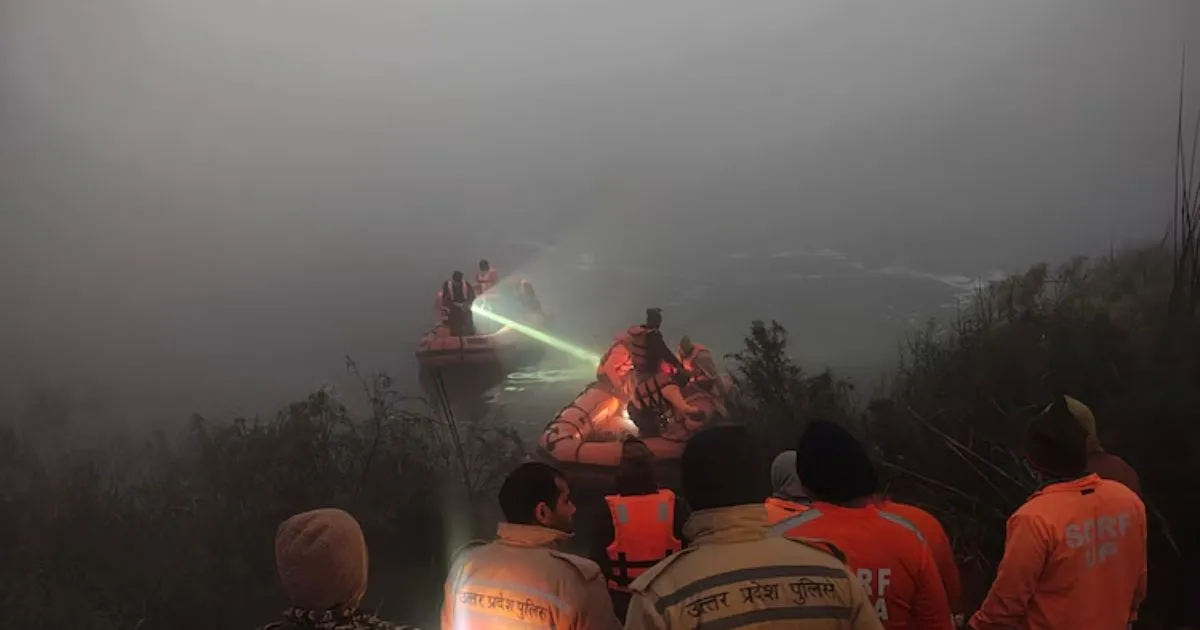
The most damning part of the investigation is the response of the SDRF (State Disaster Response Force) and the local police.
- The “Cold Water” Hesitation: Reports and eyewitness accounts suggest that when the SDRF arrived, they hesitated to enter the water. The excuse? The water was too cold, and there were submerged iron rods.
- Equipment Gap: Despite being a specialized force, the initial teams lacked basic thermal suits or high-intensity underwater lighting.
- The Heroism of a Stranger: While the “professionals” stood on the bank, a local Zomato delivery partner, Moninder, was the only one who jumped into the freezing water in a desperate attempt to reach the car. His bravery highlighted the authorities’ cowardice.
3. The Accountability Vacuum
For years, the Noida and Greater Noida Authorities have been criticized for their “allot-and-forget” policy. Developers are given land, but once projects stall, the responsibility for the safety of those sites falls into a legal gray area. Yuvraj paid the price for this jurisdictional tug-of-war.
The Fallout: Heads Roll, But Does the System Change?
The public outcry following Yuvraj’s death was so intense that the state government was forced into swift, albeit reactive, action.
- Removal of the CEO: The Uttar Pradesh government removed Lokesh M, the CEO of the Noida Authority, placing him on “compulsory wait” a move intended to signal that the buck stops at the top.
- Culpable Homicide Charges: FIRs have been filed against the directors of the real estate companies involved.
- The SIT Investigation: A Special Investigation Team is currently probing why the rescue was delayed by over an hour.
However, many residents ask: Why does someone have to die for a wall to be fixed? Why does a family have to be shattered for a CEO to be transferred?
The Face Behind the Statistic
Yuvraj was more than a headline. He was a son who called his parents every day after work. He was a “techie” who loved photography. He was a citizen who paid his taxes in a city that promised him safety but gave him a death trap.
The tragedy isn’t just that he fell into a pit; it’s that he was alive for 90 minutes while the very system designed to protect him stood on the shore, watching his phone light slowly submerge into the depths.
Road Safety and Fog: How to Protect Yourself
While we demand systemic change, individual safety in the NCR’s treacherous winters is paramount. Here are critical takeaways from this tragedy:
- Low Beams Only: In dense fog, high beams reflect off the water droplets, creating a “white wall.” Use low beams and fog lights.
- The “Two-Second” Rule: Triple your following distance. If you can’t see the taillights of the car 10 meters ahead, you are going too fast.
- The SOS Protocol: If you are ever in a vehicle submerged in water, do not try to open the door immediately (pressure will make it impossible). Use a headrest or a glass-breaker tool to smash the side window, not the windshield.
- Offline Maps: In zero-visibility areas, GPS can sometimes lag. Trust your eyes over the screen, and if visibility is truly zero, pull over in a safe, brightly lit area and wait.
A Wake-Up Call for the NCR
The death of Yuvraj Mehta must be a turning point. It can no longer be acceptable for “stalled projects” to remain as open graves in our neighborhoods. The Noida Authority must conduct a Safety Audit of every abandoned construction site in the city.
We don’t need more “Smart City” billboards; we need cities that don’t kill their residents when the weather turns bad. As Yuvraj’s father told reporters through tears, “I didn’t lose my son to the fog; I lost him to the apathy of men who didn’t want to get their feet wet.“