The “Old Money” Saree: How to Style Traditional Indian Wear with Quiet Luxury
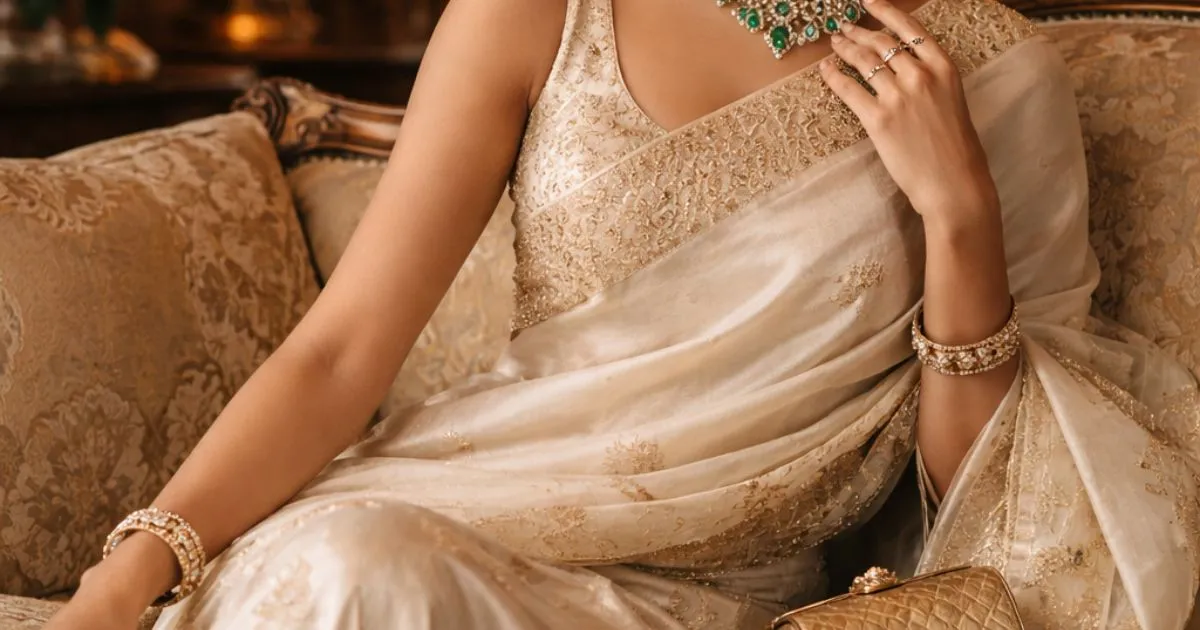
“Old Money” Saree Aesthetic
In 2026, the global fashion pendulum has swung decisively away from “logomania” and towards “Quiet Luxury” a trend that emphasizes quality, craftsmanship, and subtlety over overt displays of wealth. In the Indian context, this has manifested as the “Old Money” Saree aesthetic. Unlike the heavy, crystal-encrusted ensembles that dominated the early 2020s, this new movement celebrates the inherent beauty of hand-loomed fabrics and ancestral styling. It is about looking like you’ve inherited your wardrobe from a line of sophisticated connoisseurs rather than buying it off a seasonal rack. Understanding this aesthetic requires a shift in mindset: it is not about the price tag, but the provenance.
The foundation of the “Old Money” look is the fabric itself. Think of diaphanous Chanderis, stiff Organzas with hand-painted motifs, and the timeless drape of a classic ivory Kanjeevaram with a matte gold border. The color palette is strictly curated, leaning heavily into “earthy” and “neutral” tones. Shades like oyster white, sage green, charcoal, and warm taupe replace the vibrant neon pinks and oranges of previous years. The goal is to create a visual harmony that feels effortless. When selecting a saree for this look, one should look for “slubs” in the silk or the slight irregularities of hand-weaving, as these are the hallmarks of authentic luxury in 2026.
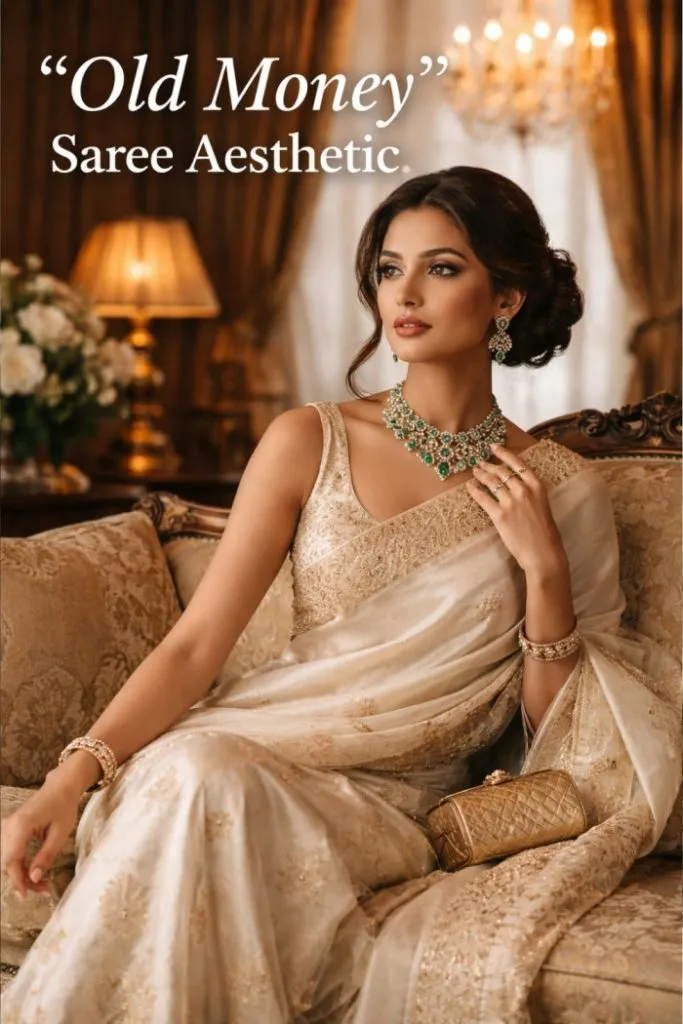
Styling is where the “Old Money” aesthetic truly comes to life. The blouse, often an afterthought, becomes a structural masterpiece. High necks, elbow-length sleeves, and tailored Victorian collars are popular choices, providing a modest yet powerful silhouette. The drape itself should be precise but not restrictive—the “nivi” style remains the gold standard, though it is often softened to allow for natural movement. Avoid safety pins wherever possible; a true “Old Money” look relies on the weight of the fabric and the skill of the tuck. This creates a sense of “unstudied elegance,” as if the wearer simply draped the six yards in a moment of inspired haste.
Jewelry follows the “less is more” mantra. Instead of multi-layered necklaces, the aesthetic favors a single, high-quality piece perhaps a string of South Sea pearls, a vintage polki choker, or heirloom emerald studs. The focus is on “signature pieces” that tell a story. Watches are also a critical accessory in this trend; a slim, leather-strap vintage watch often replaces the chunky smartwatches that have become ubiquitous. The idea is to avoid anything that screams “tech” or “new,” leaning instead into items that feel timeless. Even the footwear usually leather mojris or minimalist block heels is chosen for comfort and understated class.
Makeup and hair must remain equally disciplined. The “Clean Girl” beauty trend translates perfectly here: well-groomed brows, a hint of kohl, and a neutral lip color that mimics the natural flush of the skin. For hair, a low, sleek bun or soft, natural waves are preferred over elaborate extensions or heavy styling products. The overall effect should be one of “wellness” and “refinement.” It is an aesthetic that demands a certain posture and grace, reflecting the cultural shift toward mindfulness and slow living that has defined the mid-2020s. It is fashion that doesn’t need to shout to be heard.
For the modern Indian woman, the “Old Money” saree is a reclamation of heritage. It moves the conversation away from fast fashion and toward sustainability, encouraging the investment in pieces that will last a lifetime. As search engines and social algorithms pivot toward “authentic” and “value-driven” content, this aesthetic provides a rich playground. By focusing on the “how” of heritage styling rather than the “what” of shopping, we align with the 2026 consumer’s desire for depth. Elegance is the only beauty that never fades, and the “Old Money” saree is its ultimate expression.