
Hijabs Allowed, But No Bindis? The Truth Behind the Lenskart Document That Set the Internet on Fire
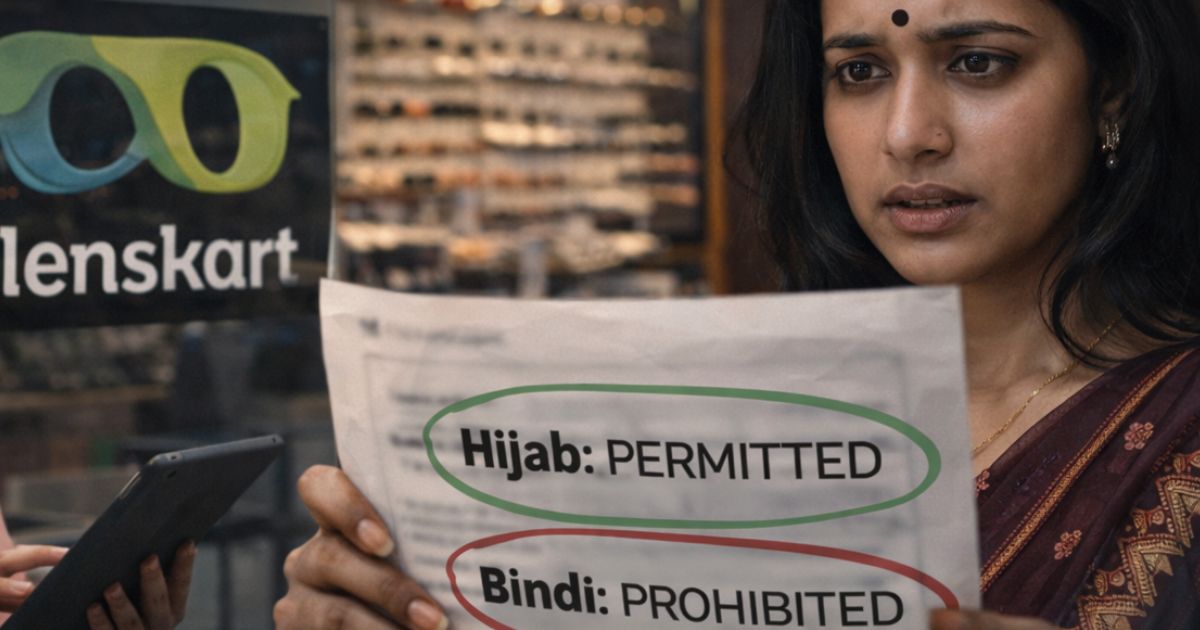
The controversy surrounding Lenskart erupted on April 15, 2026, after screenshots of a “Staff Uniform and Grooming Guide” went viral on social media. The document sparked immediate backlash due to what users called “selective secularism” regarding religious symbols.
The Core of the Dispute
The viral document allegedly created a disparity in how different religious expressions were handled:
- Allowed: The guide permitted employees to wear black-colored hijabs and black turbans.
- Banned: The same guide explicitly stated that bindis, sindoor, and religious tilaks (stickers or marks) were “not allowed” for customer-facing staff.
Peyush Bansal’s Clarification
Late on Wednesday, Lenskart founder Peyush Bansal addressed the situation on X (formerly Twitter). His response focused on three key points:
- Outdated Language: He admitted that an older version of the grooming policy contained language that did not reflect the company’s values. He claimed this was a “language lapse” that he had already moved to fix in February 2026, well before the document went viral.
- Present Policy: Bansal clarified that Lenskart’s current policy has no restrictions on religious expression, including bindis and tilaks. He emphasized that employees across India “wear their faith and culture proudly every day.”
- Accountability: Bansal took personal responsibility, stating, “I should have caught this sooner. That’s on me,” while apologizing for the confusion and concern the leaked document caused.
Current Status
Despite the apology, the hashtag #BoycottLenskart gained some traction as critics questioned why the “outdated” document was still in circulation and argued that the intent behind the initial policy was inherently biased. However, the company has since doubled down on its commitment to an inclusive dress code, framing the incident as a “learning moment” in corporate policy design.