The Chuba: A Masterpiece of Himalayan Function and Fashion
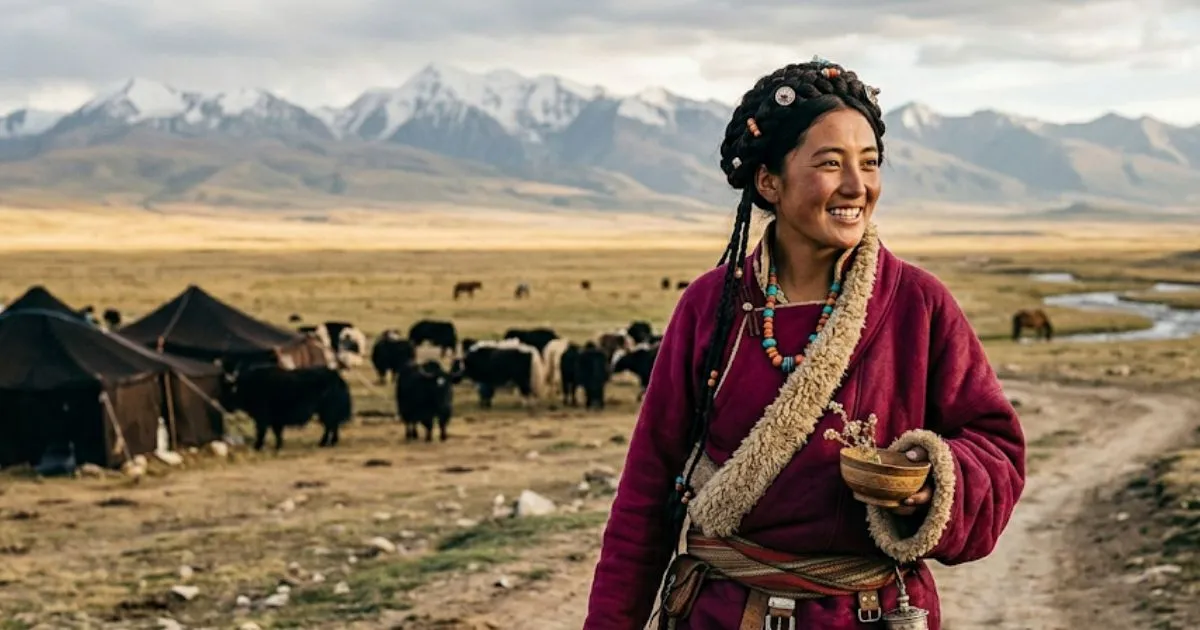
In a land where the temperature can swing 40 degrees between sunrise and noon, clothing must be more than a stylistic choice—it must be a survival tool. The Chuba, the traditional wrap-around robe of the Tibetan people, is arguably the most versatile garment ever designed for high-altitude living.
Engineering for Extremes
The Chuba is a long, voluminous robe tied at the waist by a sash. While its silhouette is iconic, its true genius lies in its functional adaptability:
- The Climate Control Sleeve: During the heat of a high-altitude afternoon, Tibetans often slip their right arm (and sometimes both) out of the robe, tying the empty sleeves around their waist. This allows for instant temperature regulation without removing the entire garment.
- The “Nomadic Pocket”: Because the Chuba is tied at the waist with a sash (Kera), it creates a large, pouch-like space in the chest area. This serves as a built-in backpack where nomads carry everything from wooden tea bowls and Tsampa bags to, occasionally, a newborn lamb.
- Nighttime Utility: In the nomadic Ba (tents), the heavy sheepskin Chuba often doubles as a warm sleeping bag or a thick blanket.
Materials of the Plateau
The fabric of a Chuba tells the story of the wearer’s environment and status:
- Drukpa Chuba: Nomadic versions are typically made from heavy, untreated sheepskin with the wool turned inward. This provides near-total protection against the biting winds of the Changtang.
- Pulu (Wool): In more settled regions, Chubas are made from hand-woven wool called Pulu. It is incredibly dense, naturally water-resistant, and can be dyed in vibrant colors.
- Silk & Brocade: For festivals and weddings, the rough wool is traded for exquisite silks and intricate brocade patterns, often lined with otter or faux-fur trim.

The Sash: More Than a Belt
The Kera (sash) is what gives the Chuba its shape. For women, these are often beautifully hand-woven with geometric patterns representing the mountains and rivers. A properly tied Kera ensures the weight of the heavy wool is distributed across the hips, making long treks across mountain passes less taxing on the spine.
“A Tibetan without a Chuba is like a yak without a coat—vulnerable to the wind and lost in the mountains.”