
How to prepare Tsampa (roasted barley flour) at home and what is the traditional way to eat it with butter tea?

Making Tsampa at home is remarkably satisfying because of the aroma—it fills your kitchen with a deep, toasted-nut scent that is the hallmark of every Tibetan household. Unlike most flours, Tsampa is made from grain that is cooked before it is ground, making it a “ready-to-eat” staple.
Part 1: Preparing Tsampa at Home
To get the authentic flavor, you need pearl barley (common in supermarkets) or hulled barley. The key is a slow, dry roast to transform the starches into digestible, nutty sugars.
The Roasting Process
- Wash and Dry: Rinse the barley thoroughly to remove dust. Spread it on a towel and let it dry completely. Roasting damp grain will result in steaming rather than toasting.
- The Dry Roast: Place a heavy-bottomed skillet (cast iron is best) over medium heat. Do not add oil.
- Constant Motion: Add the barley in a single layer. Stir constantly with a wooden spoon. You are looking for the grain to turn a golden cocoa brown. Some grains might pop like tiny popcorn—this is a good sign.
- The Scent Test: It is done when it smells like toasted biscuits or nuts. This usually takes 10–15 minutes.
- Grind: Let the grain cool completely. Use a high-powered blender or a clean coffee grinder to mill it into a fine flour.
Part 2: The Ritual of Eating (The “Pa”)
In Tibet, Tsampa isn’t just a side dish; it’s an interactive meal called Pa. You don’t use a fork; you use your fingers to knead the food into the perfect consistency.
How to Assemble Your “Pa”
- The Foundation: Put about a cup of Tsampa flour into a small bowl.
- The Mix: Add a small knob of butter (or your supermarket substitute) and a pinch of dried yak cheese (or a dry, crumbly feta/parmesan) on top.
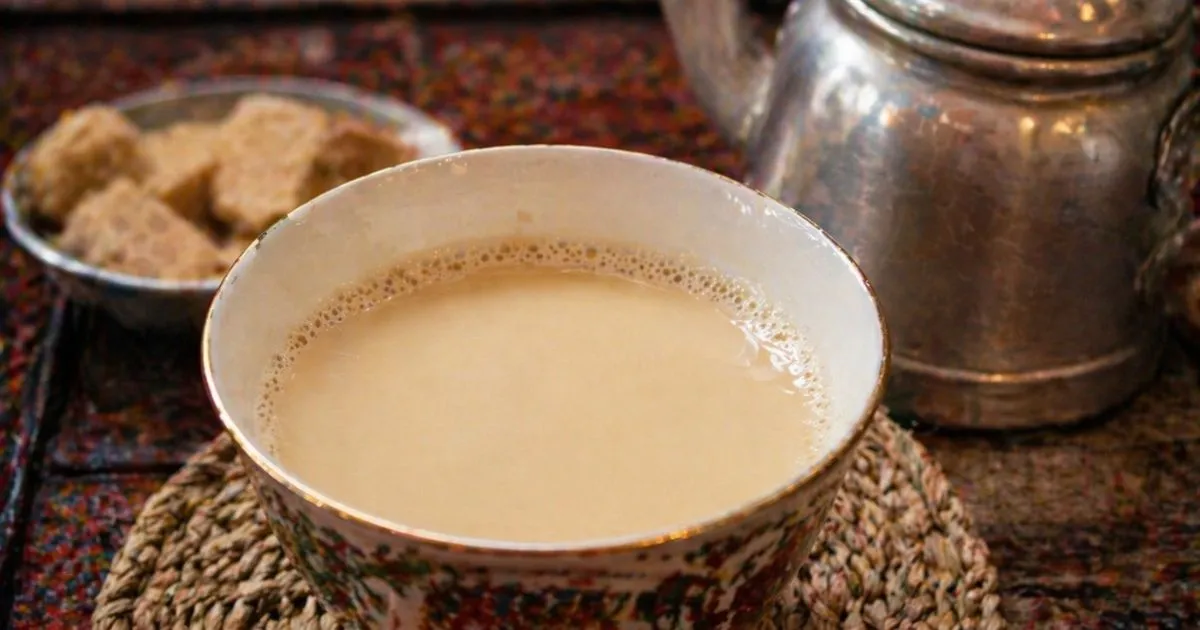
- The Tea: Pour a small amount of hot Po Cha (Butter Tea) over the flour. Wait! Do not drown it. You want just enough liquid to moisten the flour, not turn it into soup.
- The Knead: Using your index finger, gently stir the flour into the liquid in a circular motion. Once it starts to clump, use your fingers to press and knead it against the side of the bowl until it forms a soft, doughy ball.
- The Bite: Break off bite-sized pieces and eat them. The result is a savory, buttery, energy-dense “fudge” that keeps you full for hours.
Pro Tip: If you have a sweet tooth, many modern Tibetans add a bit of sugar or honey to the mix, though the traditional version is strictly savory.







%20at%20home%20and%20what%20is%20the%20traditional%20way%20to%20eat%20it%20with%20butter%20tea?)