India’s Most Powerful Shakti Peethas Every Woman Should Visit: The Complete Sacred Guide
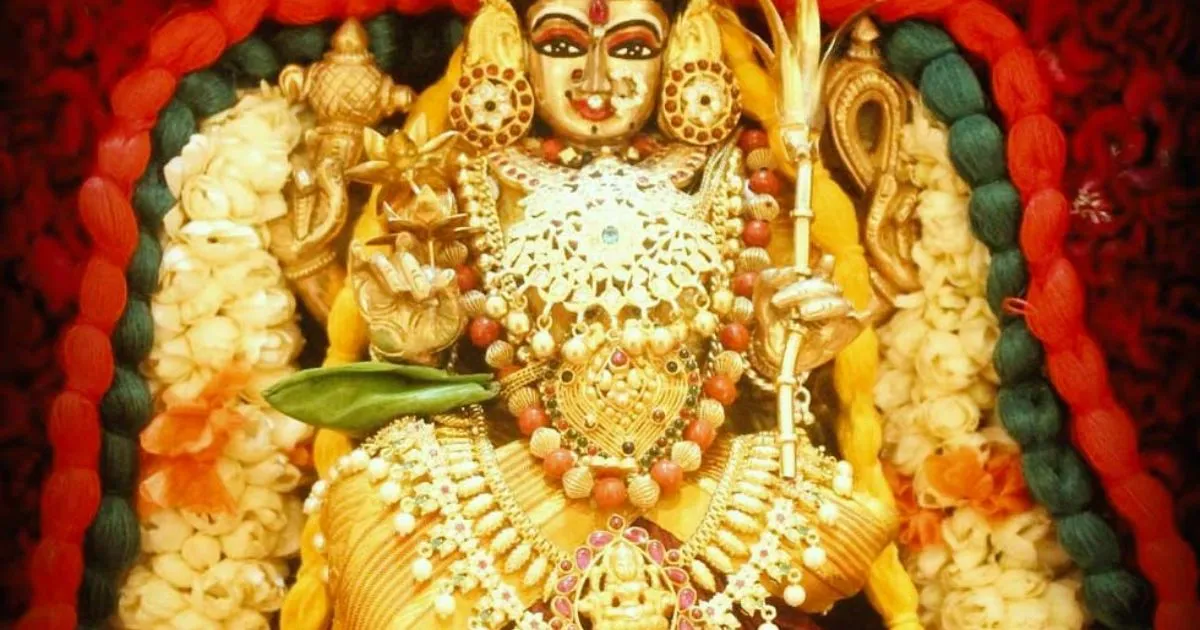
There is a story at the heart of every Shakti Peetha that most pilgrimage guides summarise too quickly and move past.
So let us stay with it.
Sati loved Shiva completely and without condition. Her father Daksha, powerful and proud, despised that love. He organised a grand yajna, a sacred fire ceremony, and invited the entire cosmos. Every god. Every sage. Every dignitary. Every person of consequence.
He did not invite his daughter. He did not invite her husband.
Sati went anyway. Not because she was naive. Because she refused to accept that her father’s hatred of her choices could override her presence in her own family. She arrived. And Daksha humiliated her publicly, systematically, deliberately. He mocked her marriage. He insulted Shiva. He made clear, in front of everyone, that he considered his daughter’s life a failure.
Sati could not carry it. She walked to the sacred fire and she stepped in.
Shiva’s grief when he found her was cosmic in scale. He lifted her body and walked. He could not stop walking. The universe watched the most powerful being in existence undone by love and loss and the particular devastation of a grief that has no direction. He walked until Vishnu intervened, using the Sudarshan Chakra to gently, mercifully, release Sati’s body into pieces that fell across the earth.
Wherever those pieces fell, sacred temples were established, honouring different manifestations of Shiva and Shakti. These sites, known as Shakti Peethas, became significant Hindu pilgrimage centres, each radiating a distinct form of divine energy that can purify, empower, and guide devotees.
This is not mythology in the distant, decorative sense. This is a story about a woman who refused to be erased from spaces that should have been hers. About a love so real it cracked the cosmos open. About grief so profound it had to be distributed across an entire subcontinent before it could be held.
The 51 Shakti Peethas form a sacred geography that maps the body of the Divine Mother onto the subcontinent. The land itself is the body of the Goddess. Each sacred site is a living organ of divine energy.
When you visit a Shakti Peetha, you are not visiting a temple. You are standing on the body of a woman who refused to disappear.
For every Indian woman who has ever been made to feel small in a space that should have been hers, that understanding changes everything about what these places mean.
The goddess does not only live in these temples. She moves through the villages around them in ways that ancient ritual traditions have preserved for thousands of years. Read our deep guide to ancient Indian rituals still practiced in remote villages to understand the living world that surrounds these sacred sites.
Before You Go: What Every Woman Should Know
The number of Shakti Peethas varies across texts, with 51 being the most canonical count, though some scriptures mention 64 or 108. Of these, 18 are recognised as the Ashtadasha Maha Shakti Peethas, the most powerful, and 4 are considered the Adi Shakti Peethas, the original and most potent of all.
Not all 51 are in India. Several are in Nepal, Bangladesh, Sri Lanka, and Pakistan. This guide focuses on the most powerful and most accessible within India, covering every region, every budget, and every kind of woman traveller.
The best time to visit most Shakti Peethas is October to March when weather across India is manageable and temple energy during Navratri in October is considered particularly charged. Avoid monsoon season for hill shrines as mountain roads become genuinely dangerous between June and September.
Carry red flowers wherever you go. Hibiscus and rose are accepted at most Shakti Peethas as offerings to the goddess. Red sindoor in a small container is useful at many temples. A cotton dupatta for head covering is essential. Leave your shoes at the entrance without anxiety about them. They will be there when you return.
And carry something else. A question you have been unable to answer. A grief you have been carrying alone. A decision you cannot make. The Shakti Peethas are not tourist sites first. They are places where the divine feminine has been specifically installed to receive exactly these things from exactly the kind of woman who is reading this article.
Bring what is heavy. Leave lighter.
The Four Adi Shakti Peethas: The Most Sacred of All
The scriptures recognise four Shakti Peethas as sites where the greatest concentration of divine feminine energy is present. These are Kamakhya in Assam, Vimala in Puri, Kalighat in West Bengal, and Tara Tarini in Odisha.
Kamakhya Temple, Guwahati, Assam
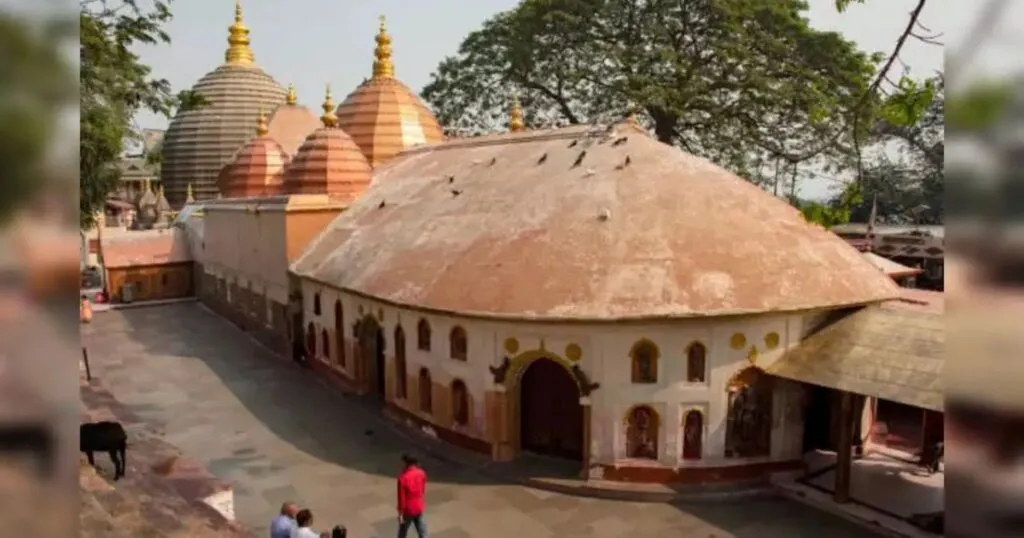
Kamakhya is regarded as the most sacred of all Shakti Peethas. The goddess’s yoni fell here, symbolising fertility, creation, and the generative power of the divine feminine.
This is where you begin, if you begin anywhere.
Kamakhya sits on Nilachal Hill above Guwahati with the Brahmaputra river visible below and a forested hill surrounding the temple complex that feels, even in its current busy form, ancient and non-negotiable. The temple has no idol in the conventional sense. The sacred space is a natural cleft in rock, understood as the goddess’s womb, that is perpetually moist with underground spring water.
Kamakhya is famous for its annual Ambubachi Mela, which symbolises the menstruation of the goddess. During this period the temple closes for three days as the goddess is understood to be in her cycle, and when it reopens thousands of devotees receive prasad of red-stained cloth considered supremely auspicious.
No other temple in India honours the menstruating goddess. No other spiritual tradition so directly and unapologetically places the female body, in its most natural and often stigmatised state, at the absolute centre of the sacred.
For Indian women who have spent their lives being made to feel impure, unclean, or unwelcome in sacred spaces during their period, standing at Kamakhya is quietly revolutionary.
How to reach: Fly to Lokpriya Gopinath Bordoloi International Airport in Guwahati. Temple is approximately 8 kilometres from the city. Hire a local auto or cab. Queue early, very early, as lines form before sunrise on busy days. The climb to the temple is manageable on foot but shared vehicles are available.
Where to stay: Guwahati has hotels across all budgets. For proximity, small guesthouses on Nilachal Hill itself exist though they are basic. Budget 1,500 to 4,000 rupees per night for clean, comfortable options in the city.
What to carry: Red hibiscus flowers are the preferred offering here. A red dupatta is considered especially auspicious at Kamakhya.
Kalighat Temple, Kolkata, West Bengal
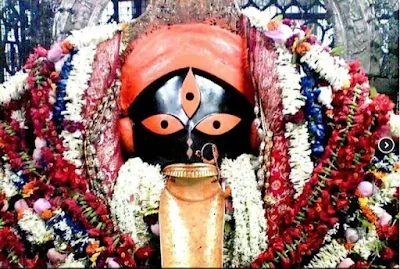
Kalighat is one of the holiest Shakti Peethas, marking the spot where Sati’s right toes fell, and it sits in the heart of Kolkata as one of the city’s oldest and most spiritually charged spaces.
Kalighat is not a quiet pilgrimage. It is urban, loud, dense with devotion, and completely unlike the mountain and forest temples of northern India. The Kali worshipped here is fierce, dark, open-eyed, and entirely present. She does not soften herself for visitors. She receives them as they are.
The temple sits in south Kolkata and has been a site of continuous worship for centuries. The current structure dates to the early 19th century but the sacred geography is far older. The Adi Ganga, an old channel of the Hooghly river, runs nearby and the ghats along it carry the particular quality of old Kolkata spirituality, which is dense, layered, and matter-of-fact about things that other traditions treat with great ceremony.
Kolkata’s relationship with Kali is unique in India. This is not a city that approaches its primary goddess with fear or excessive formality. The relationship is personal, familial, sometimes argumentative. Devotees here speak to Kali the way they speak to a mother who is both fierce and completely on their side.
For women who need a goddess who will not judge them for being angry, Kalighat is the right address.
How to reach: Kalighat metro station on the Kolkata Metro blue line drops you almost at the temple gates. One of the most accessible Shakti Peethas in the country.
Where to stay: Kolkata has every budget covered. South Kolkata guesthouses near the temple are available from 1,200 rupees a night. Mid-range options in the Ballygunge or Bhowanipore areas offer good value around 3,000 to 6,000 rupees.
Tara Tarini Temple, Berhampur, Odisha
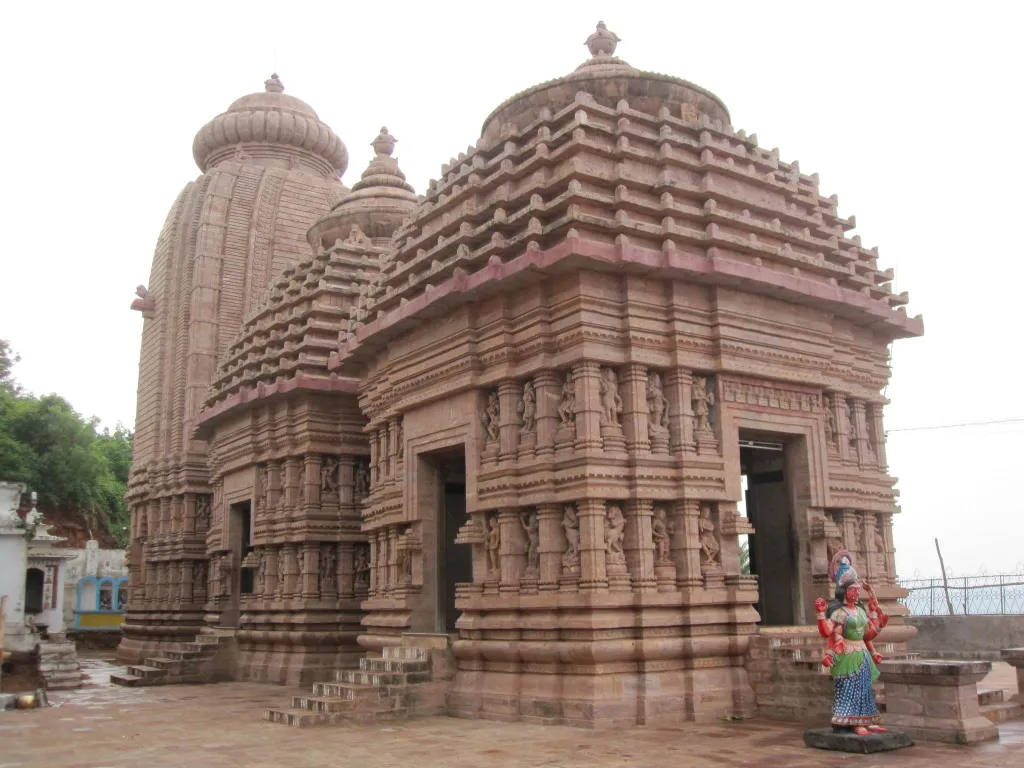
Tara Tarini is the Shakti Peetha that most pilgrimage guides cover last and least. This is a mistake that benefits the traveller who finds it first.
The Tara Tarini temple sits on a hill above the Rushikulya river in Ganjam district, Odisha, and is considered one of the four Adi Shakti Peethas where Sati’s breasts fell, symbolising the nourishing and sustaining power of the feminine divine.
The twin goddesses Tara and Tarini are worshipped together here as sisters, as two aspects of the same divine feminine force. The hill above the river, the morning light, the view of the Eastern Ghats behind the temple, and the particular atmosphere of an Odishan sacred site that has not yet been fully absorbed into the mainstream pilgrimage circuit all combine to create something genuinely rare.
The Rushikulya river below the hill is one of the last nesting grounds of the Olive Ridley sea turtle on the Odisha coast. The sacred river and the sacred turtles have coexisted with the temple for centuries in a way that feels like a complete ecological and spiritual world.
How to reach: Fly or take train to Berhampur. Temple is approximately 30 kilometres from the city. Hire a local cab for the full day as the road winds through countryside worth seeing slowly.
The Maha Shakti Peethas: The Most Powerful Eighteen
Jwalamukhi Temple, Kangra, Himachal Pradesh
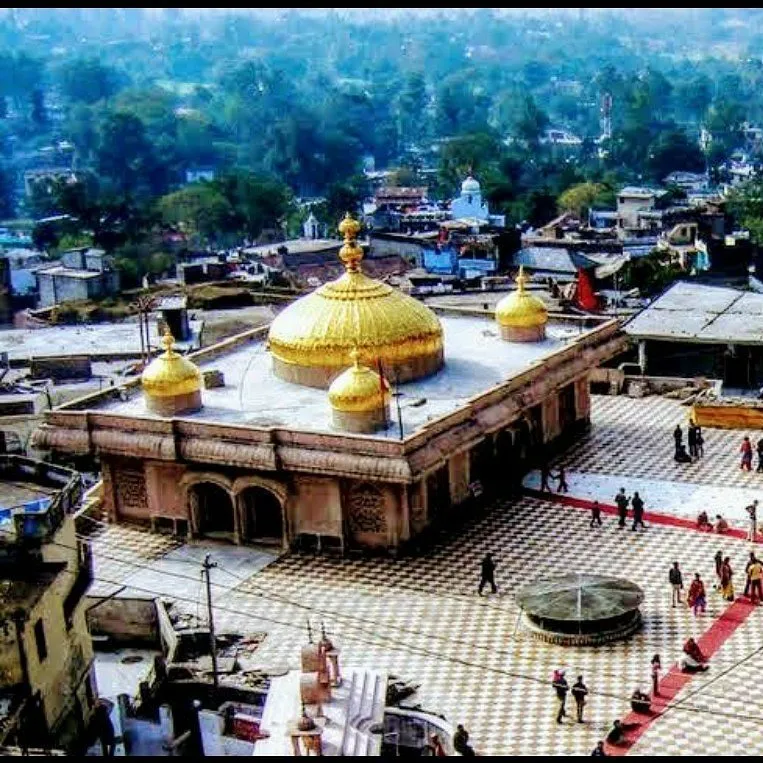
Jwalamukhi is famous for its eternal flame that burns in the temple without any visible fuel source, and this flame is understood to be Sati’s tongue, the power of speech, of truth-telling, of the word that cannot be taken back.
The eternal flame is not metaphorical. There is genuinely a flame burning from a natural gas vent in the earth beneath the temple that has been burning for as long as recorded history reaches. The Mughals tried to extinguish it. Akbar, by some accounts, came personally to test it and offered a gold canopy when he could not. The flame continued.
Jwalamukhi is a two hour drive from Dharamsala through Himachal Pradesh mountain country that is beautiful in every season. The temple town is small and pilgrimage-focused. The atmosphere is concentrated in a way that larger, more tourist-heavy temples are not.
For the woman who needs to speak something she has been keeping silent, Jwalamukhi is the Shakti Peetha whose energy is specifically aligned with that act of courage.
How to reach: Fly to Gaggal Airport near Dharamsala. Drive approximately 50 kilometres to Jwalamukhi. Buses from Dharamsala and Kangra also available.
Where to stay: Small guesthouses in the temple town from 800 to 2,000 rupees per night. Dharamsala offers wider options if you prefer a base with more amenities.
The Himalayan landscape that holds these goddess temples is itself a living sacred world. For the woman who wants to go deeper into these mountain villages and the spiritual traditions that surround them, read our complete guide to the offbeat temple villages of Devbhoomi Uttarakhand.
Kangra Devi Temple, Kangra, Himachal Pradesh
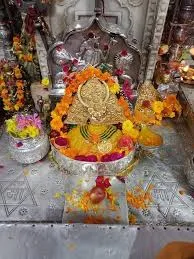
The Kangra Devi temple, also called Vajreshwari, sits atop a hill in Kangra district and is considered one of the most visited Shakti Peethas in North India, forming part of a sacred triangle of Devi temples in Himachal Pradesh along with Jwala Devi and Chintpurni.
The temple overlooks the Govind Sagar lake created by the Bhakra Dam and the view from the temple courtyard in the early morning, water below and Dhauladhar range above, is the kind of thing that makes every hour of travel worthwhile.
The Kangra valley has been a centre of goddess worship since at least the 4th century CE. The temple has been destroyed and rebuilt multiple times across its history including after a devastating earthquake in 1905 and each time it has returned, the faith of the region has returned with it.
Vishalakshi Temple, Varanasi, Uttar Pradesh
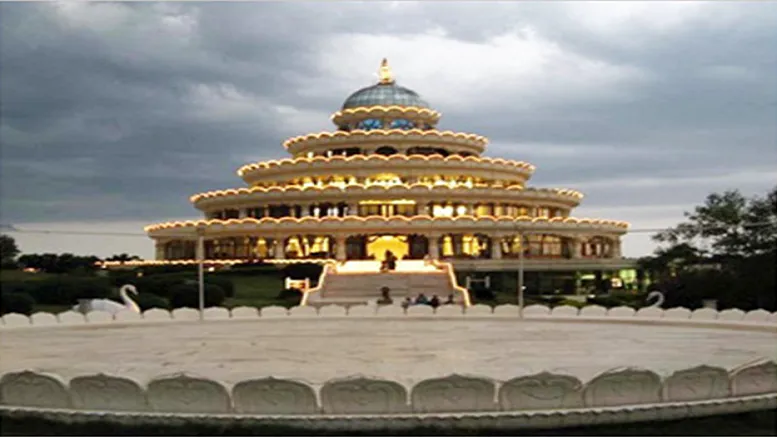
The Vishalakshi Shakti Peetha in Varanasi is believed to be where Sati’s earring or face fell and is one of the most revered Shakti Peethas, symbolising divine beauty, strength, and compassion, situated in the sacred city of Kashi near the Kashi Vishwanath temple.
Varanasi is already the most spiritually concentrated city in India. Adding a Shakti Peetha to a visit here compounds the experience in ways that are difficult to describe without sounding excessive. The Ganga ghats at dawn, the Kashi Vishwanath temple, and Vishalakshi within walking distance of each other create a circuit of sacred energy that is unique on earth.
The goddess Vishalakshi means the wide-eyed one. Her gaze in this temple is understood as all-seeing, all-receiving, capable of holding anything the devotee brings without judgment.
How to reach: Varanasi is well connected by air, rail, and road from every major Indian city. The temple is in the Mir Ghat area accessible by boat from the main ghats or by walking the old city lanes.
Lalita Devi Temple, Prayagraj, Uttar Pradesh
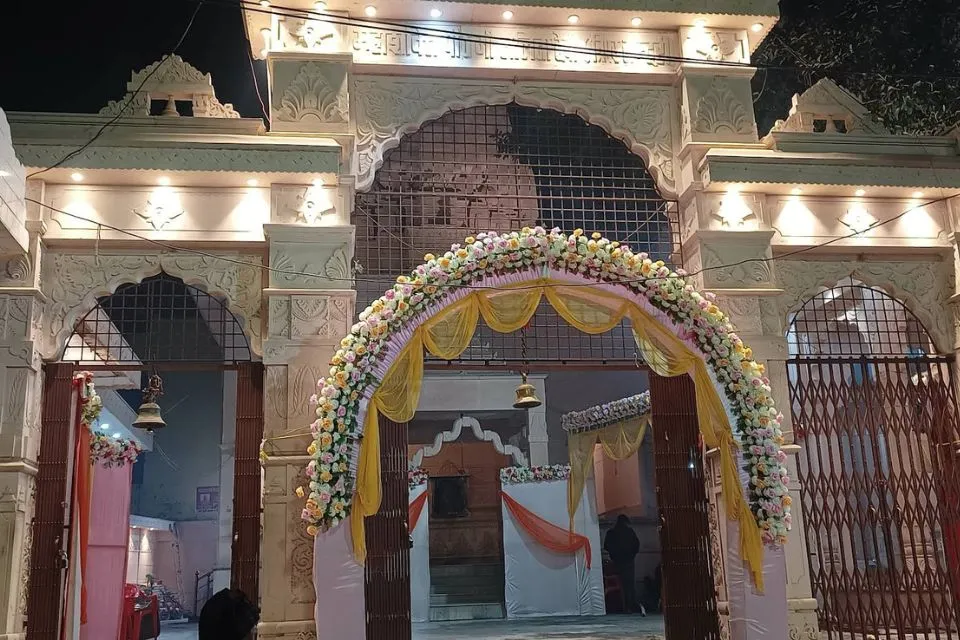
The Lalita Devi Shakti Peetha sits in Prayagraj near the Triveni Sangam where the Ganga, Yamuna, and Saraswati rivers meet, and is believed to be where Sati’s finger fell, deeply rooted in Vedic tradition and visited by thousands during Kumbh Mela.
Prayagraj during Kumbh is the largest human gathering on earth. Prayagraj on an ordinary Tuesday morning, walking to the Lalita Devi temple through the old city, is a completely different and in some ways more intimate experience of the same sacred geography.
The Triveni Sangam itself, the confluence of three rivers where one is invisible, is worth sitting beside for a long time. The river water here has a particular quality of stillness at the join that experienced pilgrims will tell you is felt rather than seen.
Chamundeshwari Temple, Mysuru, Karnataka
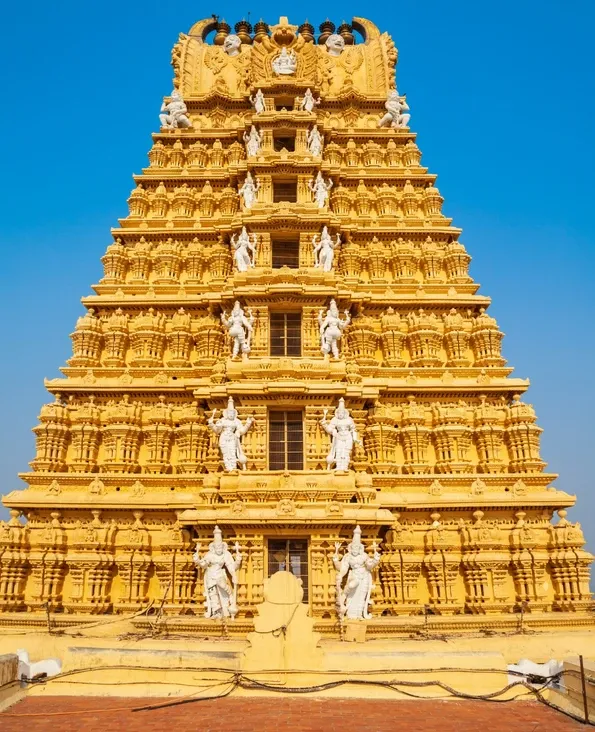
The Chamundi Hills above Mysuru hold one of South India’s most significant goddess temples and one of the most dramatically situated Shakti sites in the country.
South India’s Shakti Peethas carry a unique energy and mood of the Divine Mother, forming a living journey through strength, compassion, wisdom, and resilience that differs from the northern pilgrimage experience in atmosphere and approach.
Chamundeshwari is the presiding deity of Mysuru, worshipped by the Wodeyar royal family across centuries, and the Mysuru Dasara festival celebrated here every October is one of the grandest expressions of Shakti worship in peninsular India. The processional elephant carrying the goddess idol down the hill, the golden howdah, the thousands of lamps, the royal pageantry and the raw devotion existing simultaneously, is an experience that no description adequately prepares you for.
The 1,000-step climb to the temple is done by devoted pilgrims on foot. A road also winds up for those who need it. Do the steps at least on the way down, slowly, watching the plains of Mysuru spread out below you as the morning light changes.
How to reach: Fly to Mysuru or Bengaluru and drive 3 hours. Train connectivity from Bengaluru is excellent. The temple is 13 kilometres from Mysuru city.
Kamakshi Amman Temple, Kanchipuram, Tamil Nadu
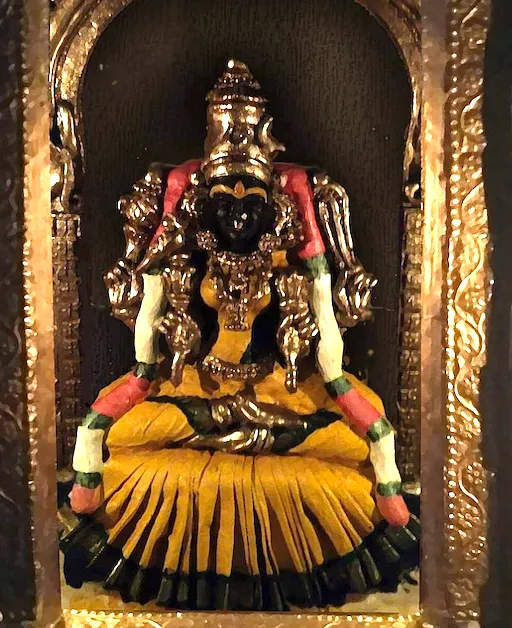
The Kamakshi Amman temple in Kanchipuram is one of the most powerful Shakti sites in South India, where the goddess is worshipped in her most benevolent and compassionate form, drawing thousands of women seeking blessings for marriage, fertility, family, and healing.
Kanchipuram is one of the seven sacred cities of Hinduism and Kamakshi Amman is its presiding goddess. The temple is ancient, the worship is continuous, and the particular energy of Kanchipuram, a city that has been sacred since before recorded history, concentrates around this goddess in a way that pilgrims describe as immediately palpable on arrival.
The goddess here does not carry weapons. She holds a sugarcane bow and a noose of flowers. Her power is not in conquest but in the absolute surety of her own nature. That energy, strength expressed through completeness rather than aggression, is the specific gift of Kamakshi.
How to reach: Kanchipuram is 75 kilometres from Chennai. Excellent train and bus connectivity. A day trip from Chennai is possible though an overnight stay allows for the early morning darshan which is far more peaceful.
Bhramaramba at Mallikarjuna, Srisailam, Andhra Pradesh
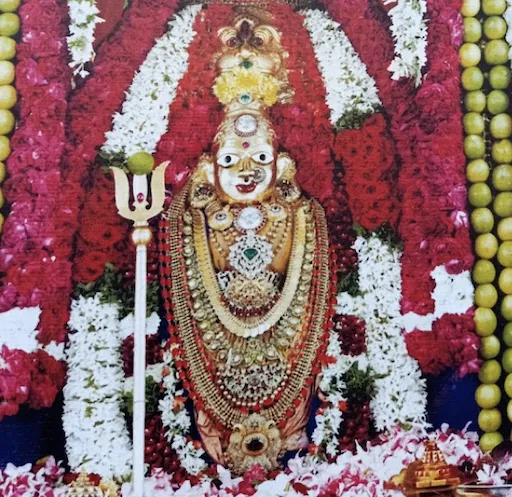
Srisailam sits in a gorge carved by the Krishna river through the Nallamala forest, and the combined presence of the Mallikarjuna Jyotirlinga and the Bhramaramba Shakti Peetha makes this one of the most powerful dual-energy sacred sites in India.
The Bhramaramba Shakti Peetha at Srisailam is where Sati’s navel fell, symbolising creation and life, and the temple sits above the Krishna river in a forest setting that amplifies its sacred energy with natural power.
The navel as the site of this peetha carries particular significance. The navel is the place of connection, the point where life entered each of us from another life. The goddess worshipped here as Bhramaramba, the goddess of bees, carries the energy of community, of interdependence, of the collective intelligence that keeps life going.
The forest road to Srisailam through the Nallamala hills is one of the most beautiful drives in South India. Do it in the morning light.
How to reach: Drive from Hyderabad, approximately 230 kilometres, or from Kurnool, approximately 160 kilometres. Forest roads require a vehicle that handles mountain terrain confidently.
Kanyakumari, Tamil Nadu
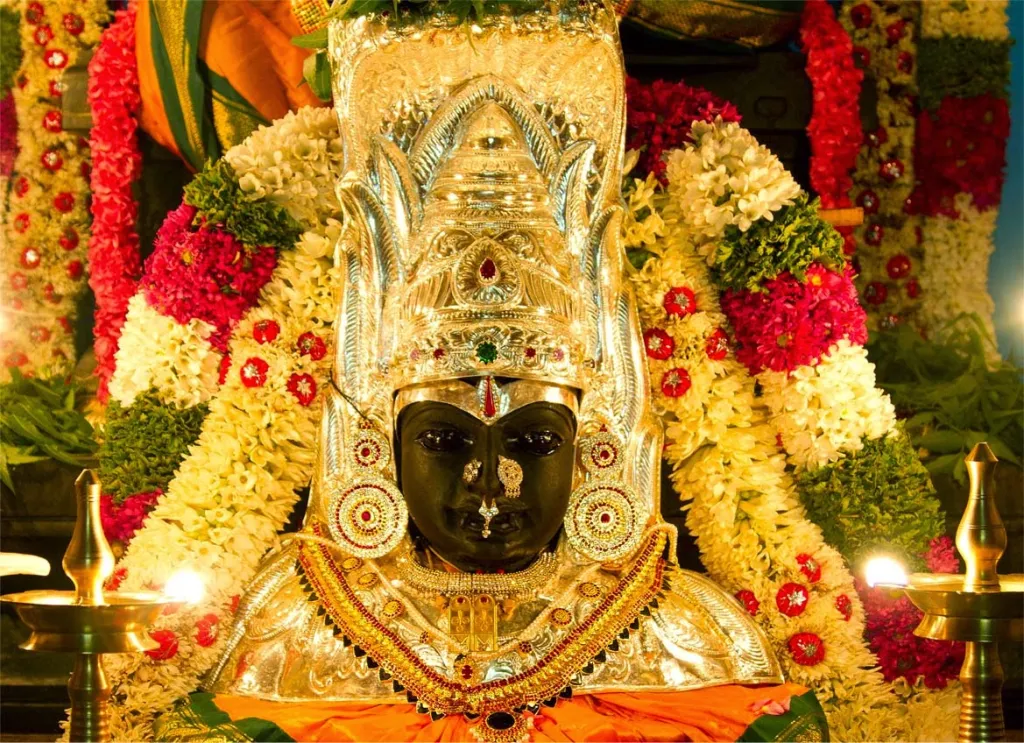
The southernmost tip of India where three seas meet is a Shakti site of immense power regardless of which tradition you approach it from.
Kanyakumari Bhagavathy Amman is worshipped here as the virgin goddess who stands at the confluence of the Arabian Sea, the Bay of Bengal, and the Indian Ocean, her power expressed in the absolute steadiness of one who waits without diminishing.
The goddess here is a young woman, unmarried, complete in herself, holding her power without needing it to be witnessed or validated by anyone. For Indian women who have been told that completeness requires a husband, that independence is a waiting room for marriage, Kanyakumari’s specific energy is quietly, directly subversive.
The sunrise at the Kanyakumari confluence is among the most extraordinary natural experiences in India. The three seas change colour simultaneously as the light arrives. Stand in the water if you can. Let all three touch you at once.
How to reach: Fly to Trivandrum, 90 kilometres away. Or take the train directly to Kanyakumari station which is well connected to Chennai, Mumbai, and Delhi on long distance routes.
The Hidden and Less Visited Peethas Worth Seeking
Tripurasundari Temple, Udaipur, Tripura
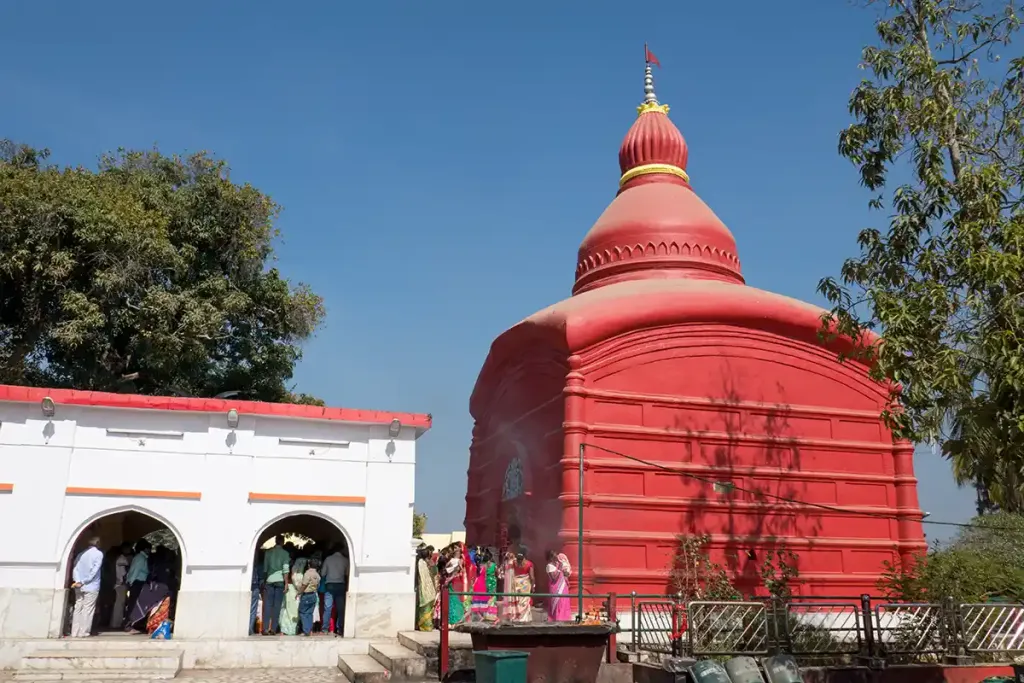
Not to be confused with Udaipur in Rajasthan. This Udaipur is the former capital of the princely state of Tripura in the Northeast, and the Tripurasundari temple here is one of the 51 Shakti Peethas and one of the most overlooked.
The Tripurasundari temple is one of the holiest shrines in Eastern India, marking the spot where Sati’s right foot fell, with the temple shaped like a square in the typical Bengali hut style, blending devotion and cultural heritage in a way that draws pilgrims from across the region.
Tripura is under-visited by Indian travellers who have not discovered that the Northeast rewards the curious woman traveller with a generosity and a beauty that more trampled destinations cannot offer. The Tripurasundari temple is reason enough to come.
How to reach: Fly to Agartala and drive approximately 55 kilometres to Udaipur town.
Nartiang Shakti Peetha, Meghalaya
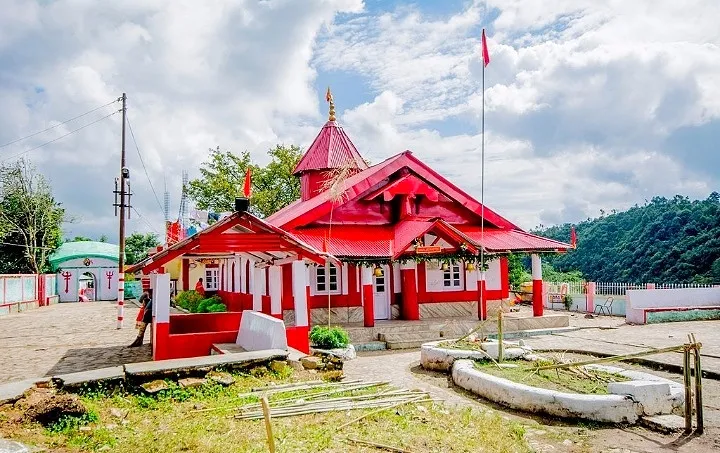
The Nartiang Shakti Peetha in Meghalaya’s hills is believed to be the place where Sati’s left thigh fell, and the temple of Devi Jayanti blends local Khasi traditions with Shakta worship in a combination that is unique in the entire pilgrimage circuit.
Meghalaya is a matrilineal society. The Khasi and Jaintia communities pass property and family name through the mother’s line. A Shakti Peetha in a matrilineal society creates a confluence of feminine sacred energy that is felt differently here than anywhere else in India.
The landscape around Nartiang, the living root bridges, the clouds that move at eye level, the particular green of Meghalaya forests, makes this one of the most atmospherically extraordinary Shakti Peetha pilgrimages in the country.
How to reach: Drive from Shillong, approximately 65 kilometres on mountain roads that are beautiful and require patience.
Manikarnika Shakti Peetha, Varanasi, Uttar Pradesh
Separate from Vishalakshi, this Shakti Peetha sits at the Manikarnika Ghat, the burning ghat of Varanasi where cremations happen continuously, day and night, without pause.
Manikarnika is where Sati’s ear ornament fell, and the ghat named for it has been a site of continuous cremation for thousands of years, understood as a place where the cycle of life and death is most directly and most honestly present.
Visiting Manikarnika is not comfortable. It is not supposed to be. You watch the fires. You watch the families. You watch the smoke rising from the oldest city on earth. And something in you that has been avoiding the fact of impermanence is forced into a conversation it can no longer postpone.
Indian women carry so much in their bodies. Grief that was never given space. Loss that was managed quietly so others could be supported. Fear of death that was never allowed to be spoken aloud.
Manikarnika holds all of it without flinching.
How to Do a Shakti Peetha Yatra as a Woman
A complete circuit of all 51 Peethas is a lifetime aspiration for dedicated pilgrims. But you do not need to do them all or do them in sequence. Many women choose a Peetha based on what they are carrying at a specific moment in their lives.
Fertility, creation, new beginnings: begin at Kamakhya.
Speaking truth, finding voice: go to Jwalamukhi.
Grief, loss, the need to release: Manikarnika or Kalighat.
Strength, protection, the courage to stand in your own life: Chamundeshwari or Kanyakumari.
Wisdom, clarity, decisions that need to be made: Vishalakshi in Varanasi.
Love, marriage, family, the softer forms of feminine power: Kamakshi in Kanchipuram.
This is not superstition. This is a map. A 5,000-year-old map of the specific forms that feminine divine energy takes and the specific places on this earth where each form is most concentrated.
The women who built this map knew something about the interior lives of women that has not been improved upon by any subsequent system.
Use the map.
✦ Real Shee Power Travel Genie
October Navratri is the most spiritually charged time to visit any Shakti Peetha but the crowds at major temples like Kamakhya and Vaishno Devi can be overwhelming for solo women. If Navratri energy matters to you, arrive three days before the festival begins when the temple is being prepared and the atmosphere is reverent and unhurried. For smaller and less visited Peethas like Nartiang in Meghalaya or Tara Tarini in Odisha, any month between November and February is ideal. Always carry red flowers and sindoor as basic offerings. Do not carry leather items into temple sanctums as most Shakti Peethas request this. At Kamakhya specifically, if you visit during Ambubachi Mela in June, understand that the temple closes for three days as the goddess menstruates and opens with extraordinary energy on the fourth day. The prasad given on that day is considered among the most powerful blessings available at any temple in India. And the one thing no pilgrimage guide tells you: sit in the temple courtyard after your darshan for at least twenty minutes before you leave. The first five minutes after seeing the goddess are not for photographs or phone calls. They are for receiving what you came for. Be still enough to let it arrive.
Real Shee Power — World’s Best Women Empowerment Portal
A Final Word at the Feet of the Goddess
The story of the Shakti Peethas begins with a woman who was not invited to a room that should have included her. Who went anyway. Who was humiliated for her choices. Who could not survive the particular cruelty of being unmade by someone who was supposed to love her.
And from her body, distributed across the earth in grief and in love, came 51 places where the divine feminine is not an afterthought or a consort or a supporting character.
She is the entire point.
For Indian women navigating a world that still, in countless quiet ways, does not invite them to rooms they should belong in, who go anyway, who sometimes cannot hold the weight of that particular cruelty, and who are looking for proof that their grief and their power and their wholeness are not small things but sacred ones, these 51 places exist.
They have always existed.
They were made for you.
Go.
Real Shee Power. Because the goddess has been waiting at every Peetha for exactly this woman to arrive.
✦ The Real Shee Power Sacred India Series