The Mystical Lakes of the Himalayas Locals Fear After Dark: What Lives in the Water When the Sun Goes Down
There is a specific instruction that every local guide in the Himalayas gives at a certain point in the day.
Not about altitude. Not about weather. Not about the trail.
It comes quietly, almost as an afterthought, as the sun begins dropping toward the ridge line. Come back before dark. Do not stay at the lake after sunset. And then they change the subject before you can ask why.
You notice that they do not go themselves after that hour.
You notice that the instruction is not delivered with the casual authority of someone managing tourist safety. It is delivered with the particular tone of someone who genuinely means it. Someone whose grandmother told them the same thing. Whose grandmother’s grandmother told her. Someone who does not need to explain because the explanation is already inside them, inherited and absolute.
The Himalayan lakes are among the most beautiful places on earth. They are also, in the understanding of every community that has lived beside them for generations, among the most inhabited. Not by wildlife. Not by weather. By something older than either that has no name in English and several names in the languages of the mountains and that every local person treats with a respect so ingrained it has become indistinguishable from instinct.
This is their story. And it is also, if you read it carefully, an invitation.
Not to be reckless. To be awake. To travel these lakes the way they deserve to be travelled. With open eyes, a respectful heart, and the wisdom to come back before dark.
Roopkund: The Lake That Kept Its Secret for a Thousand Years
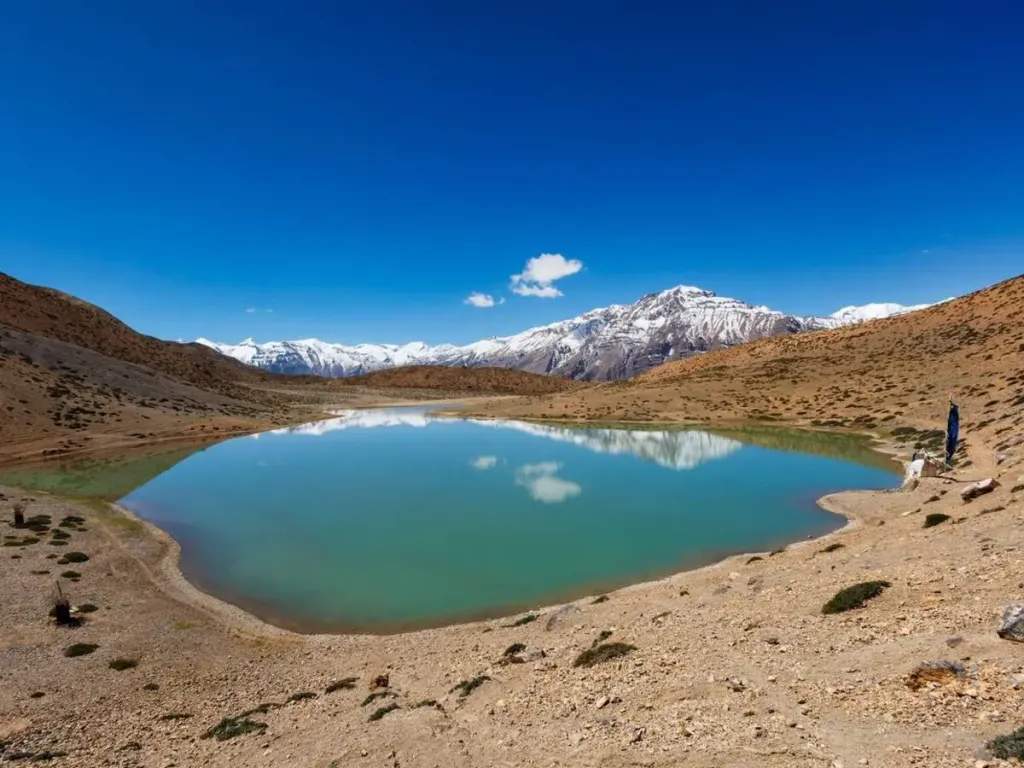
For centuries, locals dared not go near Roopkund. They believed the lake was cursed, or worse, watched. Even today, elders from nearby villages like Wan and Bedni approach the lake in silence, whispering prayers before looking into its icy face.
Roopkund sits at 5,029 metres in the Chamoli district of Uttarakhand. It is called the Skeleton Lake. Not as a metaphor. At certain times of year when the snow retreats, the lake reveals its secret. Hundreds of human skeletons visible in and around the water, preserved by the cold and the altitude for over a thousand years.
Roopkund is one of the most mysterious famous Himalayan lakes in India, linked to an ancient pilgrimage tragedy that local communities have carried in their oral memory for generations.
The legend tells of a king from Kannauj named Jasdhaval who wished to honour Goddess Nanda Devi by joining her sacred pilgrimage. But the king was proud and indulgent. Instead of walking with humility and prayer he brought dancers, musicians, soldiers, and luxuries, treating the pilgrimage like a royal parade. His wife Queen Rani Balampa was pregnant and still chose to walk. The entire entourage moved through sacred forests, disturbed temples with laughter, and ignored local warnings. At Roopkund, where offerings should be quiet and hearts should be bowed, the king’s men played music, drank, and danced.
That was the moment the locals say when the Goddess turned her gaze toward them. Without warning the sky darkened. Thunder cracked the valley. The winds rose. And then came the hail, not ordinary ice pellets but divine weapons the size of cricket balls falling with fury. None were spared. The queen cried to the goddess but her plea was unanswered. They were punished not with fire but with cold silence. And there they lay, their bodies frozen by the snow, their sins preserved under the ice.
Modern science confirmed what the legend always claimed. Radiocarbon dating and DNA analysis revealed that the remains date back to as early as 850 CE, making the mystery deeper rather than simpler. The bones are real. The lake kept them. For over a thousand years it kept them, releasing them just enough each summer to remind anyone who comes that it remembers what happened here and that the Goddess does too.
The bones you see are not horror. They are reminders of a divine balance that should not be broken. Those who walk with pure intent are protected. Those who carry pride, their destruction is certain.
Local communities do not approach Roopkund casually. The villages of Wan and Bedni below treat the lake as the domain of Nanda Devi and approach it accordingly. After dark, nobody from these villages goes near the water. The instruction has been in place for a thousand years and the lake has given nobody reason to question it.
How to reach: The Roopkund trek begins from Lohajung in Uttarakhand. It is an 8 day trek requiring good physical fitness and proper acclimatisation. Best attempted between May and June and September and October. Do not attempt solo. Go with an experienced local guide and follow every instruction they give about timing and conduct at the lake.
Chandra Taal: The Moon Lake That Belongs to Something Else After Dark
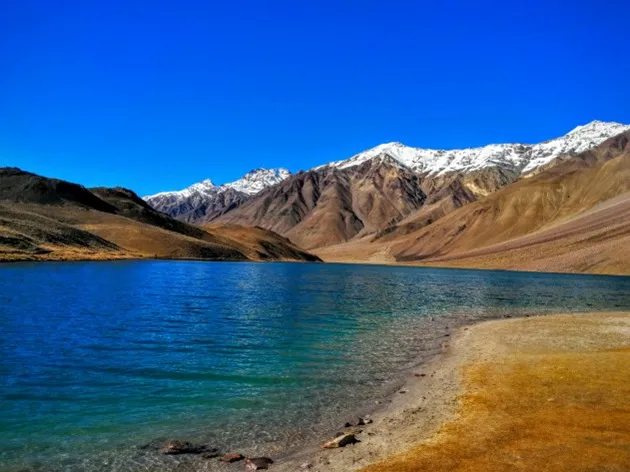
Surrounded by the barren mountains high in the Spiti Valley, Chandra Taal Lake has always been more of a legend than just another destination. Its moon-shaped curve, changing colours, and distant location have given rise to myths that have been passed down for generations by locals, shepherds, and travellers. Some people believe that the lake is protected by spirits. Some think it was a place where gods used to meet. And others fear that this is a place that should not be visited after the sun goes down.
Chandra Taal sits at 4,300 metres in the Lahaul and Spiti district of Himachal Pradesh and changes colour across a single day in ways that photographers travel vast distances to witness. Turquoise in the morning. Deep blue by noon. Green at the edges. And then, as the light dies, something darker and less categorisable.
The locals believe that Chandra Taal Lake is blessed and that fairies visit it at night. One such story involves a shepherd from a nearby village named Hansa who came to the lake to graze his cattle.
Local stories tell of a shepherd who once visited the lake while grazing his livestock and met a mermaid. The two fell in love, but the shepherd was already married and hid this truth from her. Finding out about the marriage, the mermaid disappeared, and locals say her spirit still wanders around the lake in search of love.
A Spitian folklore about Chandratal says that the lake is taken care of by a mermaid who often appears and steals stuff from unmarried men.
There is also the Mahabharata connection. According to local belief, Yudhishthira attained heaven near the lake when Lord Indra came to take his soul in his chariot of fire. Another legend suggests that divine chariots once crossed the region and the marks they left shaped the landscape around the lake.
It is believed by many that Chandra Taal is bottomless because its centre appears very dark and deep. Local shepherds who have grazed these high pastures across generations will tell you without drama or performance that they do not camp beside the lake itself. They camp at a distance. They do not go to the water after dark. They do not look directly at the lake for too long at dusk.
And then they will offer you chai and talk about something else because in the mountain communities the unspeakable is acknowledged and then set aside rather than dwelt upon. It is a kind of wisdom that valley people have largely lost.
Chandra Taal has also been associated with UFO sightings. On September 27, 2004 a team of three ISRO scientists and two geologists camping at 17,000 feet reported seeing a white object moving across an adjacent mountain ridge in a way that none of them could explain using any framework available to them.
Whether you believe in mermaids or divine chariots or UFOs or none of the above, the instruction stands and it is unanimous across every community that has ever lived near this lake. Do not stay at Chandra Taal after dark. This is not tourist management. It is a thousand years of accumulated local knowledge and it deserves to be treated as such.
How to reach: Drive from Manali via the Rohtang Pass to Batal and then trek approximately 14 kilometres to the lake. Road access opens around June when the Rohtang Pass clears and closes in October or November with the first snowfall. Camp at designated sites away from the lake shore.
Nainital Lake: Where the Goddess’s Eye Watches
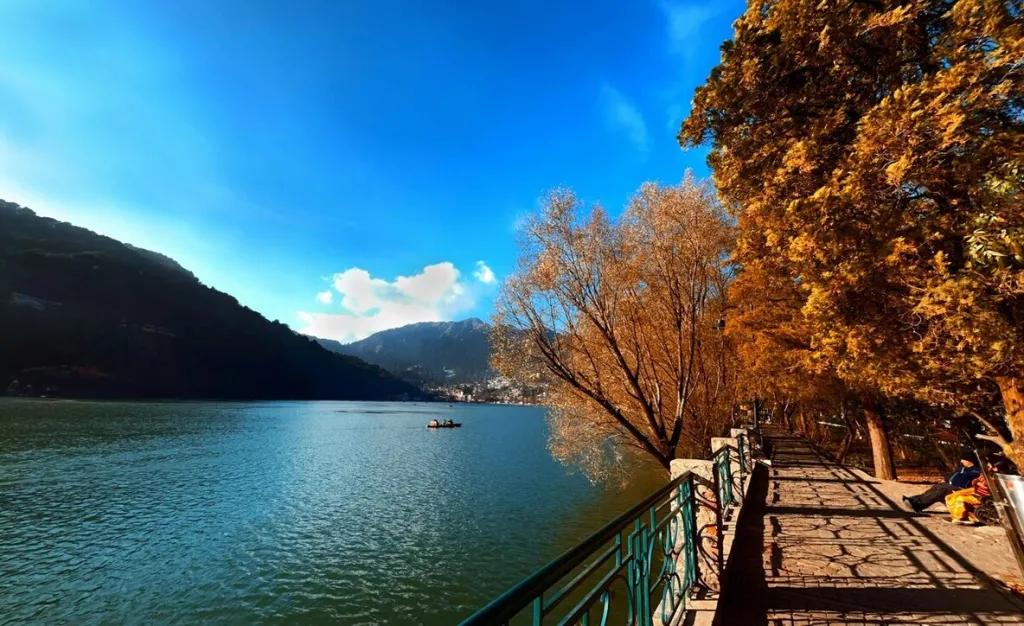
Nainital Lake is steeped in mythological significance. Legend has it that the lake originated from the eyes of the Hindu goddess Sati. This lore adds a mystical charm to its already tranquil ambiance.
Nainital is the most accessible lake in this article and the most underestimated spiritually. The tourist infrastructure around it, the boats, the Mall Road, the hotels, has buried something that the older residents of the town still carry quietly in their understanding of this water.
The Naini Devi temple sits at the northern end of the lake on the spot where, according to local tradition, Sati’s eye fell when her body was being carried by Shiva across the earth. This is a Shakti Peetha. The lake is not a scenic amenity beside the temple. The lake is the goddess. The eye of Sati, open and watching, set into the mountains of Kumaon.
The older Kumaoni families of Nainital observe specific prohibitions around the lake at certain times. There are days when the lake is not to be disturbed with boats. There are hours when the ghat below the temple is treated with the same quietness that a temple sanctum demands. These practices have thinned as the town has grown into a hill station but they have not disappeared. Seek out the older temple priests and the older families and they will tell you what the lake was before the boats arrived.
At night, even now, there is a quality to the Nainital lake that is different from the daytime. The water is very still. The reflection of the mountains in it is very precise. And the town around it, however noisy by day, goes quiet in a particular way after midnight that the locals have always understood as the lake requiring its own silence at its own hour.
How to reach: Nainital is well connected by road from Kathgodam railway station, approximately 35 kilometres. Kathgodam is connected to Delhi and other major cities by overnight trains. Direct buses from Delhi are available.
Bhrigu Lake: The Sage Who Never Left
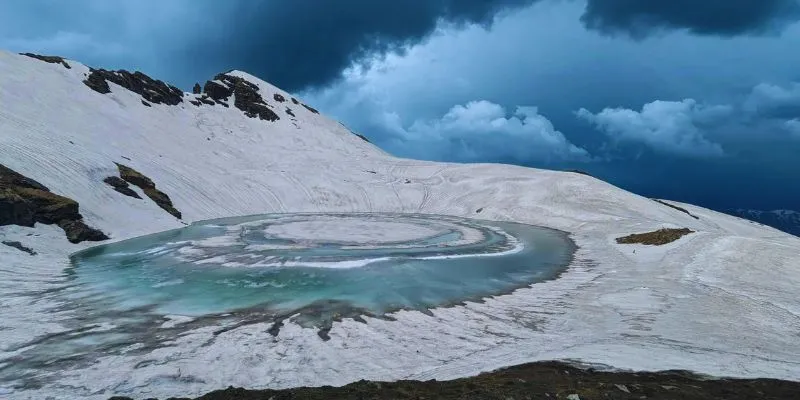
Bhrigu Lake in Himachal Pradesh sits at 4,250 metres and is steeped in mythology and spirituality, believed to possess healing properties and to be the meditation site of the sage Bhrigu who composed parts of the Rigveda at its shores.
The sage Bhrigu is said to have meditated beside this lake for years. Not in the mythological past only. In the living understanding of the communities around Kullu and Manali, Bhrigu never entirely left. His presence is understood to remain at the lake the way a long-held intention remains in a room where someone has prayed for decades.
The trek to Bhrigu Lake from Gulaba near Manali crosses high altitude meadows that in July and August are covered with wildflowers in a density and variety that feels almost designed. The lake itself sits in a natural bowl surrounded by peaks and the silence at the lake is the kind that has accumulated rather than simply existed. The silence of a place where someone has been thinking deeply for a very long time.
Local guides in the Kullu valley who take trekkers to Bhrigu Lake will tell you that the lake is best visited in the first hours of morning. That the quality of the place changes as the day progresses. That there is a window, very early, when the water and the light and the silence combine into something that the guides describe differently each time but that every person who has experienced it describes as the same.
Do not push the timing. Do not stay past the hour when your guide begins to gather his things. There is a reason the sage meditated here at specific hours and there is a reason the locals have tracked those hours across generations.
How to reach: Drive from Manali to Gulaba, approximately 22 kilometres. The trek from Gulaba to Bhrigu Lake is approximately 6 kilometres and takes 3 to 4 hours depending on pace and altitude adjustment.
Tsomgo Lake, Sikkim: Where the Lamas Read the Future
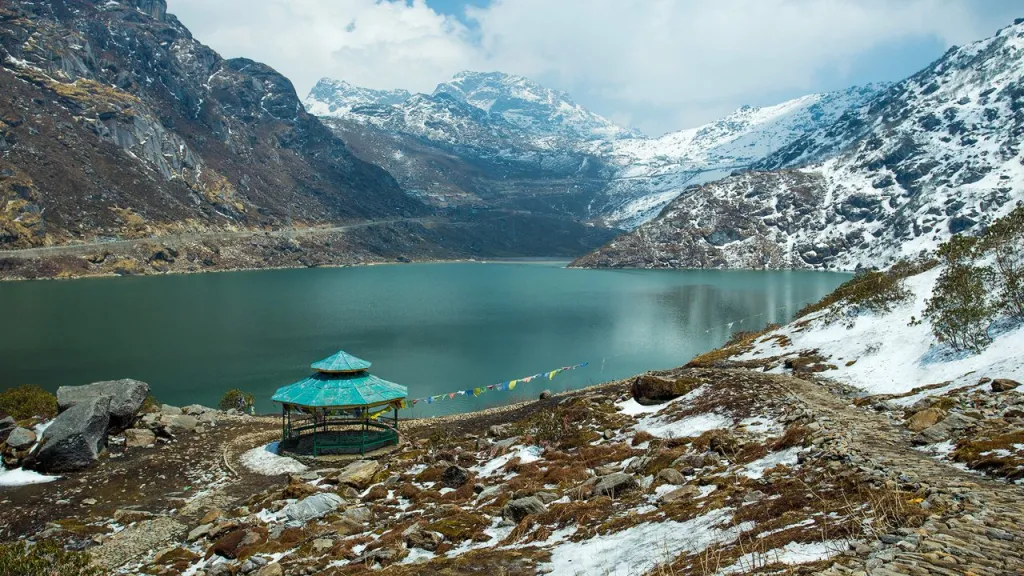
Tsomgo Lake lies at an altitude of around 12,313 feet, only 40 kilometres from Gangtok in Sikkim. Local folklore infuses Changu Lake with mystical aura. It is said to be the abode of protective deities and Sikkimese Buddhists and Hindus alike revere it as sacred, regularly visiting for rituals and faith healing. In ancient times Buddhist Lamas would read the lake’s shifting hues to prophesy fortunes.
The Lamas read the lake. Not books. Not stars. The lake itself. Its colour in the morning predicted what kind of day the valley would have. Its behaviour at certain seasons indicated whether the year would be generous or difficult. The water was a text and the Lamas were its readers.
This is not a discontinued practice belonging only to history. The older monastic communities in Sikkim still understand the lake as a living indicator of something beyond weather. The relationship between the water and the divine is maintained through observation, through presence, through the accumulated watching of generations that has produced a literacy in the lake’s moods that no tourist guide can provide.
Tsomgo is frozen in winter and open in summer, and the transformation between its winter and summer states is treated by the local community as a seasonal sacred event rather than simply a meteorological one. When the ice breaks in spring the lake is waking. That waking is an occasion that the older Sikkimese families mark with specific rituals whose details are not shared widely because not everything that is real needs to be shared with everyone.
After dark at Tsomgo, the local communities do not linger. The lake belongs to the deities it houses and the deities are understood to require their privacy at certain hours. This is not fear in the horror film sense. It is courtesy in the oldest and most serious sense.
How to reach: Tsomgo is 40 kilometres from Gangtok on a well-maintained mountain road. Permits are required for Indian nationals, obtainable from Gangtok. Foreign nationals require additional permits obtained through registered travel agents. Day trips from Gangtok are standard.
Dodital: Where Ganesha Was Born
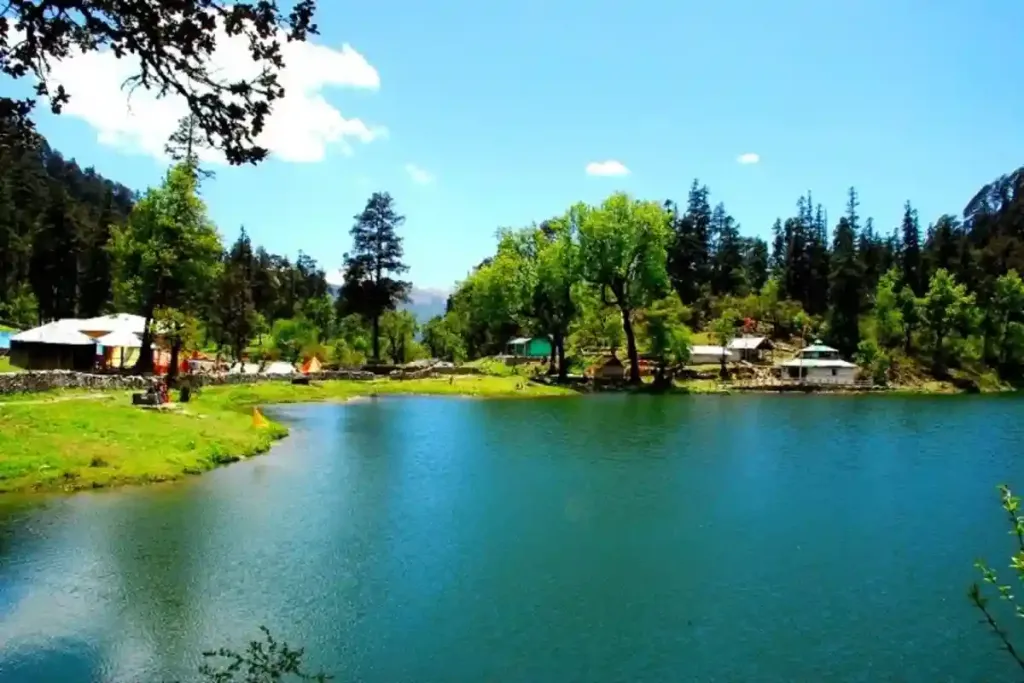
Dodital is a serene and lesser-crowded lake in Uttarakhand believed to be the birthplace of Lord Ganesha, making it one of the most spiritually significant yet under-visited sacred lakes in the Indian Himalayas.
Dodital sits at 3,310 metres in the Uttarkashi district and is reached by a two day trek through dense oak and rhododendron forest from Sangamchatti. The forest on the approach is one of the finest remaining mixed mountain forests in Garhwal. The birds here include the Himalayan monal pheasant in numbers rarely seen elsewhere, and the forest streams are stocked with golden mahseer, the sacred fish that the local communities do not permit to be fished from this water.
The sacred fish are not a conservation measure. They are the lake’s own. They belong to the deity and the deity’s domain includes the water and everything in it. This distinction between a conservation policy and a sacred relationship is one that mountain communities understand very precisely and that the rest of us are still working out in the language of ecology.
The belief that Ganesha was born at this lake gives it a specific energy in the understanding of the communities that hold this tradition. Beginnings. New things. The clearing of obstacles. Dodital is visited by people at crossroads in their lives with a specific frequency that the local priest, who has served the small lakeside temple for decades, will confirm without drama. They come when something needs to start or when something needs to end. They sit at the lake. They go back with more clarity than they arrived with.
After dark at Dodital, the forest closes around the lake in a way that the daytime does not prepare you for. The sounds change. The silence between sounds changes. The fish move differently in the water when the light goes. And the local communities who have been sleeping beside this lake across generations know without needing to articulate why that certain hours belong to the lake itself and not to its visitors.
How to reach: Drive from Uttarkashi to Sangamchatti, approximately 24 kilometres. The trek from Sangamchatti to Dodital is approximately 22 kilometres and is typically done across two days with a night at Agoda village en route.
What the Lakes Are Actually Saying
Every lake in this article has a version of the same instruction attached to it.
Come if you must. Come with respect. Come with clean intentions. And leave before dark.
The specific reasons differ across traditions. Fairies at Chandrataal. The Goddess at Nainital. The bones of the proud at Roopkund. The sage at Bhrigu. The deities at Tsomgo. The sacred birth at Dodital. The names and the stories are different. The fundamental understanding is the same.
These bodies of water are not passive. They are not scenery. They are inhabited by presences that predate every human settlement around them and that have their own relationship with time, with light, with the hours of day and night, that human presence is obligated to respect rather than override.
This understanding is not primitive. It is not superstition dressed up in narrative clothing. It is the accumulated observation of communities who have lived in close relationship with specific bodies of water across hundreds of generations and whose knowledge of those waters is therefore infinitely deeper and more specific than anything a visiting trekker or travel writer can bring.
The modern world has a word for the practice of ignoring this kind of knowledge. It is called progress. And the lakes that have watched human beings practice it across the centuries are entirely unmoved by the term.
For women planning their first solo journey into these mountain destinations, our complete guide to India’s safest hidden destinations covers everything you need to travel these places with confidence.
For the Woman Who Travels to Feel Something Real
There is a specific kind of woman who will be drawn to these lakes.
She is not coming for the Instagram photograph, though the photographs will be extraordinary. She is not coming to tick a destination off a list. She is coming because something in her knows that these are places where the membrane between the ordinary world and something larger is thinner than usual. Where the questions she carries in her ordinary life, about who she is and what she wants and what is worth fighting for, might find a quality of silence large enough to actually hear the answers in.
These lakes offer that. Each in its own language. Each with its own particular quality of presence and stillness and age.
Come to them in that spirit. Come early in the morning when the light is arriving and the water is at its most receptive. Sit beside them without an agenda. Bring your questions but do not demand answers. Let the lake set the pace. It has been here considerably longer than the questions.
And leave before dark.
Not because something bad will happen to you if you stay. But because some spaces deserve their privacy at certain hours. And the women who have always understood this, the village women who have lived beside these waters for generations, who bring offerings and whisper prayers and leave without taking photographs, have been doing something right that the rest of us are still learning.
The lakes will be here when you come back.
They have always been here.
✦ Real Shee Power Travel Genie
Never visit a high altitude Himalayan lake without spending at least one full day acclimatising at a lower altitude first. The beauty of these lakes is real and it will still be there after you have given your body the time it needs to adjust. Always hire a local guide rather than trekking to remote lakes alone and listen carefully when they give you instructions about timing and conduct at the water because those instructions come from knowledge far older than any trekking manual. The best hour at every lake in this article is the first hour after sunrise before other visitors arrive and before the wind picks up across the water. That hour is worth every early alarm and every cold morning. Pack a small offering of flowers or rice if you are comfortable with the gesture. Not for any specific ritual. Simply as an acknowledgement that you are a guest in a place that has been sacred to someone for a very long time. And the one instruction that every local guide at every lake in this article will give you in their own words: leave before the light goes. They mean it. So do the lakes.
Real Shee Power — World’s Best Women Empowerment Portal
Real Shee Power. Because the most sacred places in India are not temples. Sometimes they are lakes. And sometimes they are watching back.