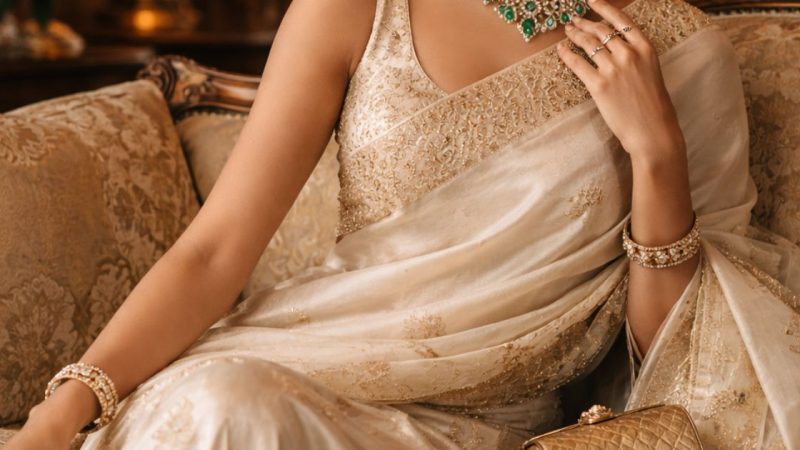
The day a saree walked into Paris and did not ask for permission
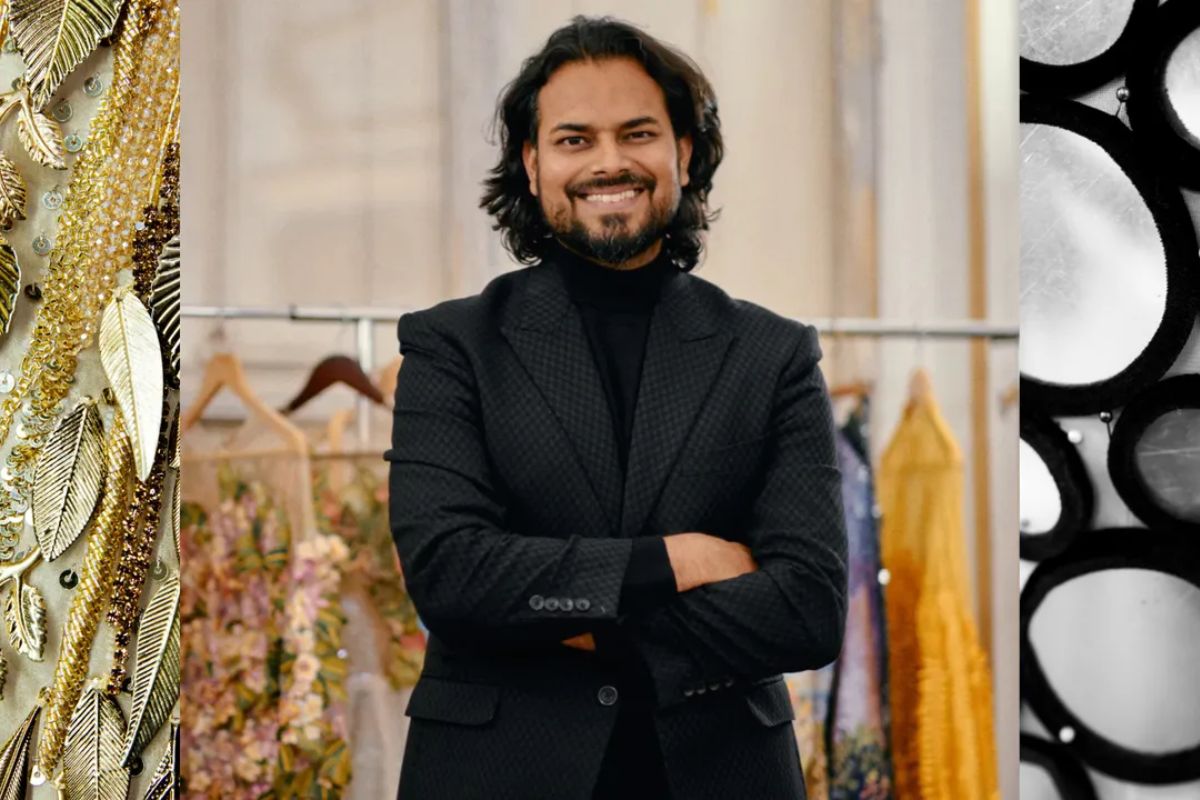
There is a particular image that returns again and again in conversations about Rahul Mishra.
A runway in Paris.
Lights controlled, audience measured, the kind of room where fashion is not just shown but judged.
And then, garments that do not behave like the room expects them to.
They carry hand embroidery that looks almost excessive by global standards. Motifs that come from forests, villages, memory. Threads that do not hide the fact that they were placed by hand, slowly, deliberately.
Nothing about it asks to blend in.


Before Paris, there was a different kind of learning
Rahul Mishra’s journey did not begin with couture in the traditional sense. He studied at National Institute of Fashion Technology and later at Istituto Marangoni. What shaped his work early on was not just design training, but exposure to how fashion operates across contexts.
In India, craft is abundant but often undervalued.
In Europe, craftsmanship is positioned as luxury.
That contrast matters.
Because it changes how a designer decides to present what already exists.
The decision that defined everything
There is a simpler path that many designers take when entering global fashion spaces. Reduce complexity. Simplify references. Translate local aesthetics into something more universally digestible.
Rahul Mishra did not choose that path.
He leaned further into Indian craft.
Not as a decorative element, but as the core of his work.
This meant working extensively with artisans, particularly embroiderers, whose techniques are time intensive and difficult to scale. Instead of moving away from that limitation, he built his design language around it.
When craft became couture


His collections often draw from nature. Not in a symbolic way, but in a detailed, almost obsessive manner.
Flowers are not printed.
They are constructed thread by thread.
Landscapes are not suggested.
They are built through layers of embroidery.
This level of detail requires time that fast fashion cannot afford.
But couture can.
And that is where his work found its place.
In 2020, Rahul Mishra became the first Indian designer to showcase at Paris Haute Couture Week. This is not a symbolic milestone. Couture, by definition, values craftsmanship at its highest level. His presence there was not about representation alone. It was about recognition of process.
The invisible workforce becomes visible


Every Rahul Mishra garment carries hours of manual work. Behind it are artisans whose contributions often remain unnamed in mainstream fashion narratives.
What his work does, intentionally or otherwise, is shift attention.
The embroidery is not subtle background detail.
It is the garment.
You cannot look at it without acknowledging the labor behind it.
This changes the relationship between wearer and clothing. It introduces awareness of time, effort, and human involvement.
A different idea of luxury enters the room
In many global contexts, luxury has historically been associated with exclusivity of material or brand.
Rahul Mishra’s work introduces another layer.
Time.
The idea that a garment is valuable not just because of what it is made of, but because of how long it took to make. This aligns closely with the philosophy of slow fashion, but within the structure of couture.
It is not mass accessible.
But it is conceptually important.
Why it resonates now


The global fashion industry is at a point where questions of sustainability, labor, and authenticity are no longer peripheral.
Consumers are beginning to look beyond surface aesthetics.
Designers who foreground process rather than hide it are gaining attention.
Rahul Mishra’s work fits into this shift because it does not separate beauty from labor.
It connects them.
Final thought
That image of a saree, or something shaped like one, walking into Paris without asking for permission is not just about geography.
It is about confidence.
Confidence in craft.
Confidence in origin.
Confidence in not needing to simplify complexity for acceptance.
Rahul Mishra did not introduce Indian embroidery to the world.
He presented it in a way that made it impossible to overlook.
And once seen at that scale, it becomes difficult to return to a version of fashion where the hand behind the garment remains invisible.