Tsingy de Bemaraha is Madagascar’s Fortress of Needles
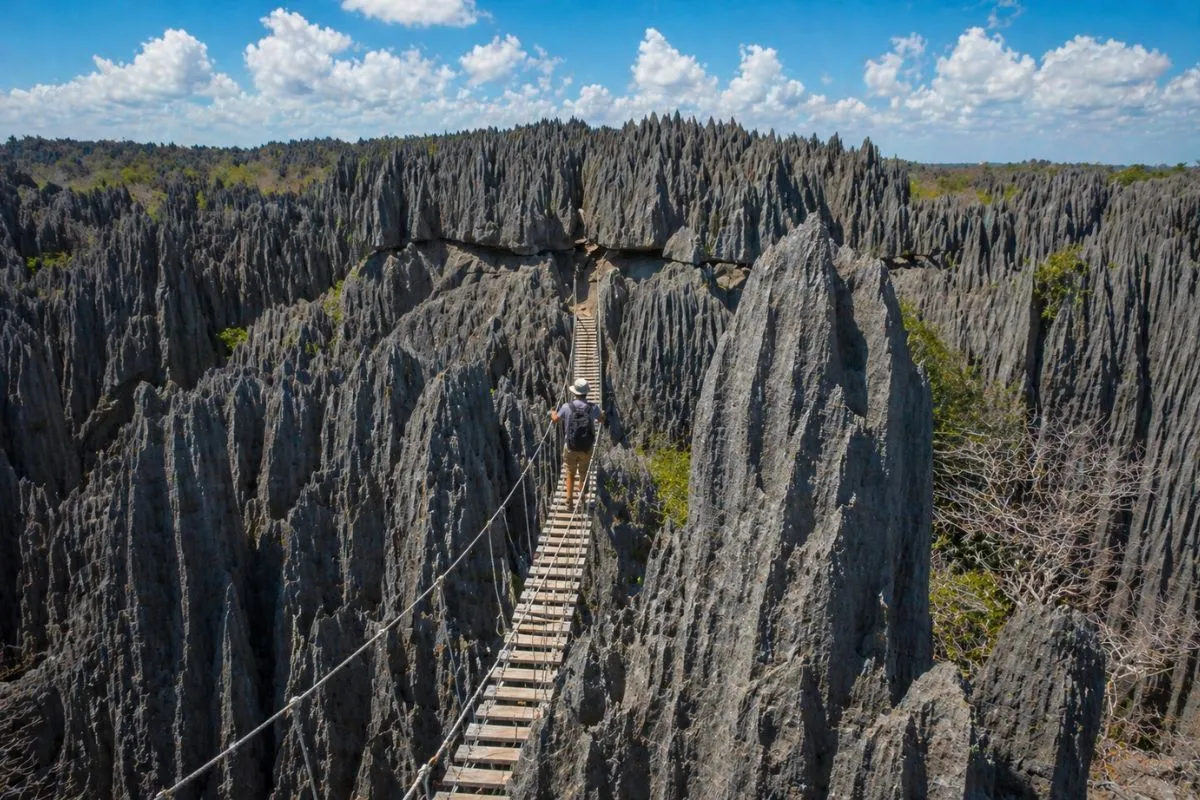
If Socotra is prehistoric and Lençóis Maranhenses is surreal, Tsingy de Bemaraha in Madagascar is architectural. It is a “forest” where the trees are made of razor-sharp limestone needles, some reaching hundreds of feet into the sky.
Located in the remote western wilds of Madagascar, this UNESCO World Heritage site is a geological fortress. The word Tsingy comes from the local Malagasy language, meaning “where one cannot walk barefoot.” It is a landscape designed by nature to be impenetrable, yet for the adventurous soul, it is the most rewarding labyrinth on Earth.
1. A Fortress of Stone
The Tsingy was formed over millions of years as groundwater undercut a vast limestone plateau, creating deep fissures and vertical “shards.” The result is a cathedral of stone—a maze of canyons, hidden caves, and jagged peaks that look like the serrated teeth of a dragon.
- The Great Tsingy: This is the heart of the park. To explore it, you must don a climbing harness and clip into a series of steel cables (via ferrata). You’ll navigate narrow crevices, climb vertical ladders, and cross suspension bridges that dangle over 300-foot drops.
- The Manambolo River: The journey often begins with a slow drift down the Manambolo River in a traditional dugout canoe (pirogue). From the water, you see the limestone walls rise up like ancient city gates, hiding the tombs of the Vazimba (Madagascar’s first inhabitants) in their high-altitude caves.
2. Life in the Vertical Desert
What makes the Tsingy truly “unheard of” is how life has adapted to this hostile environment. Despite the sharp rocks and intense heat, it is a biodiversity hotspot.
- The Ghostly Lemurs: The Decken’s Sifaka—a stark white lemur—is the king of the Tsingy. Watching these “dancing” primates leap effortlessly between razor-sharp stone needles that would shred a human’s hands is one of the most incredible wildlife spectacles in the world.
- Upside-Down Trees: In the valleys between the stone shards, you’ll find stunted baobabs and rare succulents that have evolved to thrive in the pockets of soil trapped within the rocks. It is a vertical garden where every plant has a defense mechanism.
3. Why You Should Go At Least Once
You should go to Tsingy de Bemaraha because it challenges your sense of physical space.
In most beautiful places, you are a spectator. In the Tsingy, you are a participant. You have to squeeze through cracks, balance on ridges, and move with a precision that forces you into a state of total “flow.” It is scenic in a way that feels aggressive and magnificent all at once. It reminds you that nature isn’t always soft—sometimes, it is a masterpiece of sharp edges.
4. Practical Guide for 2026
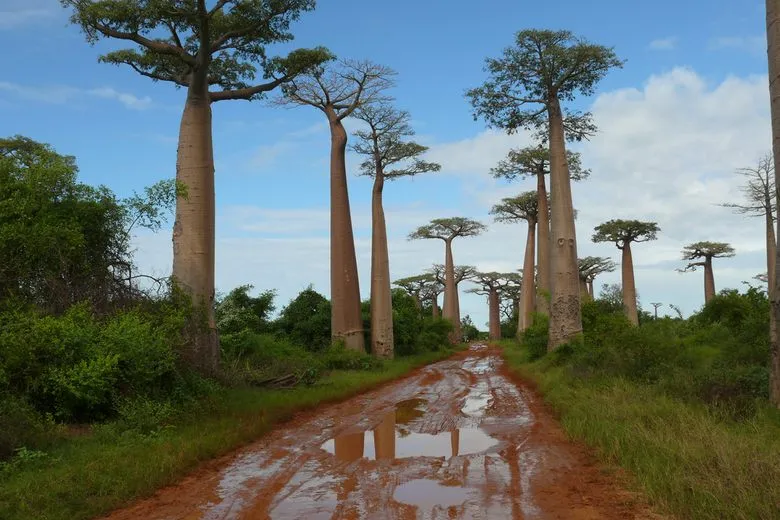
- The Journey: This is the ultimate “slow travel” experience. It takes two days of 4×4 driving from Morondava over rugged dirt tracks and multiple river crossings via manual ferries to reach the park.
- The Season: The park is strictly seasonal. It is only open from April to November. During the rainy season, the roads disappear, and the park becomes a literal island.
- The Add-On: Most travelers combine the Tsingy with a sunset visit to the Avenue of the Baobabs, which is on the way back to Morondava. It is the perfect visual “dessert” after the sharp intensity of the stone forest.
➤ Up Next: The Emerald Heart of the Amazon