Indian Handloom: Where to Buy the Real, the Rare, and the Rooted


Indian handloom is not just fabric it’s memory woven into thread.
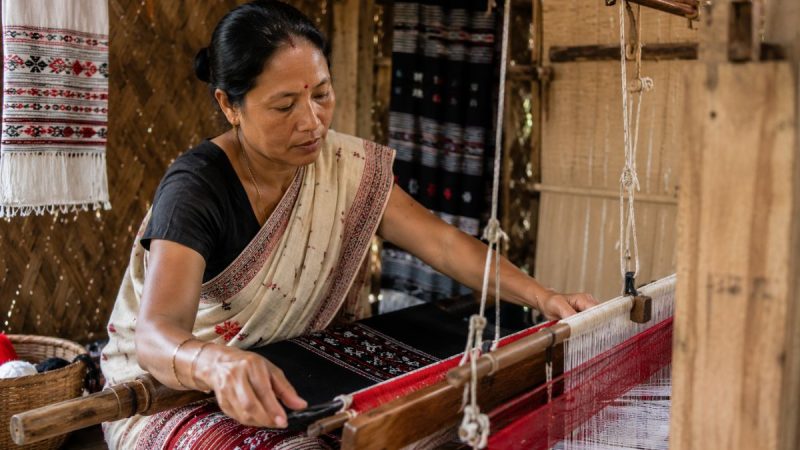
Every saree, every weave carries the imprint of a region, a community, and often an entire family’s livelihood. A single handloom saree can take days, sometimes weeks to complete, crafted entirely without electricity, relying on human rhythm and skill.
But here’s the uncomfortable truth: not everything sold as “handloom” today is authentic.
So if you’re serious about owning real Indian handloom pieces that are true to their local nuance, artistry, and heritage, you need to know where to buy, what to look for, and how to avoid diluted versions.
This is that guide.
What Makes “True” Indian Handloom?
Before buying, understand this:
- Handloom ≠ Handmade-looking
- It must be woven on a manual loom
- Imperfections are not flaws—they’re proof of authenticity
- Designs are region-specific, not mass-replicated
India’s handloom ecosystem supports lakhs of artisans and remains one of the largest cottage industries in the country.
Which means when you buy right, you’re not just shopping.
You’re sustaining culture.
Where to Buy Authentic Indian Handloom (Online & Trusted Platforms)
1. Direct-from-Weaver Platforms (Most Authentic)
If you want purity—buy as close to the source as possible.
- GoSwadeshi
- GiTAGGED
- Gaatha
These platforms work directly with artisan clusters across India, offering:
- Region-specific weaves (Ajrakh, Patola, Maheshwari, etc.)
- Verified craftsmanship
- Transparent sourcing
👉 Particularly, GiTAGGED focuses on GI-tagged products, ensuring geographical authenticity. (GiTAGGED)
Verdict:
If authenticity is your top priority, start here.
2. Curated Handloom Marketplaces (Balanced & Accessible)
- BharatSthali
- iTokri
- Karagiri
These platforms curate handloom collections across India, offering:
- Cotton, silk, linen handlooms
- Contemporary designs with traditional roots
- Wider price range
BharatSthali, for instance, is often described as an “Etsy of India” for handloom lovers. (BharatSthali)
Verdict:
Best for beginners entering the handloom space without compromising too much on authenticity.
3. Legacy & Heritage Retailers
- Kankatala
- Tantuja
These are long-standing institutions with deep roots in Indian textiles.
- Tantuja, backed by the West Bengal government, preserves regional weaves like Tant, Jamdani, and Baluchari.
- Kankatala offers premium handwoven silks like Kanchipuram and Banarasi.
Verdict:
Ideal if you want heritage + reliability.
4. Designer-Led Handloom Revival Brands


These brands have reintroduced handlooms to modern wardrobes by:
- Blending tradition with contemporary design
- Elevating handloom into global fashion conversations
- Supporting artisan clusters sustainably
Designers today are actively turning to handwoven textiles as part of a broader sustainability movement.
Verdict:
Best if you want handloom, but styled for modern, urban wear.
5. Offline: The Real Treasure Lies in India’s Textile Cities


If you want the purest experience, go where the weaves are born:
- Varanasi – Banarasi silk
- Kanchipuram – Kanjeevaram silk
- Kolkata – Tant, Jamdani, Baluchari
- Mysore – Mysore silk
Markets like Gariahat (Kolkata) or weaver clusters in Varanasi offer direct access to authentic craftsmanship.
Verdict:
Nothing beats buying handloom at its source.
How to Identify Real Handloom (Don’t Skip This)
If you remember only one section—make it this.
✔ Look for:
- Handloom Mark / Silk Mark certification
- Slight irregularities in weave
- Soft, breathable texture
- Natural dyes or subtle color variations
❌ Avoid:
- Perfect machine-like symmetry
- Extremely cheap “silk”
- Identical patterns across multiple sarees
The Most Iconic Indian Handlooms to Invest In
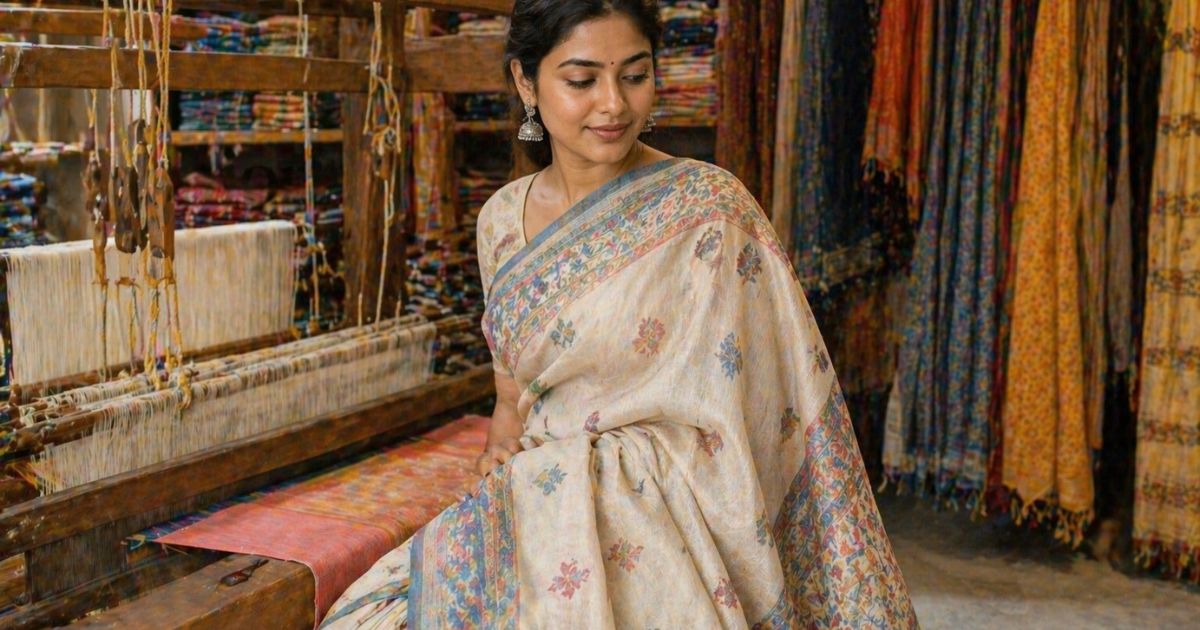
India’s diversity reflects in its weaves. Some timeless ones:
- Banarasi (Uttar Pradesh) – Rich zari, wedding staple
- Kanjeevaram (Tamil Nadu) – Heavy silk, temple motifs
- Chanderi (Madhya Pradesh) – Lightweight elegance
- Pochampally Ikat (Telangana) – Geometric brilliance
- Patola (Gujarat) – Complex double ikat
Each region carries its own visual language and once you understand it, you’ll never confuse them again.
Final Thought: Don’t Just Buy—Understand
Buying Indian handloom is not a transaction.
It’s participation.
It’s choosing:
- Slow over fast
- Craft over convenience
- Identity over imitation
In a world flooded with machine-made sameness, handloom remains beautifully human—slightly imperfect, deeply meaningful, and impossible to replicate.
And if you buy it right, you don’t just wear it.
You carry a story.