Meet Jacinta Kerketta: The Fearless Poet Giving Voice to Resistance and Hope

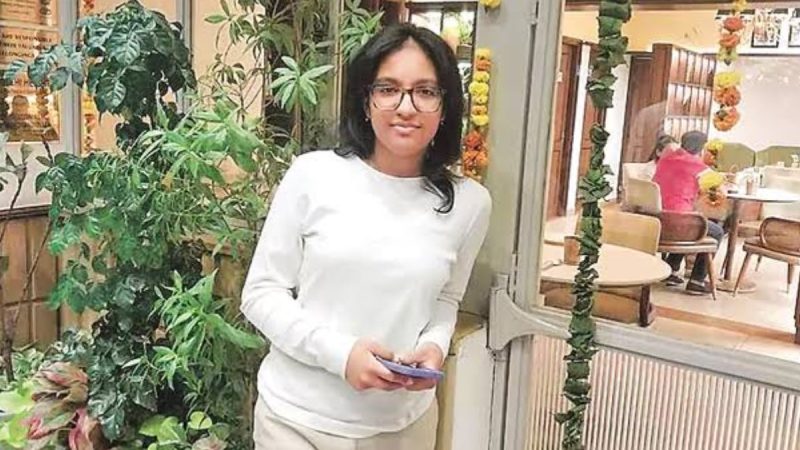
In the heart of Jharkhand’s West Singhbhum district, where the Koel River flows and the Saranda forest stands as Asia’s largest Sal forest, Jacinta Kerketta was born on August 3, 1983. A poet, journalist, and activist from the Oraon Adivasi community, Jacinta has emerged as a powerful voice for India’s Indigenous peoples, amplifying their struggles, resilience, and cultural heritage through her evocative poetry and fearless journalism. Her journey—from a village girl witnessing systemic injustices to a globally recognized literary figure named among Forbes India’s Top 20 Self-Made Women in 2022—is a testament to her courage, conviction, and commitment to social justice.
Table of Contents
Roots in Khudposh: A Childhood Shaped by Community and Struggle
Jacinta’s story begins in Khudposh, a village nestled near the Jharkhand-Odisha border, where the Oraon Adivasi community’s way of life is deeply intertwined with nature. Born to Pushpa Anima Kerketta and Jay Prakash Kerketta, a marathon athlete who joined the police department, Jacinta grew up in a close-knit community that she describes as “family.” Her early years were marked by movement, as her father’s job took the family across Jharkhand’s Santhal Pargana and Bihar’s West Champaran.
It was in Betiya, Bihar, at a missionary boarding school, that Jacinta first encountered the sting of caste supremacy and societal prejudice against Adivasis. “Back at home, the entire community, village, and settlement was my family,” she recalls. “When I went outside to study, I began living with children of different castes in boarding, and experienced caste supremacy for the first time.”
A defining moment came during her childhood when her uncle and grandmother were falsely accused in a land dispute with a non-tribal family in Manoharpur. The local media misrepresented the incident, blaming her family for human sacrifice, a narrative that deeply scarred her community and fueled her resolve to challenge such injustices. “I watched in disbelief as the local newspapers reported the killings, blaming my family… They never even bothered to report our version,” she later shared. This experience ignited her passion for journalism, as she realized the power of storytelling to either perpetuate or dismantle systemic oppression.
From Student to Storyteller: A Journey in Education and Journalism
Jacinta’s academic journey reflects her hunger for knowledge and agency, inspired by her mother, the first woman in her family to pass the matriculation examination. She studied in various schools across Jharkhand and Bihar before graduating with a degree in mass communication and video production from St. Xavier’s College, Ranchi, in 2006. In 2016, she completed her master’s degree in mass communication at Ranchi University. Her education equipped her with the tools to amplify marginalized voices, but it was her lived experiences that shaped her purpose.
From 2010 to 2013, Jacinta worked as a reporter for the Ranchi edition of Dainik Jagran, immersing herself in the stories of Jharkhand’s Adivasi communities. Witnessing unreported violence and systemic neglect, she transitioned to freelance journalism, contributing to outlets like The Wire and Prabhat Khabar since 2019. Her 2014 study, “Adivasi and Mining in Five Districts of Jharkhand,” commissioned by the UNDP, earned her recognition, including the Indigenous Voice of Asia Award from the Asia Indigenous Peoples Pact (AIPP) in Bangkok. Her journalism focuses on land conflicts, the impact of industrialization on Adivasi livelihoods, and grassroots democracy, offering a perspective that challenges mainstream narratives.
The Power of Poetry: Angor, Jadon ki Zameen, and Beyond
Jacinta’s poetry is her most potent weapon, weaving together the pain, resistance, and hope of Adivasi communities. Her first bilingual (Hindi-English) collection, Angor (2016, Adivani, Kolkata), meaning “a piece of wood that continues to burn after a fire has no more flames,” captures the enduring spirit of Adivasi resistance. Translated into German, Italian, and French, Angor addresses issues like cultural identity loss, gender-based violence, and environmental degradation. Poems like “A Rebellious Slayed” and “The Call of the Dombari Hill” evoke the 1855 Sidhu-Kanhu revolt, connecting historical Adivasi resistance to contemporary struggles.
Her second collection, Jadon ki Zameen (2018, Bharatiya Jnanpith, New Delhi), translated into English and German, delves into the Adivasi connection to land and the impact of displacement. Ishwar aur Bazaar (2022, Rajkamal Prakashan), her third collection, critiques the civilizational threats posed by industrialization and state apathy, earning her the Aaj Tak Sahitya Jagriti Udyman Pratibha Samman, which she notably declined in 2023 to protest the media’s silence on Adivasi issues in Manipur. Her fourth collection, Prem me Ped Hona (2022, Rajkamal Prakashan), explores love and rootedness, while her children’s books, Jacinta ki Diary (2023) and Jirhul (2024, Jugnu Prakashan), introduce young readers to Adivasi culture and socio-political consciousness through poems about forests and flowers.
In September 2024, Jacinta rejected the Room to Read Young Author Award for Jirhul, citing its association with USAID and Boeing, which she linked to Israel’s actions in Gaza. “How can the arms business and care for children continue simultaneously when the world of children is being destroyed by the same weapons?” she asked, expressing solidarity with Palestinian victims. Her principled stance echoes her 2023 rejection of the India Today award, highlighting her commitment to aligning her actions with her values.
Community Building and Adivasi Ekta Manch
Beyond her literary work, Jacinta is a community builder. Since 2015, she has worked on girls’ education in Adivasi villages in Simdega and Khunti districts, supported by the Kutchina Foundation. Her efforts focus on reducing school dropouts and migration among tribal girls by fostering confidence through poetry, film screenings, and discussions about their dreams and challenges. “They watch films, read poetry, meet new people, and share their feelings so that they feel more confident,” she says.
Her most significant contribution is the Adivasi Ekta Manch, a platform led by Adivasi youth that brings together over 5,000 participants annually to preserve local languages, arts, and music while countering migration and conflict. Jacinta also researches the traditional Parha system of Adivasi grassroots democracy, facilitating intergenerational dialogue between youth and elders to revitalize cultural practices. Her work bridges communities, local governments, and cultural leaders, fostering unity and resilience.
A Global Voice for the Marginalized
Jacinta’s poetry and activism have resonated worldwide. She has recited her poems in the United States, England, Germany, France, Italy, Switzerland, Austria, Costa Rica, and Thailand, including at the 2020 Harvard India Conference. Her work is studied in academic circles, with scholars like Anummeha Yadav noting that “the anger of Adivasis turns to poetry of anguish and hope in a young woman’s hands.” Her 2024 Omega Resilience Award from Commonweal, North America, recognizes her as a global youth leader.
Her poetry’s universal appeal lies in its ability to connect Adivasi struggles to broader human experiences. As she told The Honest Ulsterman, “Poems have always tried to touch the souls of people in a few words, to awaken their suppressed sensitivity… Poetry gives people a way to see beyond boundaries.” Her writings, published in magazines like Cycle and Modern Poetry in Translation, ensure Adivasi stories reach diverse audiences.
Challenges and Resilience
Jacinta’s journey has not been without obstacles. As a second-generation graduate in her community, she faced discrimination in mainstream educational settings and navigated the challenges of a male-dominated literary and journalistic world. The violence against her family and the media’s misrepresentation of Adivasi issues fueled her resolve but also exposed her to personal risks. Her refusals of prestigious awards, while principled, have drawn scrutiny, yet she remains steadfast. “Mainstream media has the power to become an agent of change… but Adivasis have, for long, been viewed as anti-development and uncivilized,” she told YourStory.
A Legacy of Resistance and Hope
Jacinta Kerketta’s life is a tapestry of resistance, creativity, and compassion. Through her poetry, she preserves Adivasi worldviews, challenges systemic oppression, and inspires hope. Her journalism exposes hidden truths, and her community work empowers the next generation. As she continues to travel Jharkhand’s tribal belts, engage global audiences, and reject honors that conflict with her values, Jacinta remains a symbol of what it means to be a self-made woman rooted in her heritage yet fearless in her fight for justice.
Her words, like the angor she writes of, continue to burn brightly, illuminating the struggles and dreams of Adivasi communities while inviting the world to listen, learn, and act. Jacinta Kerketta is not just a poet or activist—she is a movement, weaving a legacy that will endure for generations.