The Flavors of Ziro Valley A Food Guide to Arunachal Pradesh
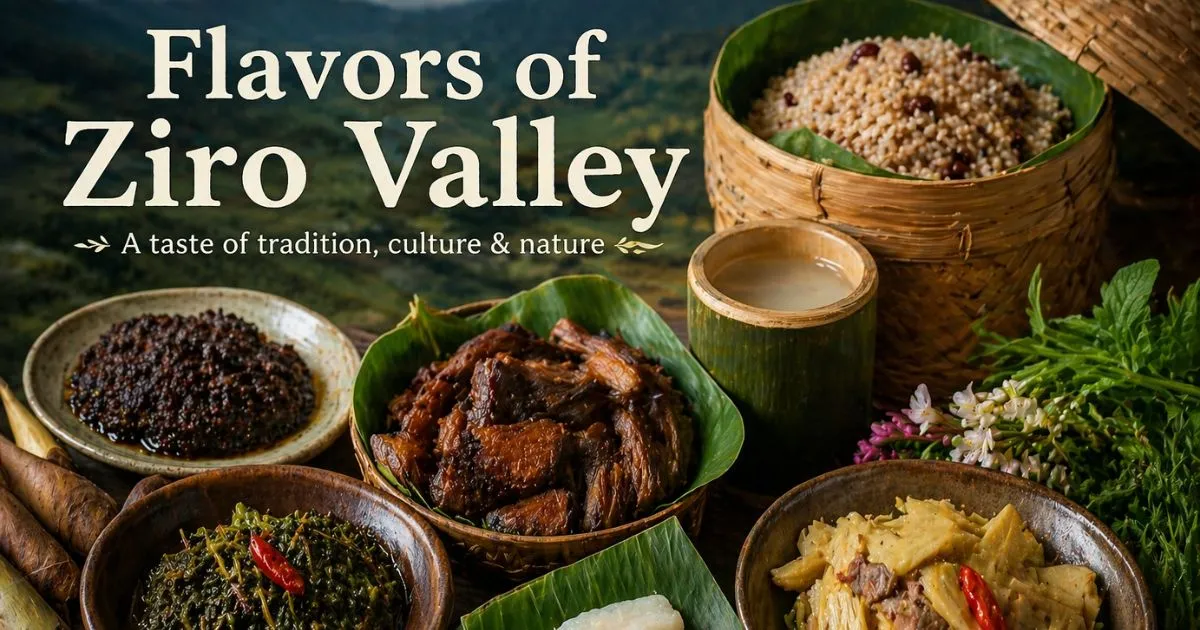
In the quiet, mist-laden villages of Ziro, the cuisine is as much a part of the landscape as the emerald rice fields. Unlike the spicy, oil-heavy dishes found in the plains, Apatani food is a masterclass in simplicity, fermentation, and subtle, smoky flavors. Most dishes are boiled, steamed, or roasted, using ingredients gathered directly from the forest or the family’s integrated rice-fish farm.
Here is your guide to the flavors of Ziro—what to seek out and where the locals are eating in 2026.
What to Eat: The Essential Apatani Menu
1. Pika Pila (The Signature Condiment)
You cannot leave Ziro without trying Pika Pila. It is a sharp, pungent, and spicy pickle made from bamboo shoot juice (Hirree), pork fat, and king chilies.
- The Taste: It’s an acquired taste—acidic and deeply aromatic—that provides the perfect punch to a bowl of plain rice.
2. Sududu (Bamboo Roasted Meat)
A true delicacy of the Lower Subansiri region. Chicken or pork is seasoned with local herbs, stuffed into a fresh bamboo hollow, and roasted slowly over an open wood fire.
- The Taste: The meat absorbs the sweet, woody flavor of the moisture inside the bamboo, resulting in a tender, smoky dish that is incredibly unique.
3. Rice-Fish Symbiosis
Because the Apatanis farm fish directly in their paddy fields, the fish in Ziro is exceptionally fresh.
- Must Try: Fish stew made with fermented bamboo shoots and local herbs. The fish is often small and bony but packed with flavor.
4. Zan (The Mountain Porridge)
A nutritious staple made by stirring millet flour into boiling water. It is often served with green vegetables and smoked meat.
- The Taste: Earthy and hearty, it’s the ultimate “soul food” for a cold Himalayan evening.
5. Apong (Traditional Rice Beer)
Apong is the social lubricant of Arunachal. It comes in two main varieties:
- The Milky White: Sweet and light.
- The Dark/Brown: Blended with millet or blackened rice, offering a richer, almost chocolatey depth.
Where to Eat: 2026 Recommendations
While homestays offer the most authentic experience, Hapoli (the main town) and the surrounding villages have some excellent eateries:
For Authentic Tribal Meals
- Dapo’s Kitchen (Ziro Market): A local favorite for its Pika Pila and authentic boiled pork dishes. It’s unpretentious and focuses purely on traditional Apatani flavors.
- Apatanis Kitchen (Near Hapoli): Specifically known for its tribal thali. If you want to try a little bit of everything—smoked meat, bamboo shoots, and Apong—this is the place.
- Meghna Restaurant (Hapoli): Famous for its Zan and chicken curry. It’s one of the older, reliable spots for a comforting meal.
For a Modern “Cafe Culture” Vibe
- Good Vibes Cafe (MG Road, Hapoli): The hub for younger locals and travelers. Great for a quick break with good coffee, snacks, and a view of the town’s daily life.
- Ziro Coffee House: Perfect for those afternoons when you want a break from tribal food. They serve excellent local brews and have a cozy, wooden interior.
- Pinewood Cafe (Near Kasa Resort, Hija): A beautiful spot to enjoy a meal surrounded by greenery. Their fish stew is highly recommended.
For the Ultimate Local Experience
- Hong Village Homestays: If you are visiting the village of Hong, ask your host to prepare a meal. Eating boiled chicken with local herbs around the Mering (central kitchen fire) is an experience that no commercial restaurant can replicate.
Traveler’s Tip: Tapyo (The Special Salt)
Keep an eye out for Tapyo, a unique herbal salt used by the Apatanis. It’s made by burning specific indigenous plants into ash. It’s not just for flavor; it was traditionally used to prevent goiter and remains a fascinating piece of local culinary history.
Pro Tip: In Ziro, the best meals often start with a conversation. Don’t be afraid to ask your server for the “daily catch” or the seasonal forest greens—they are usually the freshest items on the menu.