“The Gentlemen Gangsters of Japan”: Inside the Rise and Fall of the Yakuza
🧨 Summary
The Yakuza isn’t just a gang — it’s an empire. For decades, they operated in the shadows of Japan’s neon cities, feared yet strangely respected. Known for their tattoos, rituals, and strict codes of conduct, the Yakuza blurred the line between crime and tradition. But now, Japan’s most feared underworld empire is crumbling from within. What happened? This is the story of power, blood, honor, and slow self-destruction.
Scene One: A Cigarette in the Rain
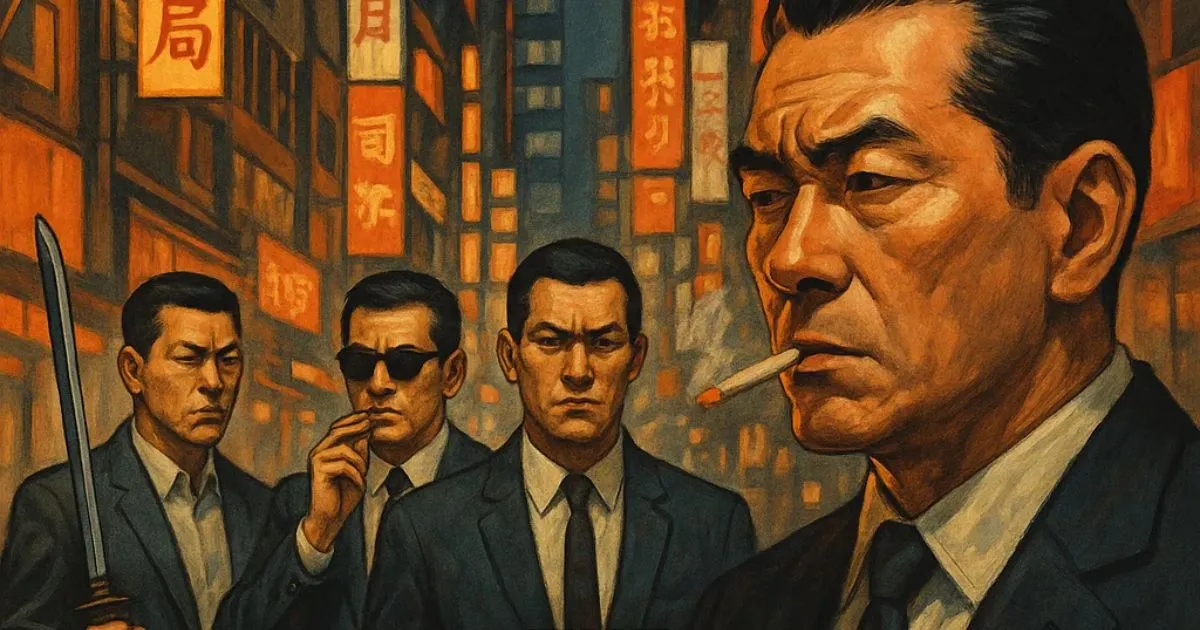
Tokyo. 1991. The rain falls in silence outside the neon-lit alleys of Kabukicho, Japan’s red-light district. A sharply dressed man flicks a cigarette, his fingers missing a tip — a reminder of an ancient code. He’s not hiding. He’s not running. He is the law — or at least, he was.
He’s Yakuza.
Back then, everyone knew who the Yakuza were. They didn’t hide in shadows. They had offices, business cards, and even year-end parties reported in the news. They extorted, they trafficked, but they also rebuilt cities after disasters, handed out aid during crises, and kept petty criminals in check.
They were organized crime — but with order. Until that order started collapsing.
Who Are the Yakuza?
The Yakuza, also known as bōryokudan (literally: “violent groups”), are Japan’s most infamous criminal syndicates, existing since at least the 17th century. Think of them as a mix between Italian mafia families and samurai outlaw lore.
Their roots lie in two distinct groups:
- Tekiya – street peddlers.
- Bakuto – gamblers.
These groups formed tight brotherhoods based on loyalty, structure, and an intense code of honor. Over centuries, these brotherhoods evolved into powerful crime families — or “clans” — that began dominating everything from drug trafficking and human smuggling to stock market manipulation and political lobbying.
Rituals, Taboos, and Tattoos
What makes the Yakuza unlike any other gang?
- Tattoos (Irezumi): Full-body artworks done by hand, often hidden under suits. These weren’t just art — they were loyalty etched in skin.
- Yubitsume: Cut off your finger to apologize. A ritual of shame and submission.
- Code of Ninkyo: A chivalrous code — protect the weak, stay loyal to the clan, and keep honor above profit. (Though, that’s romanticized.)
Despite their criminal nature, the Yakuza operated under an almost militaristic structure. They had ranks, titles, even internal HR policies. A crime family could have thousands of members with bureaucratic discipline.
The Peak of Power: 1980s to Early 2000s
During Japan’s economic boom, Yakuza thrived. They infiltrated:
- Construction firms
- Banks and stock markets
- Entertainment industries
- Politics (unofficially)
The three biggest Yakuza syndicates were:
- Yamaguchi-gumi – The largest and most powerful.
- Sumiyoshi-kai – Less centralized, but brutal.
- Inagawa-kai – Smaller but influential in Tokyo.
They laundered money, owned casinos, and controlled real estate. At one point, their membership across all gangs exceeded 80,000.
And yet — they walked free. Why?
Because they were legal. Not officially, but practically. Japan’s constitution made it hard to ban an organization unless it acted as an enemy of the state. So the Yakuza operated openly, with offices, logos, and even corporate registrations.
What Went Wrong? The Fall Begins
1. The Anti-Yakuza Laws (1992)
Japan had had enough. In 1992, the Anti-Bōryokudan Law passed. It allowed:
- Citizens to sue Yakuza for damages
- Police to crack down on their financial networks
- Businesses to legally refuse Yakuza affiliations
Overnight, the warm handshake turned into a death grip.
2. Banks and Corporates Cut Ties
By 2011, Japan introduced stricter anti-organized crime ordinances. Now, any business caught dealing with the Yakuza — whether for a party or a contract — could be criminally prosecuted. Banks began freezing accounts. Hotels refused them entry.
Suddenly, the once-feared Yakuza were homeless kings.
3. Younger Generation Opted Out
Yakuza life was no longer lucrative. Young Japanese weren’t joining. Tattoos became social curses. Jobless, stigmatized, and isolated, many Yakuza turned to petty crime or went underground. The samurai-code was dead.
4. The Rise of “Hangure” Gangs
With traditional Yakuza in decline, a more dangerous breed rose: Hangure — loosely affiliated violent criminals without rules or hierarchy. Unlike Yakuza, they had no code, no public face, no remorse.
The vacuum was filled — but not honorably.
Where Are They Now?
In 2024, the Yakuza are:
- Fewer than 23,000 active members (down from 80,000+)
- Splintered into rival factions, especially within the once-mighty Yamaguchi-gumi
- Operating mostly in financial crime, cybercrime, and underground trade
- Increasingly irrelevant in pop culture and public fear
Many former Yakuza live in hiding, tattooed and unemployed, rejected by society. Japan still stigmatizes anyone with underworld ties. Even reintegration is tough — no jobs, no rentals, no social security.
Yakuza in Pop Culture: A Legacy of Glamour and Grit
From Yakuza video games to films like Outrage and The Yakuza Papers, the syndicate continues to be mythologized. They’re both villains and tragic heroes in modern storytelling.
But behind the myth lies the truth: an empire built on blood, slowly eaten from within.
Final Thought: Honor, Hollowed
The Yakuza’s story isn’t just about crime — it’s about how a deeply cultural, hierarchical society tried to co-exist with modern capitalism. For decades, they were Japan’s necessary evil. But when honor became outdated and profit turned digital, even the most disciplined gang couldn’t survive.
Their empire wasn’t taken down by war — it was buried under the weight of irrelevance.