Who Benefits from the US-Israel-Iran War? An Examination of Economic Gains Amid Geopolitical Conflict
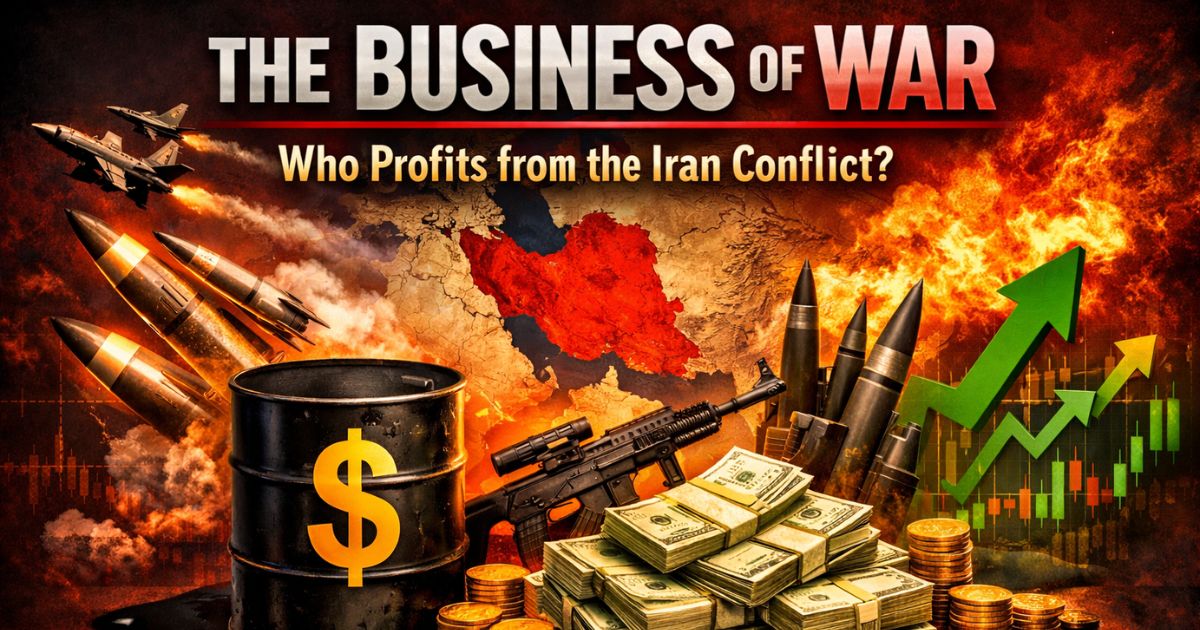
The US-Israel military campaign against Iran, dubbed Operation Epic Fury, entered its second week on March 6, 2026, with airstrikes, naval engagements, and retaliatory missile attacks escalating across the Middle East and beyond. While the human cost is already staggering with over 1,230 reported deaths in Iran and several US service members killed the conflict has triggered significant economic shifts. This editorial dissects the primary beneficiaries, focusing on major players, weapon manufacturers, companies, and money flows, drawing solely from verified data and reports. It reveals a pattern where short-term profits accrue to specific sectors and nations, often at the expense of broader economies and taxpayers, underscoring that wars like this produce no unambiguous victors, only redistributed losses.
The Major Players: Nations Navigating Gains and Risks
The United States, as the primary aggressor alongside Israel, stands to gain strategically by degrading Iran’s nuclear and missile capabilities, but the economic burden falls heavily on American taxpayers. Initial estimates peg the first 24 hours of operations at $779 million, including munitions, aircraft sorties, and naval deployments, with pre-strike buildup costs adding another $630 million. Daily operational costs for major equipment like two aircraft carrier strike groups and over 200 aircraft are around $59.39 million, potentially totaling $210 billion if the conflict prolongs, factoring in macroeconomic losses like reduced consumption from higher energy prices. The US military budget for fiscal year 2026 exceeds $1 trillion, with a proposed $1.5 trillion for 2027, including $113 billion for immediate modernization under the “One Big Beautiful Bill Act.” These funds flow from federal appropriations, ultimately sourced from taxes and borrowing, exacerbating the US national debt, which stands at over $35 trillion.
Israel benefits from enhanced security through the dismantling of Iranian threats but incurs high costs, offset by US aid. Since January 2025, the US has approved $10.1 billion in arms sales to Israel, including $6.67 billion announced on January 31, 2026, for 30 Apache helicopters ($3.8 billion) and 3,250 light tactical vehicles ($1.98 billion). Annual US Foreign Military Financing to Israel totals $3.3 billion, plus $500 million for missile defense, part of a 10-year memorandum (2019-2028) committing $38 billion overall. This aid, drawn from US budgets, bolsters Israel’s qualitative military edge but strains its economy, with defense spending projected at 16% of its $208 billion public budget in 2026, or about $35 billion.
Iran, the primary target, faces devastating losses, with infrastructure damage and a death toll exceeding 1,230. However, it gains indirect support from Russia and China, who supply arms to sustain its defenses. Russia has delivered Su-35 fighter jets (48 units ordered for $6.5 billion, with 16 in production for 2027 delivery) and signed a €495 million deal for 500 Verba shoulder-fired air defense launchers and 2,500 missiles, with deliveries phased through 2029. China is nearing a deal for CM-302 supersonic anti-ship missiles, violating UN embargoes, and provides dual-use components for drones and missiles, including BeiDou-3 satellite navigation for real-time targeting. Iran pays via oil exports (China buys over 90% of its output) and other trade, valued at billions annually. This sustains Iran’s resistance but deepens its isolation, with GDP contraction estimated at 5-10% due to sanctions and strikes.
Russia and China benefit economically and strategically without direct involvement. Russia profits from arms sales and higher oil prices (Brent crude surged 12% to $80-85 per barrel), as disruptions in the Strait of Hormuz reduce global supply by 20%. As the world’s second-largest oil exporter, Russia sees revenues rise, offsetting Ukraine war costs. China, the top oil importer, faces higher prices but secures discounted Iranian crude and advances its influence via tech transfers, potentially gaining leverage in global energy markets.
Gulf states like Saudi Arabia and the UAE gain from oil price spikes (Saudi paused production after drone attacks but stands to earn billions from $85/barrel crude) and US arms deals, such as Saudi’s $9 billion for 730 Patriot missiles. However, they suffer from Iranian retaliatory strikes on infrastructure, with economic losses in billions from disrupted shipping and refineries.
Weapon Manufacturers and Companies: Profiting from Destruction
US defense contractors are the clearest economic winners, with stocks surging amid replenishment demands.
- Lockheed Martin, the Pentagon’s largest contractor, saw shares rise 3.4% on March 2, 2026, hitting 52-week highs, driven by demand for THAAD interceptors ($12.77 million each) and Patriot missiles ($4 million each).
- RTX (Raytheon) jumped 4.7%, benefiting from Patriot systems and Tomahawk missiles ($1.3-2.2 million each; production ramping to 1,000/year).
- Northrop Grumman rose 6%, Boeing 2%, and Palantir 5.8%, with the sector up 1.5% overall.
These firms receive billions from Pentagon contracts; the “Big Five” (Lockheed, RTX, Boeing, General Dynamics, Northrop) secured $2.1 trillion from 2020-2024. A White House meeting on March 6 aims to accelerate production, potentially with a $50 billion supplemental budget. Energy companies also profit: Exxon and Chevron shares rose pre-market amid oil surges, with Texas firms gaining short-term from $80+ crude. Losers include airlines (Finnair -10%, Air France -8%, American -6%) and consumers facing 5-10 cents/day gas price hikes, potentially adding 0.35% to US inflation per 10% oil rise.
Russian and Chinese firms benefit from sales to Iran: Rostec (Russia) for Verba/Su-35, and Chinese state entities for CM-302 and dual-use tech, valued in billions.
Money Flows: From Taxpayers to Profiteers
Funds originate from national budgets: US taxpayers fund over $1 trillion in defense spending for fiscal year 2026 (with enacted discretionary national defense funding reaching approximately $838.7 billion base, plus additional reconciliation and mandatory allocations pushing total defense-related outlays toward or exceeding $1 trillion, including atomic energy and other elements). These funds flow to major contractors like Lockheed Martin, which reported $75 billion in total sales for 2025 (with expectations of $77.5–$80 billion in 2026) and derives the vast majority of its revenue from U.S. government contracts.
US foreign military financing (FMF) to Israel continues at approximately $3.3 billion annually under the ongoing 2016–2028 memorandum of understanding (with an additional $500 million typically allocated for missile defense programs, totaling around $3.8 billion per year in combined support). Recent major arms sales approvals include nearly $6.67 billion to Israel (e.g., for 30 Apache helicopters and related equipment). Arms sales to Saudi Arabia have included a $9 billion package for 730 Patriot missiles and associated gear, redirecting U.S. taxpayer dollars abroad through these transactions.
Iran’s payments to Russia and China for arms and support stem primarily from its oil export revenues, which have fluctuated significantly due to sanctions and market dynamics. Estimates for recent periods place recoverable oil income in the range of $20–$30 billion annually (with nominal exports higher but heavily discounted and eroded by evasion costs, logistics, and buyer discounts primarily to China resulting in lower net inflows, such as around $13 billion actually received in parts of recent fiscal years).
Oil windfalls from the price spike (with Brent crude surging amid Strait of Hormuz concerns) accrue to producers like Russia, where export prices have risen from under $40 per barrel in late 2025 to around $62 per barrel recently exceeding the $59 per barrel benchmark in Russia’s 2026 budget assumptions potentially boosting revenues despite ongoing discounts from sanctions. Meanwhile, consumers worldwide face higher energy costs, contributing to inflation pressures and market volatility (e.g., S&P 500 flat and Dow down 0.2% in recent sessions amid uncertainty).
In truth, this war exposes a zero-sum dynamic: defense and energy giants profit, funded by public coffers and consumer pain, while global stability erodes. The estimated $779 million spent by the U.S. in the first 24 hours of strikes (plus $630 million in pre-strike buildup) illustrates the scale—costs that, if extrapolated over just days or weeks, could rival or exceed funding for domestic priorities. For context, such expenditures highlight misplaced priorities when compared to programs like SNAP (Supplemental Nutrition Assistance Program), which provides food assistance to millions at far lower per-capita scales, or Medicaid, which supports healthcare for low-income and vulnerable populations. Redirecting even fractions of these military outlays could sustain essential services for millions, underscoring how war financing often diverts resources from broader societal needs.
As markets fluctuate and costs mount, the conflict serves as a stark reminder that economic “wins” in war are illusions, built on widespread suffering.
References
- Fortune.com
- IPS-DC.org
- TimesofIndia.com
- Markets.ChronicleJournal.com
- ResponsibleStatecraft.org
- AirandSpaceForces.com
- Reuters.com
- NYPost.com
- En.Sedaily.com
- QuincyInst.org
- WashingtonPost.com
- SIPRI.org
- TRTWorld.com
- Reuters.com
- En.Wikipedia.org
- Facebook.com/Forbes
- HoustonChronicle.com
- Finance.Yahoo.com
- MorganStanley.com
- CNN.com
- SpecialEurasia.com
- Reuters.com
- Facebook.com/AboutThatStreet
- FDD.org