The Future of Indian Cinema: Can Originality Survive the Nostalgia Wave by 2030?
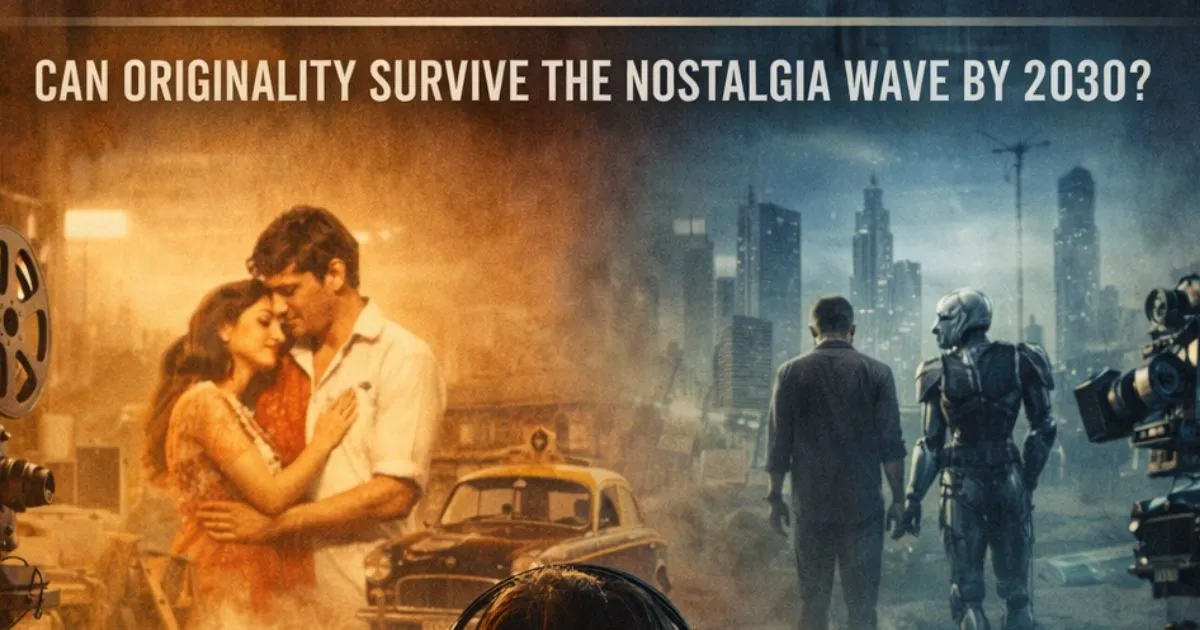
The year 2030 will not be the death of original storytelling in India, but it will certainly be the year the “original” has to fight twice as hard for half the space.
By the end of this decade, we are looking at a bifurcated industry: a top-tier “Legacy Layer” dominated by nostalgia marketing and a fragmented, highly specialized “Indie Layer” where originality lives—provided it can survive the brutal economics of a market that has learned to treat memory as a commodity.
The Strategic Retreat to Safety
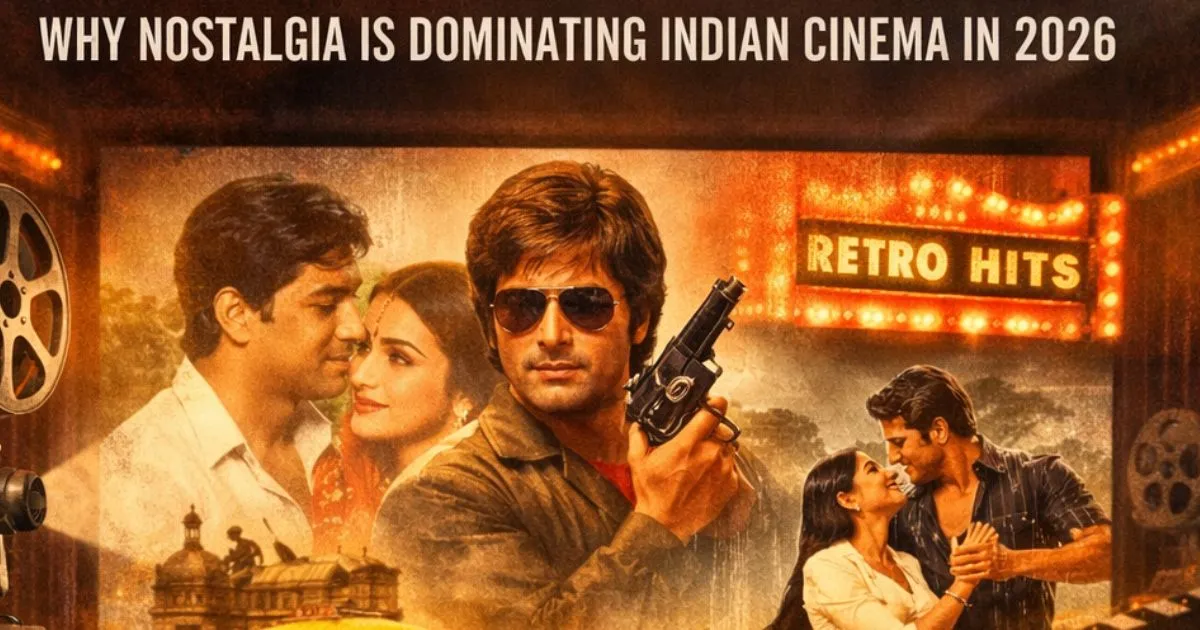
The current obsession with nostalgia—evidenced by the massive success of films like Dhurandhar 2 and the return of stars like Akshay Kumar to 2000s-era comedy—is a symptom of financial trauma. Between 2022 and 2025, the Indian box office witnessed a series of high-budget original failures that terrified investors.
The industry’s response has been a tactical retreat. By 2030, the “Originality Tax” will be a recognized industry term. Studios will view a new, untested IP as a liability, requiring a higher premium for marketing and a lower budget for production. Conversely, a reboot or a “spiritual sequel” to a 2010 blockbuster will be seen as an asset, easier to sell to both distributors and audiences because the “emotional heavy lifting” was done twenty years ago.
The Algorithmic Ceiling
One of the biggest threats to original storytelling by 2030 is the Data-Driven Greenlight. As AI integration becomes standard in studio boardrooms, scripts will be vetted against historical performance data.
- The Trap: If an algorithm sees that “Nostalgic Comedy” consistently outperforms “Original Sci-Fi” in the Tier-2 cities of North India, it will prioritize the former.
- The Consequence: This creates a feedback loop where the audience is only fed what they have already liked, slowly eroding the cultural muscle for processing new ideas. By 2030, we risk a generation of moviegoers who find truly original structures “too difficult” because they lack the familiar beats of established IPs.
The Survival Strategy: “Stealth Originality”
If original storytelling is to survive, it will likely be through a strategy of Stealth Originality. Creators will learn to wrap brand-new ideas in the skin of old ones.
We are already seeing this. A film might be marketed as a remake of a classic, but the actual narrative subverts every trope of the original. By 2030, this “Trojan Horse” method will be the primary way ambitious directors get non-derivative work funded. They will use the “nostalgia wave” as a vehicle to reach the masses, only to deliver a story that is radically different once the lights go down.
The Bifurcation of the Audience
| The Legacy Layer (Mainstream) | The Discovery Layer (Alternative) |
| Focus: Reboots, sequels, and star-vehicle “nostalgia traps.” | Focus: High-concept originals, niche genres, and debutant directors. |
| Revenue: 80% of total theatrical box office. | Revenue: 20% of box office + heavy reliance on international streaming. |
| Experience: The “Grand Event”—large-scale communal watching. | Experience: The “Curated Watch”—boutique cinemas and high-end home systems. |
The Role of the “Creator-Auteur”
The savior of the original script in 2030 won’t be the studio, but the Creator-Auteur who builds their own distribution ecosystem. With the democratization of production tools, we will see directors who bypass the nostalgia-driven studio system entirely.
These creators will treat their audience like a community rather than a consumer base. By using 2020s-style “direct-to-fan” models, they can fund original stories that don’t need to cross the ₹1000 crore mark to be profitable. Success for these films will be measured in “Cultural Impact” and “Long-tail Streaming Value” rather than the opening weekend splash.
A Narrowing, but Deepening Path
Originality will survive, but it will stop being the “default” of Indian cinema. It will become a luxury product.
By 2030, the “original” film will be a status symbol—a sign of an enlightened viewer who seeks more than the comforting echo of their childhood. While the masses bask in the warm, familiar glow of the nostalgia wave, the most vital parts of Indian culture will continue to be forged in the shadows of the original. The path is narrowing, but for those who find it, the stories will be deeper, more daring, and more necessary than ever.