Kangana Ranaut’s Parliament Wardrobe: A Masterclass in Indian Handloom Elegance
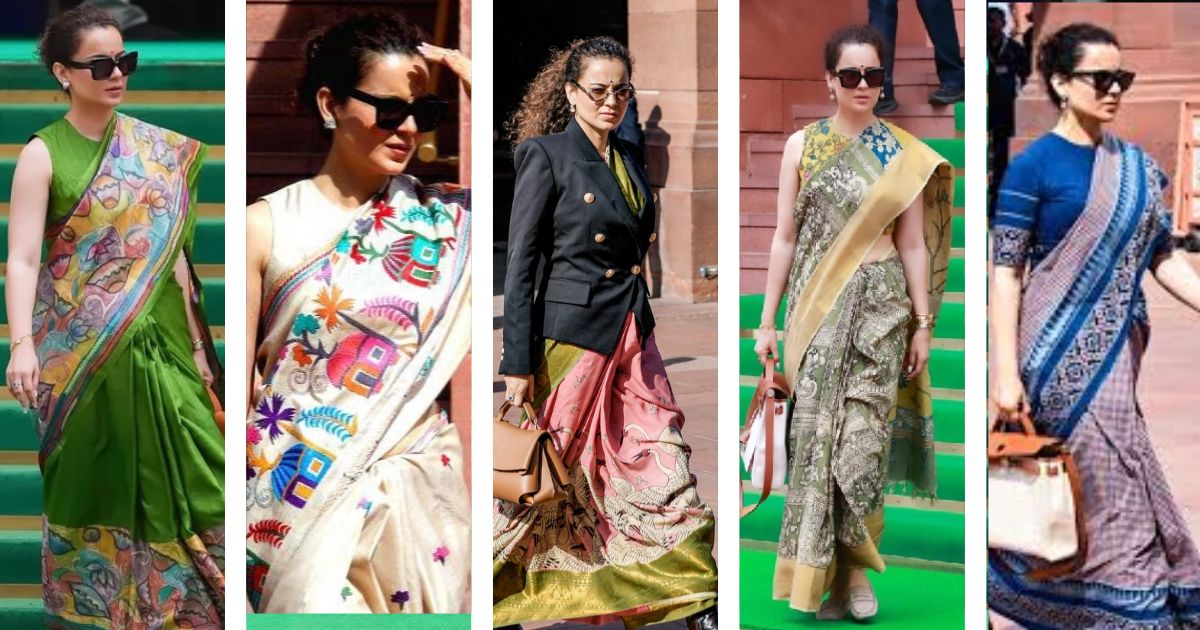
When Kangana Ranaut walks into Parliament, she doesn’t just enter a political space—she carries centuries of Indian textile heritage with her. In an era where fast fashion dominates public appearances, Kangana’s sartorial choices feel deliberate, rooted, and quietly revolutionary.
This is not about glamour. This is about identity.
And perhaps, more importantly, it’s about how clothing can become cultural diplomacy.


A Wardrobe That Speaks Without Noise
Kangana’s Parliament looks are striking for one simple reason, they don’t try too hard.
Muted tones. Crisp cottons. Handwoven silks. Minimal jewelry.
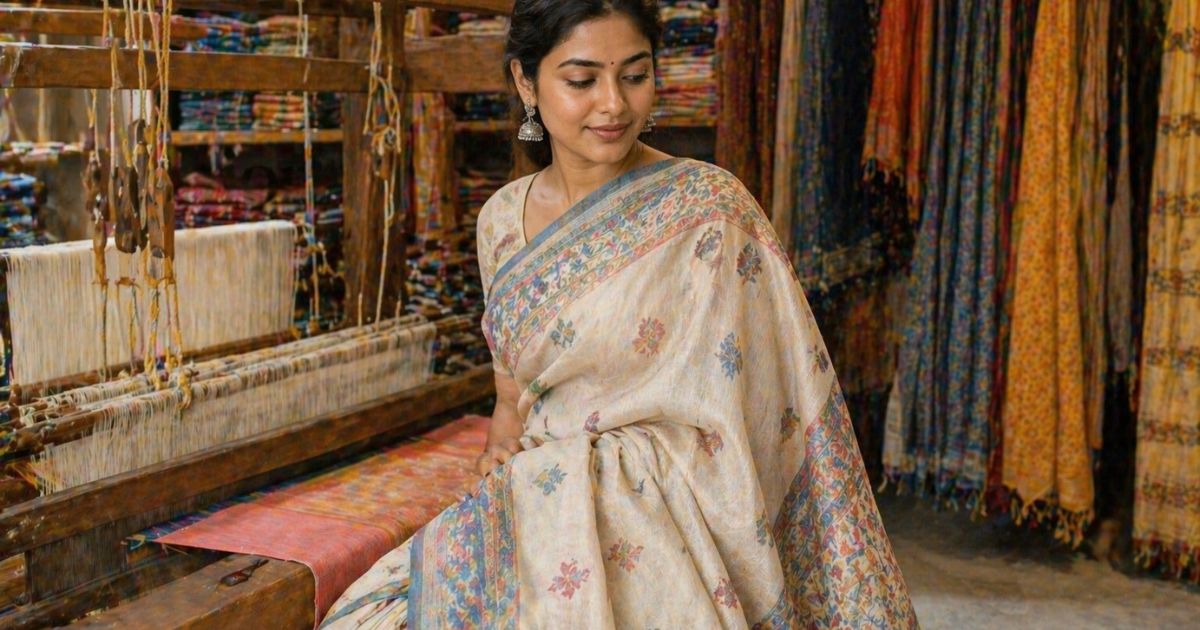
There is a quiet confidence in how she chooses simplicity over spectacle. Unlike the high-drama couture often seen in public life, her wardrobe leans heavily into Indian handlooms—fabrics that breathe, move, and tell stories.
From finely woven cotton sarees to structured blouses, her choices reflect an understanding of proportion, texture, and occasion. It’s a reminder that elegance is not about excess it’s about restraint.
The Power of Indian Handlooms


To understand Kangana’s Parliament wardrobe is to understand India’s handloom legacy.
She often chooses fabrics like:
- Chanderi – Lightweight, sheer, and regal
- Tussar Silk – Textured, earthy, and rich
- Khadi – Handspun, deeply symbolic of India’s independence
- Banarasi weaves – Traditionally opulent, but styled by her in understated ways
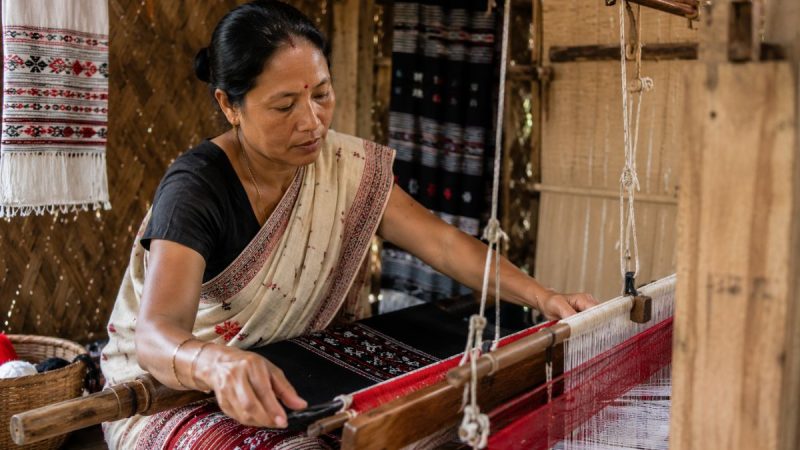
These are not just fabrics. They are ecosystems. Each weave represents artisans, generations of skill, and local economies that survive against the odds of industrial fashion.
By wearing handlooms in Parliament, Kangana is not just making a style statement, she’s participating in a larger narrative of sustainability and cultural preservation.
Minimalism Meets Authority


There’s a certain discipline in Kangana’s styling:
- A neatly draped saree
- A small bindi
- Hair tied back in a bun
- Barely-there jewelry
This aesthetic is not accidental. It aligns perfectly with the seriousness of Parliament while still allowing her individuality to shine through.
In a space often dominated by Western formalwear or heavily embellished ethnic outfits, her look strikes a rare balance of professional yet deeply Indian.
Reclaiming Indian Textiles on a Global Stage
Kangana has long been known for her bold fashion choices on red carpets, but her Parliament wardrobe marks a shift from experimental to intentional.
At a time when global fashion is rediscovering “slow fashion,” Kangana is quietly embodying it.
Handlooms are sustainable by design:
- They consume less energy
- They support rural artisans
- They preserve traditional techniques
When a public figure consistently chooses such fabrics, it sends a powerful message not just within India, but globally.
Indian textiles are not relics of the past. They are relevant, modern, and worthy of global attention.
Style as a Political Statement
Clothing in politics has always carried meaning.
From Mahatma Gandhi’s khadi to contemporary leaders choosing regional attire, fashion becomes a language of ideology.
Kangana’s wardrobe fits into this continuum.
By wearing handloom sarees in Parliament, she aligns herself with:
- Indigenous craftsmanship
- Cultural authenticity
- Economic support for artisans
Whether intentional or instinctive, her style becomes a subtle assertion: that modern India does not need to look outward for validation.
The Grace of Effortless Representation
What makes Kangana’s Parliament wardrobe compelling is not just the clothes, it’s the consistency.
There is no performative shift, no exaggerated styling for attention.
Instead, there is a steady commitment to:
- Simplicity
- Elegance
- Cultural pride
And that consistency builds credibility.
It tells a story of someone who understands that representation is not about occasional gestures, it’s about everyday choices.
Why This Matters in 2026
In today’s hyper-digital world, where trends change overnight and attention spans are shrinking, Kangana’s wardrobe offers something rare timelessness.
For young Indians, especially women, it reframes what power dressing can look like.
Not sharp blazers or imported luxury brands, but handwoven sarees, rooted in identity.
It challenges the idea that modernity must come at the cost of tradition.
Final Thought: Beyond Fashion
Kangana Ranaut’s Parliament wear is not just about aesthetics.
It’s about narrative.
It’s about how a saree when worn with intention can carry history, politics, sustainability, and identity all at once.
And perhaps that’s the real takeaway.
In a world chasing trends, she’s choosing legacy.
And in doing so, she’s quietly reminding India and the world that elegance doesn’t need to shout to be heard.