Captain Lakshmi Sahgal: Commander of the Rani of Jhansi Regiment
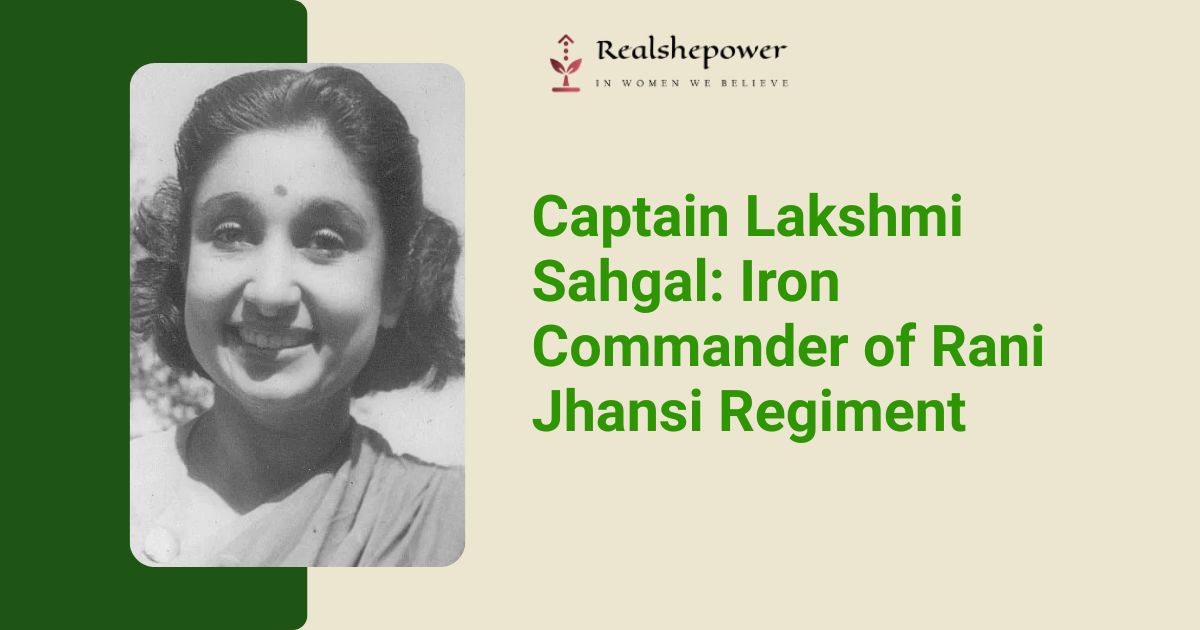
In the sweltering heat of colonial Madras, on a quiet October morning in 1914, a girl was born into a world that told women to stay silent, to stay small. Her name was Lakshmi Swaminathan. But the world would come to know her as Captain Lakshmi—a doctor who healed the broken, a soldier who led women into battle, and a revolutionary whose heart burned fiercely for a free India. Her story is not just history; it is a reminder of what one woman’s unyielding courage can achieve and a quiet indictment of how nations sometimes forget their truest heroes.
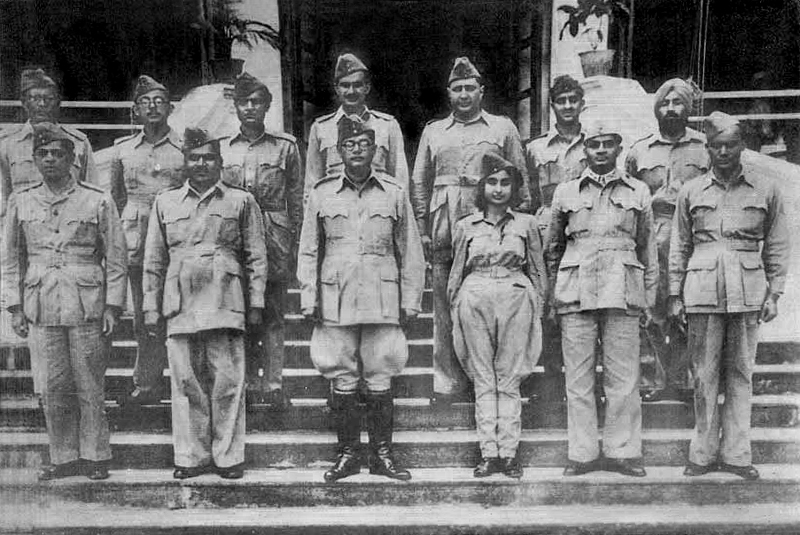
(Note: This rare photograph captures a mixed group of INA personnel, highlighting the inclusion of women in the fight for Azad Hind.)
Raised in a home alive with ideas of reform and resistance—her mother a fearless social activist, her father a principled lawyer—young Lakshmi learned early that injustice demanded action. She defied norms to study medicine, graduating in 1938 with dreams of serving the poorest. By 1940, she was in Singapore, running a clinic for migrant Indian workers, treating the forgotten while the shadows of war lengthened across Asia.
Then came 1943. Singapore had fallen to Japanese forces, and thousands of Indian soldiers languished as prisoners. Lakshmi, the compassionate doctor, tended to their wounds not just of the body, but of the spirit. Many whispered of fighting back, of turning captivity into rebellion for India’s freedom.
When Netaji Subhas Chandra Bose arrived like a storm, proclaiming the rebirth of the Indian National Army, he called for total sacrifice. And in a moment that would echo through history, he announced an all-women regiment: the Rani of Jhansi Regiment, named after the fearless queen who rode into battle against the British a century before.
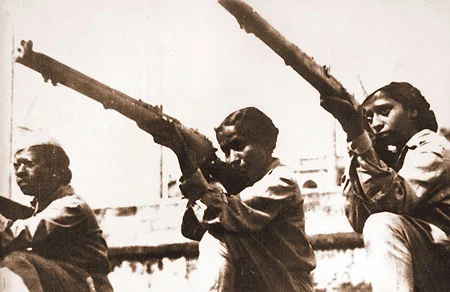
Lakshmi did not hesitate. She stepped forward, the first to volunteer, and Netaji appointed her commander Captain Lakshmi. Hundreds of young women, many barely out of their teens, from Indian families across Southeast Asia, followed her lead. They cut their hair, donned uniforms, and trained relentlessly: marching through jungles, handling rifles, nursing the wounded under fire.
Imagine it: these women, who society had confined to kitchens and veils, now advancing through the treacherous Burma front, rifles in hand, tending to fallen comrades amid bombing raids. Captain Lakshmi led them with quiet steel serving as Minister for Women’s Affairs in Netaji’s provisional Azad Hind government, inspiring them to believe that freedom was worth any price.
The tide of war turned. In 1945, as defeat loomed, Lakshmi was captured in Burma and imprisoned by the British. Yet even in chains, her spirit ignited a nation. The infamous INA trials back home sparked outrage, fueling the final push that forced Britain to quit India in 1947.
Freedom came, but for many INA warriors like Lakshmi, recognition did not. In 1947, she married her fellow officer, Colonel Prem Kumar Sahgal, and settled in Kanpur. There, the revolutionary became a healer once more—treating Partition refugees, running a clinic for the poor, often waiving fees for those who had nothing. She worked into her 90s, her hands steady, her compassion boundless.
But her fight never ended. Joining the Communist Party, she championed women’s rights, aided victims of communal violence in 1984, the Bhopal tragedy, and countless crises. In 2002, at 88, she ran for President of India—a symbolic stand for the left and for equality.
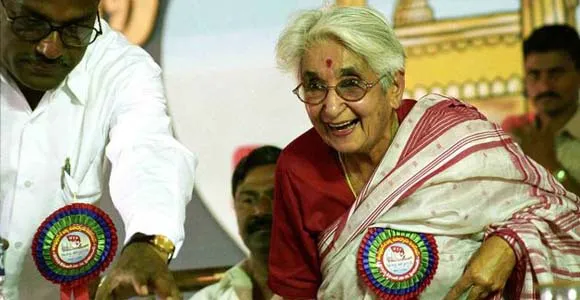
On July 23, 2012, at 97, Captain Lakshmi left this world after a heart attack. She donated her body to science, giving even in death. Honored with the Padma Vibhushan, she remains a beacon yet how many school textbooks mention her name alongside the men?
In an era when we celebrate icons, let us pause and feel the weight of her sacrifice. She traded comfort for the battlefield, youth for a lifetime of service, and asked for nothing in return. Captain Lakshmi Sahgal was not just a soldier or a doctor; she was the embodiment of India’s indomitable soul, a woman who proved that true revolution begins in the heart. Her fire still burns, urging us: Remember. Honor. Emulate. For in forgetting heroes like her, we dim the very light that freed us.
MUST READ
Saraswathi Rajamani — India’s Youngest Spy
Discover the remarkable life of Saraswathi Rajamani, one of India’s youngest spies whose courage and patriotism made her an unforgettable figure in the struggle for freedom.
→ Read Full Story