How to Make Belly Fat Disappear: 7 Hard-Hitting, Science-Backed Facts You Need to Know

Belly fat isn’t just a cosmetic issue—it’s a health hazard. Visceral fat, the kind that wraps around your organs, is linked to serious conditions like heart disease, diabetes, and even premature death. If you’re tired of sifting through fad diets and empty promises, this article cuts through the noise with seven unfiltered, evidence-based facts to help you torch belly fat for good. No gimmicks, no fluff—just the truth, grounded in science.
Table of Contents
1. Belly Fat Is More Than Skin Deep—It’s a Silent Killer
Visceral fat, the deep abdominal fat that surrounds your organs, isn’t just about tight jeans. According to a 2015 study in Annals of Internal Medicine, excess visceral fat increases the risk of type 2 diabetes, cardiovascular disease, and certain cancers by up to 50%. Unlike subcutaneous fat (the pinchable stuff under your skin), visceral fat pumps out inflammatory chemicals, disrupting your metabolism and hormones.
Why It Matters: You can’t spot-reduce belly fat with crunches or “fat-burning” teas. Targeting it requires a full-body approach, which we’ll unpack below. The good news? Losing just 5-10% of your body weight can significantly reduce visceral fat, per a 2016 study in Obesity Reviews.
Actionable Tip: Measure your waist-to-hip ratio. A ratio above 0.9 for men or 0.85 for women signals excess visceral fat. Track this monthly to monitor progress.
2. Calories Are King—Deficit Is Non-Negotiable
The hard truth: you can’t outrun a bad diet. To lose belly fat, you must create a calorie deficit—burn more calories than you consume. A 2020 meta-analysis in The Lancet confirmed that a sustained calorie deficit of 500-750 calories daily leads to significant fat loss, including visceral fat, without muscle loss.
Why It’s Tough: Modern diets are packed with hyper-palatable, calorie-dense foods (think processed snacks and sugary drinks). These hijack your brain’s reward system, making overeating easy. A single 600-calorie fast-food burger can undo a day’s progress.
Actionable Tip: Use a calorie-tracking app like MyFitnessPal to log your intake for two weeks. Aim for a 500-calorie deficit daily, combining diet and exercise. Prioritize whole foods—vegetables, lean proteins, and healthy fats—to stay full longer.
3. Not All Carbs Are Evil, But Sugar Is a Belly Fat Magnet
Carbohydrates often get demonized, but the real villain is refined sugar. A 2014 study in The American Journal of Clinical Nutrition found that high sugar intake, especially from sugary drinks, directly increases visceral fat by promoting insulin resistance. Complex carbs like oats, quinoa, and sweet potatoes, however, provide sustained energy without spiking blood sugar.
The Science: Excess sugar gets converted to fat in the liver via a process called de novo lipogenesis. This fat often settles in your midsection. Fructose, found in high-fructose corn syrup, is particularly insidious, as it bypasses normal appetite regulation.
Actionable Tip: Cut sugary drinks and desserts. Read labels—anything with more than 5 grams of added sugar per serving is a red flag. Swap for water, unsweetened teas, or black coffee. Include 1-2 servings of complex carbs daily to fuel workouts without overloading calories.
You May Also Like

4. Strength Training Beats Cardio for Belly Fat Loss
Cardio burns calories, but strength training reshapes your body. A 2015 study in Obesity showed that resistance training, like weightlifting, reduces visceral fat more effectively than aerobic exercise alone. Why? Muscle tissue is metabolically active, burning calories even at rest. For every pound of muscle gained, you burn an extra 6-10 calories daily, per Journal of Applied Physiology.
The Catch: Most people underestimate the intensity needed. Half-hearted bicep curls won’t cut it. Compound lifts—squats, deadlifts, bench presses—engage multiple muscle groups, spiking metabolism and growth hormone, which targets visceral fat.
Actionable Tip: Train 3-4 times per week, focusing on compound lifts. Aim for 3 sets of 8-12 reps at 70-85% of your one-rep max. Pair with 10-15 minutes of high-intensity interval training (HIIT) for a fat-burning boost.
5. Sleep Is Your Secret Weapon—Skimp at Your Peril
You can diet and exercise perfectly, but if you’re sleeping 5 hours a night, you’re sabotaging yourself. A 2018 study in Sleep found that sleep deprivation increases cortisol and ghrelin, hormones that promote hunger and fat storage, particularly in the belly. Just one week of poor sleep can increase visceral fat by 11%, per a 2010 study in Journal of Clinical Endocrinology & Metabolism.
Why It’s Brutal: Lack of sleep impairs insulin sensitivity, making your body store more fat. It also tanks willpower, making you crave junk food. Adults need 7-9 hours of quality sleep nightly for optimal fat loss.
Actionable Tip: Create a sleep routine. No screens 1 hour before bed, keep your bedroom cool (60-67°F), and aim for a consistent bedtime. If stress keeps you up, try 10 minutes of mindfulness meditation—studies show it lowers cortisol.
6. Stress Is a Belly Fat Factory—Control It or Lose
Chronic stress is a belly fat magnet. When you’re stressed, cortisol levels spike, signaling your body to store fat, especially around the midsection. A 2017 study in Obesity linked high cortisol levels to a 20% increase in visceral fat accumulation over five years. Stress also drives emotional eating, further piling on calories.
The Reality: You can’t eliminate stress, but you can manage it. Mindfulness, exercise, and even therapy can lower cortisol. Ignoring stress is like ignoring a leaking pipe—it’ll only get worse.
Actionable Tip: Practice 5-10 minutes of deep breathing or progressive muscle relaxation daily. Schedule “stress breaks” during your day—short walks or stretching. If emotional eating is an issue, keep a food journal to identify triggers.
7. Consistency Trumps Perfection—Stop Chasing Quick Fixes
Here’s the gut punch: there’s no overnight fix for belly fat. Crash diets and detoxes might drop water weight, but they don’t target visceral fat and often lead to rebound weight gain. A 2021 study in Nature Medicine showed that sustainable lifestyle changes—moderate calorie reduction, regular exercise, and stress management—yield lasting fat loss, with participants losing 15-20% of visceral fat over 12 months.
Why It’s Hard: Social media bombards you with “lose belly fat in 7 days” scams. These prey on desperation but ignore biology. Fat loss is a marathon, not a sprint. Small, consistent changes compound over time.
Actionable Tip: Set realistic goals—aim to lose 0.5-1 pound per week. Track progress with photos, measurements, and how your clothes fit, not just the scale. Celebrate non-scale victories, like better energy or stronger lifts.
Putting It All Together: Your Belly Fat Battle Plan
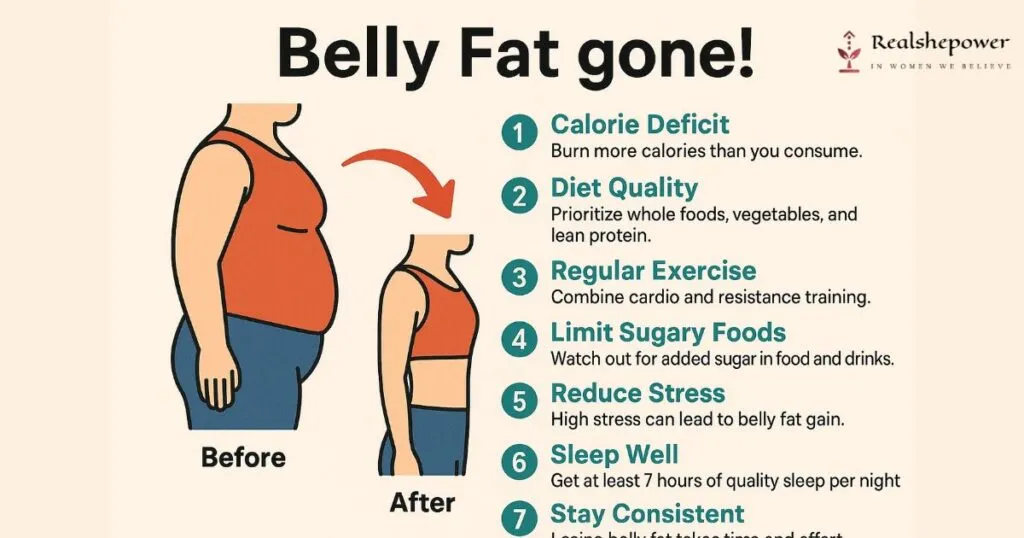
Losing belly fat isn’t about magic pills or extreme diets—it’s about science-backed habits that stick. Here’s a quick recap:
- Understand the stakes: Visceral fat is a health risk, not just a vanity issue.
- Master your calories: A 500-750 calorie deficit is your foundation.
- Ditch sugar: Cut refined sugars and prioritize complex carbs.
- Lift heavy: Strength training burns fat and builds metabolism-boosting muscle.
- Prioritize sleep: 7-9 hours nightly keeps hormones in check.
- Manage stress: Lower cortisol with mindfulness and movement.
- Stay consistent: Small, sustainable changes beat quick fixes every time.
Final Word: Belly fat is stubborn, but it’s not invincible. Commit to these seven facts, and you’ll not only shrink your waistline but also boost your health and confidence. Start today—your future self will thank you.
Sources: Studies from Annals of Internal Medicine (2015), Obesity Reviews (2016), The Lancet (2020), The American Journal of Clinical Nutrition (2014), Obesity (2015, 2017), Journal of Applied Physiology, Sleep (2018), Journal of Clinical Endocrinology & Metabolism (2010), Nature Medicine (2021).