Ayurvedic Benefits of Neem Flowers
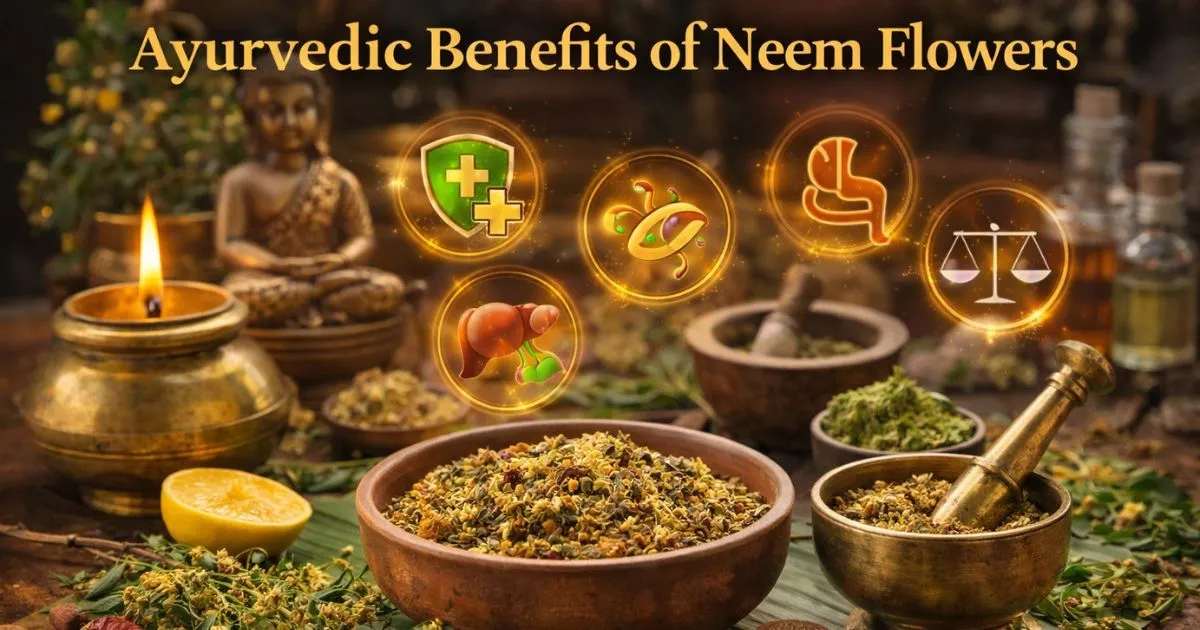
In the vast pharmacopeia of Ayurveda, the neem tree is often called “the village pharmacy.” However, while most people reach for the leaves or bark, the neem flower holds a unique, specialized place. Significantly more “cooling” (Sheeta) and less aggressive than other parts of the tree, the flowers are categorized as a seasonal dietary tonic. They are specifically designed for the delicate transition from spring to summer, acting as a internal thermostat and cleanser.
1. Blood Purification (Rakta Shodhana)
Neem flowers are a classic Rakta Shodhak, or blood purifier. They work by stimulating the liver and kidneys to process metabolic waste more efficiently, but their real magic lies in their thermal profile.
- Cooling Potency: Unlike many detox herbs that generate heat, neem flowers possess Sheeta Virya (cooling energy). This makes them the ideal remedy for “heat-born” blood issues—such as acne, rashes, and inflammatory skin conditions—that tend to flare up as the weather warms.
- Alkalizing Effect: By reducing excess acidity (Pitta), the flowers help balance the blood’s pH. This is critical because chronic skin irritation and inflammation are often rooted in a high-acid internal environment.
2. Impact on Digestion (Agni & Pachana)
The bitter taste (Tikta Rasa) of the flowers serves two primary functions in the gut:
- Bitter Stimulant (Deepana): When the flowers touch the tongue, their bitter receptors signal the stomach to secrete gastrin and the gallbladder to release bile. This effectively “wakes up” a sluggish digestive fire (Agni).
- Krimihara (Deworming): Historically, neem flowers have been used as a gentle anthelmintic. Their natural compounds are toxic to intestinal parasites and harmful bacteria while remaining gentle on the gut’s beneficial flora.
- Liver Support: By promoting healthy bile flow, they ensure fats are broken down correctly, preventing the heavy, bloated sensation often caused by slow digestion.
Comparative Profile: Flowers vs. Leaves
| Neem Flowers | Neem Leaves | |
| Ayurvedic Profile | Cooling, Light, Gentle | Very Cooling, Highly Drying |
| Intensity | Mild; culinary-grade | Potent; medicinal-grade |
| Primary Use | Seasonal tonic, digestive aid | Acute skin issues, wound healing |
| Flavor Profile | Aromatic, nutty when fried | Intensely and lingeringly bitter |
The “Vishu” Connection
The tradition of eating neem flowers on the New Year (April 14) is a masterclass in ancestral timing. This is the exact moment when Kapha (winter’s accumulated heaviness) begins to liquefy and Pitta (internal heat) begins to rise. The flowers act as a bridge, clearing out the old while protecting the body from the incoming heat.
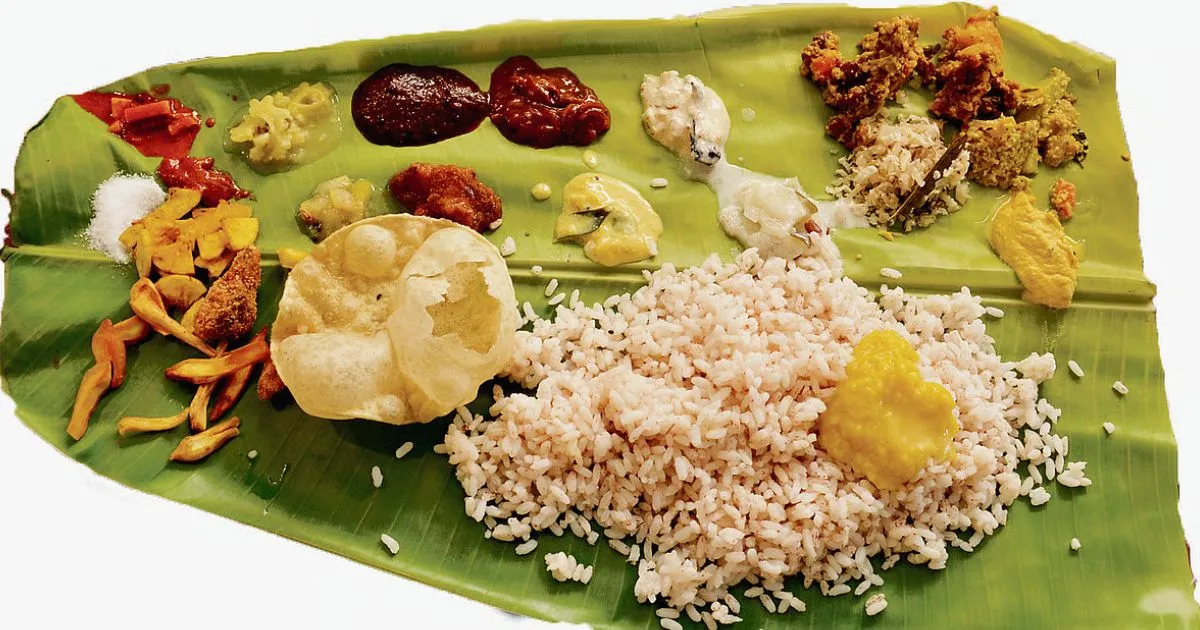
Vishu Sadhya 2026: Traditional Recipes Guide
Experience Kerala’s grand New Year feast—Vishu Sadhya—a beautifully balanced spread of flavors, traditions, and symbolism served on a banana leaf.
Explore Full Guide →The Bioactive Compound “How”
The efficacy of the flower comes down to specific phytochemicals. Neem flowers are rich in flavonoids like quercetin and sesquiterpene lactones. These act as natural antioxidants that neutralize free radicals in the bloodstream while providing the antimicrobial “kick” that cleanses the digestive tract without the harshness of synthetic alternatives.
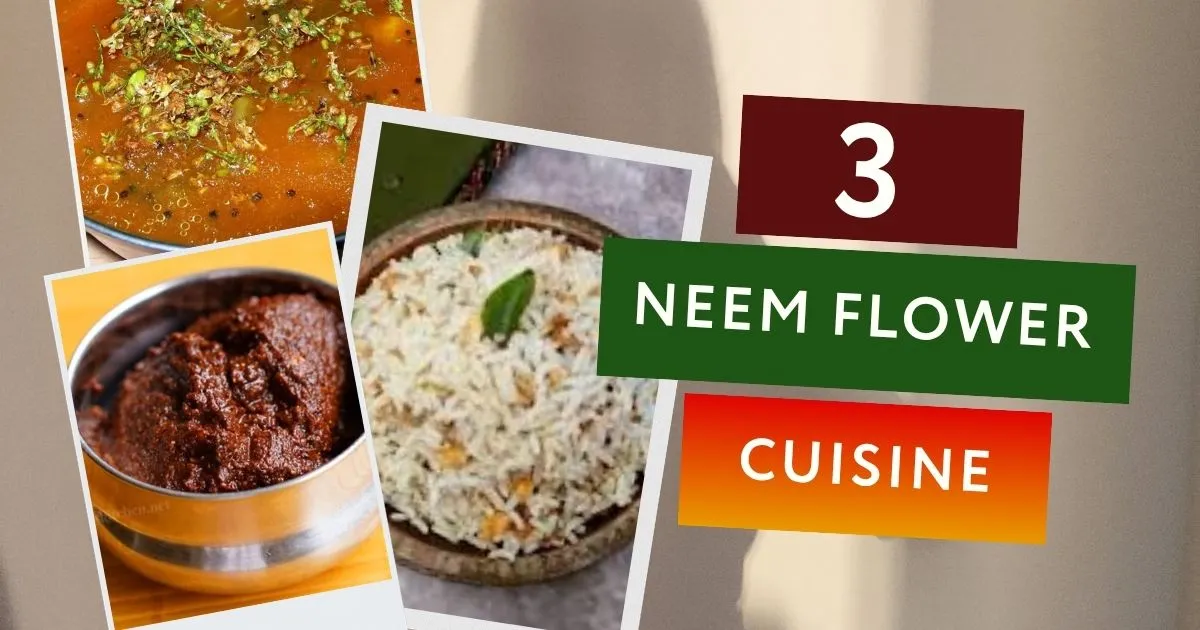
Traditional Neem Flower Recipes of South India
From veppampoo rasam to pachadi and chutneys, explore how neem flowers are transformed into powerful, symbolic dishes rooted in South Indian tradition and wellness.
Explore Recipes →How to Harvest, Clean, and Dry Neem Flowers
To enjoy these benefits year-round, you must dry the flowers correctly. If dried improperly, they will mold or lose their volatile oils (the source of their health benefits).
1. Harvest at the Peak
Early morning is best
Spread a clean white cloth under the tree and gently shake the branches. Alternatively, pick the fresh white clusters when they are in full bloom. Avoid flowers that have already turned brown or fallen on the bare ground.
2. Clean and Sort
Remove stems and debris
Spread the flowers on a large tray. Remove any small sticks, dried leaves, or insects. Do not wash them with water unless they are visibly dusty; moisture is the enemy of the drying process. If you must wash, pat them completely dry with a towel immediately.
3. Shade Drying
2-3 days
Spread the flowers in a thin, single layer on a parchment-lined tray or a clean cotton cloth. Never dry them in direct sunlight, as the UV rays will bleach the nutrients and destroy the medicinal flavonoids. Keep them in a well-ventilated, shaded area indoors.
4. Storage
In airtight glass
Once the flowers feel crisp and crumble easily when touched, they are ready. Store them in an airtight glass jar in a cool, dark cupboard. They will remain potent for up to 12 months, ready for your next Rasam or Pachadi.
Neem Flower Tea: Detox Infusion Guide
Learn how neem flower tea works as a powerful Ayurvedic detox drink—supporting digestion, immunity, and overall balance with its natural bitter healing properties.
Read Full Guide →Must Read:
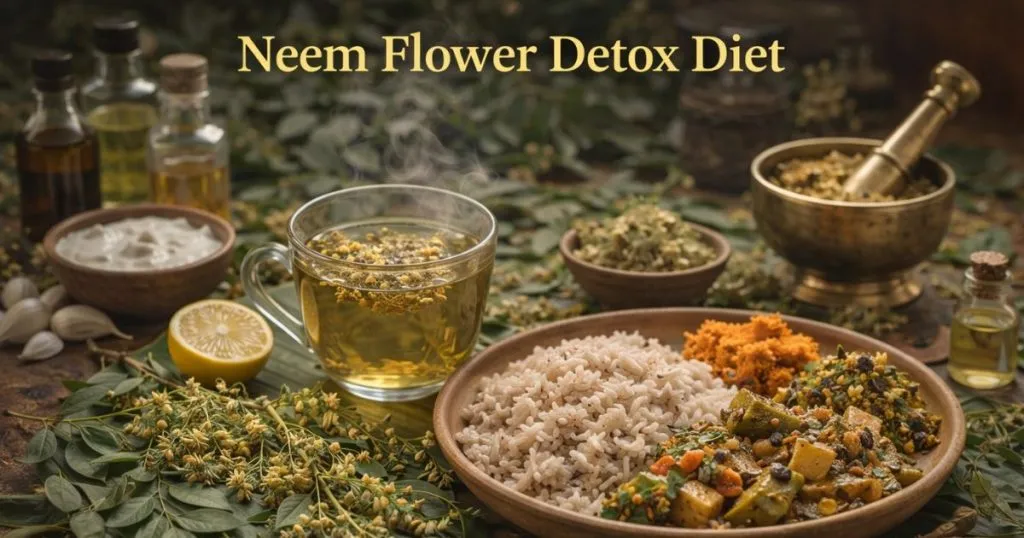
Neem Flower Detox Diet: Foods to Eat and Avoid for Blood Purification