Beyond Rasam: The Versatile World of Neem Flower Cuisine
In Tamil and Telugu households, the arrival of spring is marked by the distinct, nutty aroma of frying Veppampoo (dried neem flowers). Because these blossoms are intensely bitter, they are rarely cooked in isolation. Instead, they act as the “bitter anchor” in a complex flavor quartet: paired with jaggery (sweet), tamarind (sour), and chili (spice). This culinary philosophy doesn’t just create a balanced dish; it creates a medicinal one designed to detoxify the body for the coming summer.
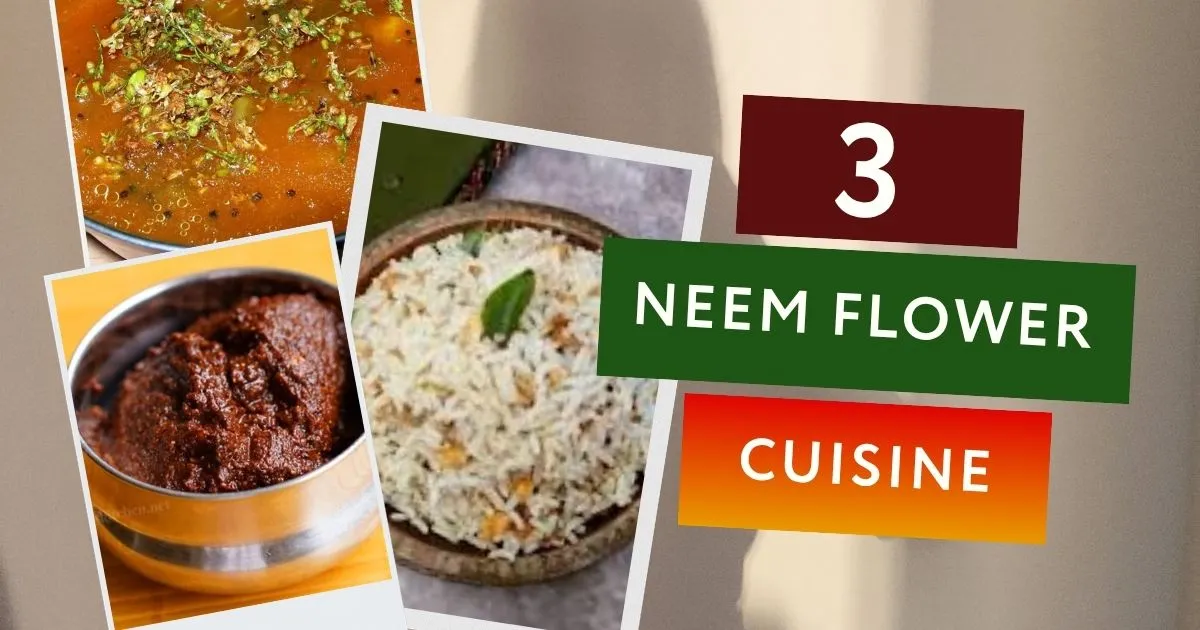
1. Veppampoo Pachadi: The Festive Jam
This is arguably the most culturally significant use of neem flowers outside of Rasam. Served during the Tamil New Year (Puthandu) and Ugadi, this thick, jam-like condiment is a symbolic representation of the “Six Tastes” of life.
- The Profile: It mirrors the emotional spectrum of the coming year. It incorporates raw mango (sourness), jaggery (happiness), neem flowers (sorrow), green chilies (anger), salt (fear), and turmeric (disgust/astringency).
- The Method: Raw mango pieces are simmered until they collapse into a mushy base. A generous amount of jaggery is stirred in until the mixture thickens. The dish is finished with a crucial tempering: mustard seeds and neem flowers fried in ghee until crisp.
2. Veppampoo Thogayal: The Earthy Chutney
For those who prefer a savory application, the Thogayal is a dense, ground chutney typically served with hot steamed rice and a dollop of fresh ghee.
- The Profile: Nutty, earthy, and only mildly bitter. The bitterness is tempered by the savory depth of roasted lentils.
- The Method: Urad dal, dried red chilies, and tamarind are roasted until fragrant. In a separate drop of oil, the neem flowers are fried until they turn a deep, dark brown. Everything is ground together with salt and a tiny pinch of jaggery to create a coarse, flavor-dense paste.
3. Veppampoo Sadam: The Variety Rice
Similar to Pulihora (Tamarind Rice), this is a “Variety Rice” where the crunch of the fried flower is the star of the show.
- The Profile: Savory, crunchy, and aromatic.
- The Method: A large quantity of neem flowers is fried in ghee until they are highly crisp—almost chocolatey in color. These are tossed into cooked, cooled rice along with a tempering of mustard, urad dal, peanuts, and curry leaves. Interestingly, this serves as excellent travel food, as neem possesses natural preservative properties.
Ayurvedic Benefits of Neem Flowers: Detox Guide
Discover how neem flowers detoxify the body, boost immunity, and balance doshas through ancient Ayurvedic wisdom and modern science.
Read Full Guide →Quick Comparison: Usage Styles
| Dish Type | Texture | Key Pairing | Best Served With |
| Pachadi | Jam-like | Raw Mango & Jaggery | Curd Rice or as a side |
| Thogayal | Thick Paste | Urad Dal & Tamarind | Steamed Rice & Ghee |
| Sadam | Grainy Rice | Ghee-fried flowers | Roasted papad |
| Vadam | Crisp | Sun-dried Rice Batter | Fried as a side snack |
Pro Tip: If the bitterness of the dried flowers is too overwhelming, soak them in a little sour buttermilk for 10 minutes, squeeze them dry, and then fry them. The lactic acid in the buttermilk neutralizes the harshest bitter notes while keeping the medicinal benefits intact.
Bitter Soul of the Sadhya: Mastering Veppampoo Rasam
Discover the deep cultural meaning of Veppampoo Rasam—a bittersweet dish symbolizing life’s contrasts, served during Vishu Sadhya and Tamil New Year traditions.
Read Full Guide →