The Rise of “Mood-First” Gastronomy: How We’re Eating for Neurochemistry in 2026
The Death of the “Diet”
For decades, our relationship with food was defined by restriction—low carb, low fat, no sugar. But in 2026, the global conversation has shifted from physical weight to mental state. We are officially in the era of Mood-First Gastronomy, a movement where meals are curated to trigger specific neurotransmitters like dopamine, serotonin, and GABA.
In a world that feels increasingly fast-paced, we’ve stopped eating for the scale and started eating for the soul. The modern menu is less about “nutrition facts” and more about “emotional outcomes.”
1. “Dopamine Dining”: The Joy on the Plate
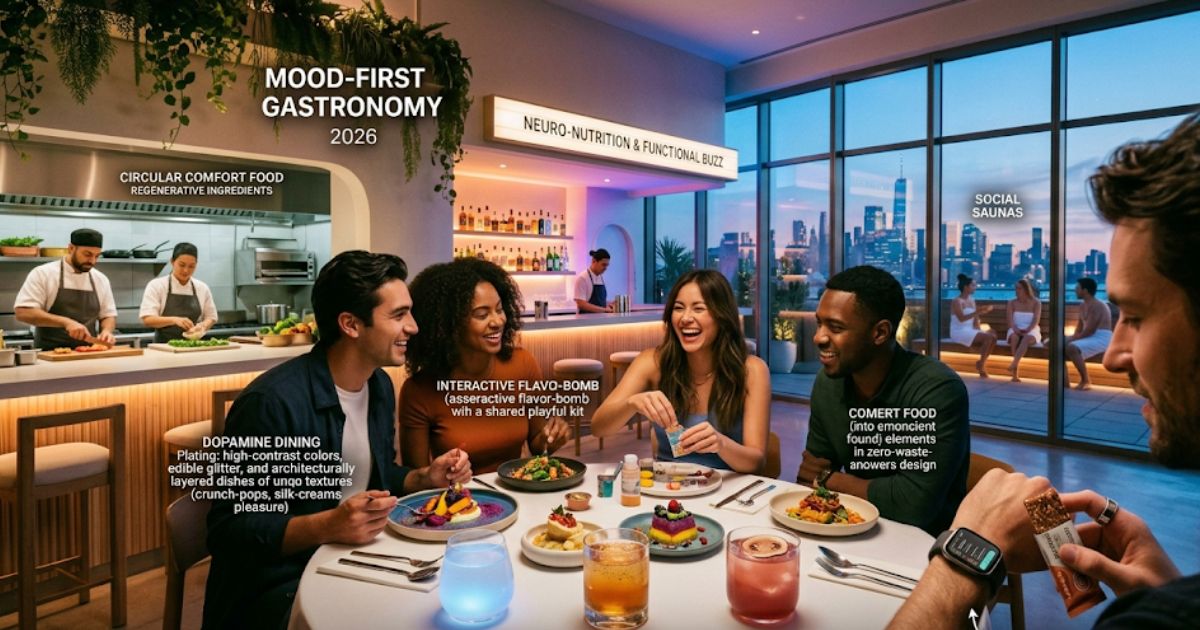
The most popular restaurant concept of 2026 is Dopamine Dining. These aren’t just places to eat; they are sensory playgrounds designed to spark instant joy.
- Visual Feasts: Expect high-contrast colors, edible glitter, and gravity-defying plating. The goal is to trigger a visual dopamine hit before the first bite.
- Texture Play: Chefs are layering “crunch-pops,” “silk-creams,” and “fizzy-gels” to engage the brain’s novelty sensors.
- Shared Delight: These meals are designed to be interactive, encouraging groups to assemble their own “flavor-bombs,” turning dinner into a collaborative game.
2. Functional Mocktails and “The Buzz Without the Blues”
The “Sober Curious” movement of the early 2020s has evolved into a sophisticated Functional Mocktail industry. In 2026, the bar menu is divided by desired feeling rather than base spirit.
The New Menu: You’ll find drinks like The Flow State (infused with Lion’s Mane mushroom for focus), The Social Lubricant (featuring L-Theanine and Magnesium for relaxation), and The Sunset Glow (packed with Ashwagandha to lower cortisol).
Alcohol consumption is at an all-time low because these “Smart Drinks” offer a social “buzz” without the next-day inflammatory crash, making the 2026 nightlife scene clearer and more connected.
3. Adaptogenic Snacking: The Stress-Buster in Your Pocket
Snacking has undergone a functional revolution. The vending machines of 2026 don’t stock empty calories; they stock Adaptogenic Snacks.
Whether it’s a dark chocolate bar infused with Reishi mushrooms for evening wind-downs or “Brain Bites” with Omega-3s and Bacopa for afternoon slumps, every snack serves a biological purpose. We are treating our afternoon hunger as an opportunity to regulate our nervous systems, turning a quick bite into a moment of micro-therapy.
4. The “Post-Meal Glow” Metric
In 2026, the success of a meal is measured by how you feel two hours after eating it. This is the Post-Meal Glow.
High-end restaurants now use “Bio-Feedback” menus that suggest pairings based on your current stress levels (often tracked via your wearable ring or watch). If your device detects high stress, the waiter might suggest a tryptophan-rich starter to help boost serotonin production. It’s personalized, data-driven, and deeply empathetic.
5. Circular Comfort Food: Nostalgia with a Conscience
Finally, we are seeing a return to Circular Comfort Food. These are the dishes we grew up with—mac and cheese, dumplings, hearty stews but reinvented using regenerative ingredients and zero-waste techniques. It’s the ultimate “mood” food: the psychological safety of nostalgia combined with the ethical peace of mind that comes from planet-friendly sourcing.
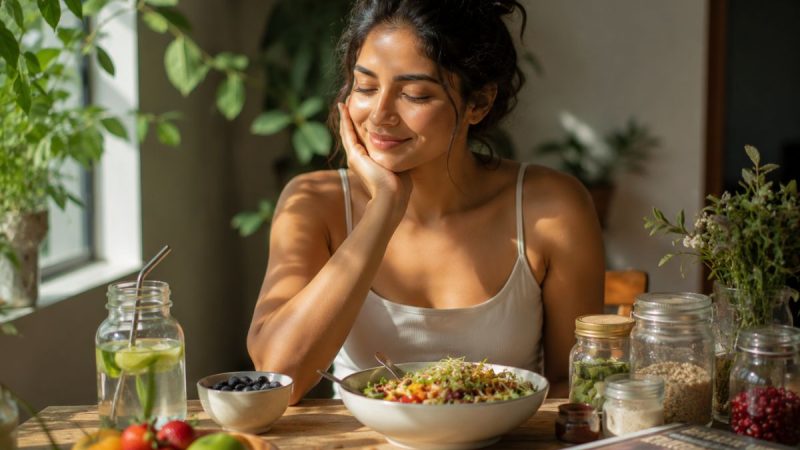
Food in 2026 is no longer an enemy to be tracked or a fuel to be optimized; it is a tool for emotional regulation. By prioritizing how our meals affect our minds, we are reclaiming the dinner table as a place of healing and happiness. After all, the best ingredient any chef can use is a little bit of serotonin.