Salasar Balaji Travel Guide 2026: Pilgrimage, Rituals, and Tips
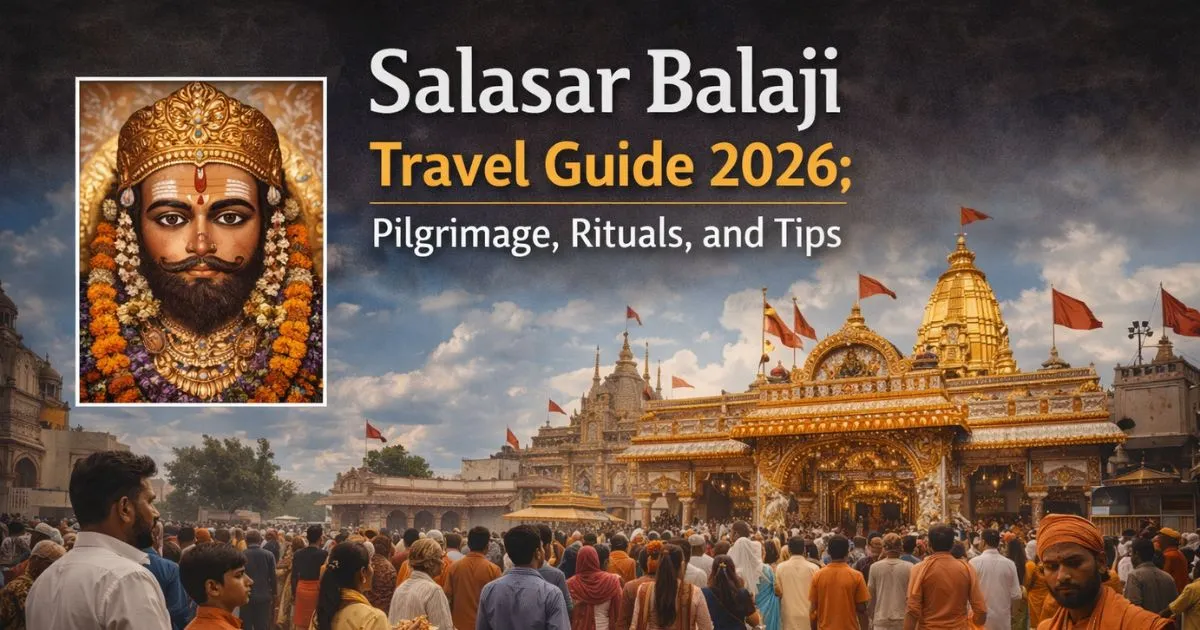
The Ultimate Guide to Salasar Balaji: A Journey to Rajasthan’s Sacred Siddhapitha
Traveling to Salasar Balaji isn’t just a trip into the Churu district of Rajasthan; it is a journey into the heart of “Siddha” devotion. Located approximately 165 km from Jaipur and 315 km from Delhi, this small town revolves entirely around the energy of its deity.
If you are planning a visit to the only Hanuman temple in the world where the Lord is depicted with a beard and mustache, this guide will help you navigate the logistics, the rituals, and the spiritual atmosphere.
Table of Contents
Getting There: The Journey to Salasar
Salasar is well-connected by road, making it a popular weekend pilgrimage for residents of neighboring states.
- By Road: Most travelers arrive via Jaipur or Delhi. The drive from Jaipur takes roughly 3 to 4 hours via NH52. The roads are generally well-maintained, passing through the characteristic semi-arid landscapes of Rajasthan.
- By Rail: The nearest railway stations are Sujangarh (27 km), Sikar (57 km), and Laxmangarh (31 km). From these stations, private taxis and local buses are frequently available to take you directly to the temple town.
- By Air: The nearest airport is Jaipur International (JAI). From there, you can hire a private car for a comfortable one-way journey.
Where to Stay: Dharamshalas and Guest Houses
Salasar is famous for its hospitality. The town is dotted with hundreds of Dharamshalas (charitable lodging) and guest houses. Many of these are maintained by various community trusts and offer clean, comfortable rooms at very modest rates.
Pro Tip: If you are visiting during Chaitra Purnima or Ashwin Purnima, book your accommodation weeks in advance. The town’s population swells by hundreds of thousands during these festivals.
Navigating the Temple Experience
The Salasar Balaji temple is open throughout the day, usually from 4:00 AM to 10:00 PM, though these timings can shift slightly during major festivals.
1. The Queue System
On weekdays, the wait time is typically manageable (30-60 minutes). However, on Saturdays and Tuesdays—days sacred to Lord Hanuman—the queues can stretch for several hours. The temple management uses a zigzag barricade system to ensure a smooth flow of devotees.
2. The Darshan (Viewing the Deity)
As you reach the inner sanctum, the atmosphere becomes electric. The chants of “Jai Shree Ram” and “Jai Balaji” grow louder. You will see the unique idol: a round, serene face covered in sindoor (vermillion), adorned with a gold crown, and featuring the distinctive beard and mustache.
3. Essential Rituals
To fully experience the spiritual depth of Salasar, many devotees participate in these specific traditions:
- Tying the Coconut: Purchase a coconut wrapped in red thread (moli). After your darshan, you can tie this coconut in the designated area within the temple complex while making a “Mannat” (vow/wish).
- The Akhand Dhuni: Don’t miss the sacred eternal fire lit by the founder, Mohandas Maharaj. Taking a moment of silence here is said to be deeply grounding.
- Swayambhu Darshan: Remember that the idol is considered Swayambhu (self-manifested), meaning it wasn’t carved by human hands but appeared naturally from the earth.
Practical Travel Tips
1. Choose your timing
Avoid peak heat
Rajasthan temperatures can exceed 40°C (104°F) in summer. The best time to visit is between October and March. If you visit in summer, aim for a pre-dawn darshan.
2. Dress appropriately
Respectful attire
As with most Indian temples, modest clothing is expected. Avoid shorts or sleeveless tops. Many devotees choose to wear saffron or red colors to honor the deity.
3. Footwear management
Safe storage
You must remove your shoes before entering the temple precincts. There are designated “Juta Chappal” stalls outside. Note your stall number to find them easily afterward.
4. Manage your belongings
Beware of monkeys
Like many Hanuman temples, Salasar has a resident monkey population. They are generally harmless but attracted to food bags or loose items like glasses. Keep your offerings tucked away until you are inside.
Exploring the Surroundings
While the Balaji temple is the primary draw, the nearby area offers other spiritual and cultural touchpoints:
- Anjani Mata Temple: Located about 2 km from Salasar, this temple is dedicated to Hanuman’s mother, Anjani. It is traditional for many pilgrims to visit here first or immediately after Salasar.
- Laxmangarh Fort: For history buffs, this 19th-century fort offers a stunning view of the Shekhawati region and is a perfect stop on your way back to Sikar or Jaipur.
- Local Cuisine: Do not leave without trying local Rajasthani staples like Dal Bati Churma or the famous Kadhi Kachori found in the local markets surrounding the temple.
A Final Note on the Spirit of Salasar
What makes Salasar unique isn’t just the architecture; it’s the collective faith of the people. You will see devotees performing Dandvat Pranam (prostrating fully on the ground) for kilometers as they approach the temple. This level of devotion is infectious, making Salasar a place where even a casual traveler might find themselves moved by the profound sense of peace and protection that the “Bearded Balaji” is said to provide.