
Choosing You — The Guilt-Free Guide to Limited Contact
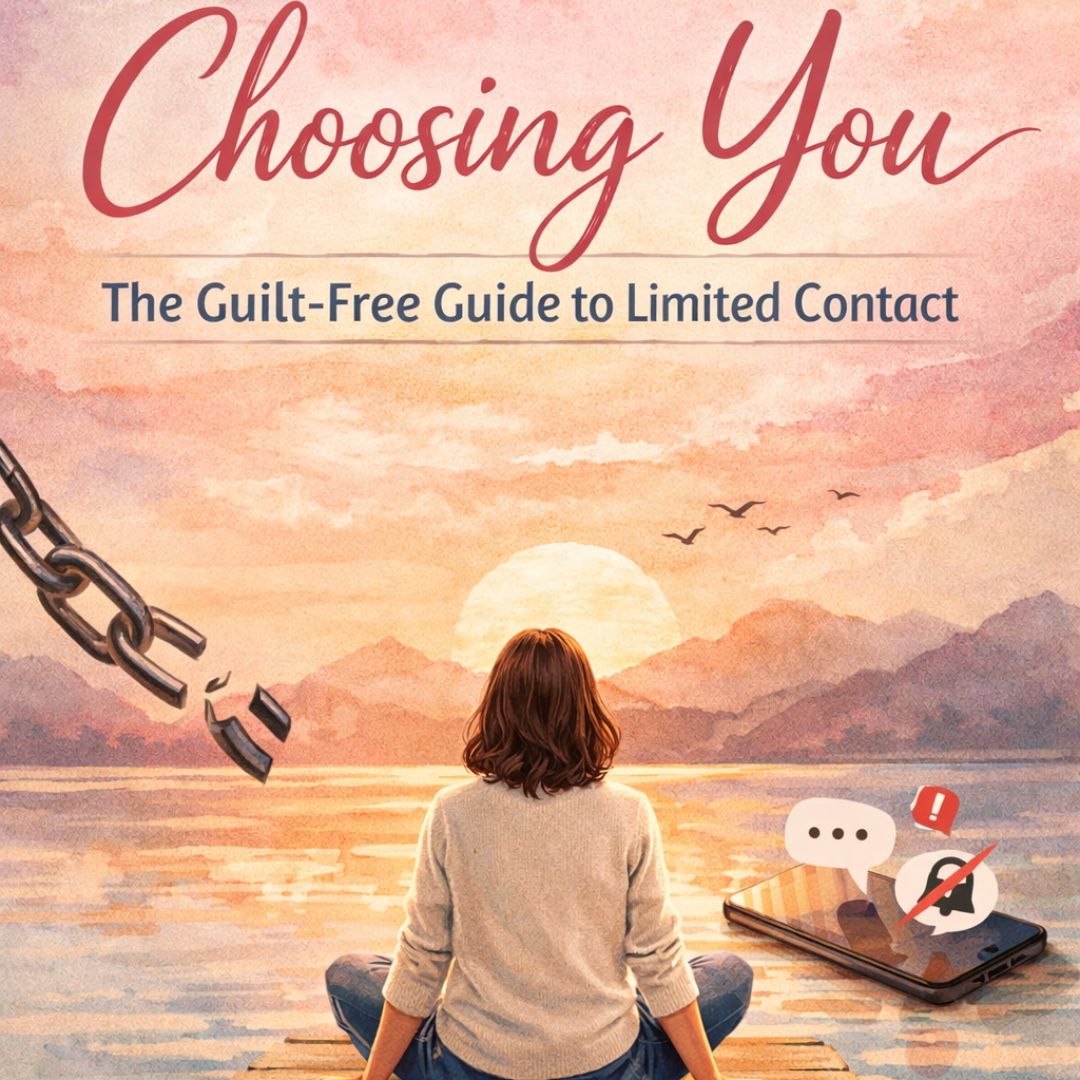
The moment you decide to take a step back from a negative loved one, a second, more internal battle begins: The Guilt War. Society, culture, and often religion have spent years telling us that “family is everything” and that we must “endure all for love.” When you decide to stop answering every phone call, skip a holiday, or move to a different city to escape a toxic atmosphere, your brain triggers a shame response. You feel like a “bad” daughter, son, or partner.
This guide is designed to help you dismantle that guilt and realize that limited contact is not a punishment for them; it is a boundary for you.
Table of Contents
1. Understanding the “Guilt Hook”
Guilt is the primary tool used by negative people to maintain the status quo. In dysfunctional systems, “loyalty” is often code for “compliance.”
- The Obligation Trap: The idea that because someone provided for your basic needs, they have a lifetime subscription to your emotional energy.
- The “Vulnerability” Play: Negative loved ones often frame themselves as the victim the moment you set a boundary. “After all I’ve done for you, you’re going to treat me like this?”
2. Reframing “Limited Contact”
To find peace, you must change the definitions you carry in your head.
| Old Thought | New Empowered Thought |
| “I am abandoning my family.” | “I am adjusting the distance to a level where I can still be kind.” |
| “I am being selfish.” | “I am being self-sustaining so I don’t become negative myself.” |
| “They need me to survive.” | “I am not a crisis counselor; I am a person with my own life.” |
3. The “Compassionate Distance” Strategy
Limited contact doesn’t have to be a dramatic “No Contact” explosion. It can be a series of strategic shifts:
The “Scheduled Connection”
Instead of being available 24/7 for their vents and complaints, choose a specific time.
- The Rule: “I will call Mom on Saturday mornings for 20 minutes.”
- Why it works: You go into the interaction with a full “battery” and a clear exit strategy. You are no longer being ambushed by negativity on a random Tuesday afternoon.
The “Public Only” Rule
If a loved one is particularly negative or abusive behind closed doors, only meet them in public spaces (restaurants, parks, malls).
- Why it works: People are generally on their best behavior in public. It limits the “emotional safety” they feel to lash out at you.
Digital Distancing
Mute notifications from negative family threads or individuals.
- The Rule: You check the messages when you are emotionally ready, not the second your phone pings.
4. Handling the “Extinction Burst”
When you change the rules of a relationship, the other person usually gets worse before they get better. This is called an Extinction Burst. They will try harder to provoke you, guilt you, or involve other family members to “talk sense” into you.
The Key: Stay the course. If you cave during the extinction burst, you are teaching them that if they just get loud enough or mean enough, you will give in. If you stay consistent, they will eventually realize the old tactics no longer work.
5. Scripting Your Boundaries
You don’t need to explain yourself extensively. The more you explain, the more “ammo” you give them to argue.
- The Phone Call Exit: “I’ve loved catching up, but I have to go now. Talk soon!”
- The Topic Pivot: “I’m not the best person to talk to about this. Have you considered talking to [Professional/Friend]?”
- The Hard Line: “I want to spend time with you, but I’m going to head out if we continue to talk about [Negative Topic].”
➡ Must Read: How to Protect Your Peace Without Saying a Word
Final Thought: You Are Not a Sacrifice
You were brought into this world to live your own life, not to be a sponge for someone else’s unhealed trauma. By choosing limited contact, you are actually preserving the possibility of a long-term relationship. If you don’t set boundaries, you will eventually burn out and go “No Contact” out of pure necessity.
Distance is the medicine that allows the relationship to survive in a smaller, healthier dose.
Moving Forward in Your Journey…
Once you’ve managed the guilt of stepping back, the real work of “cleaning the system” begins.