
The Ultimate Guide to Protecting Your Peace: Why Distance from Negativity is Non-Negotiable
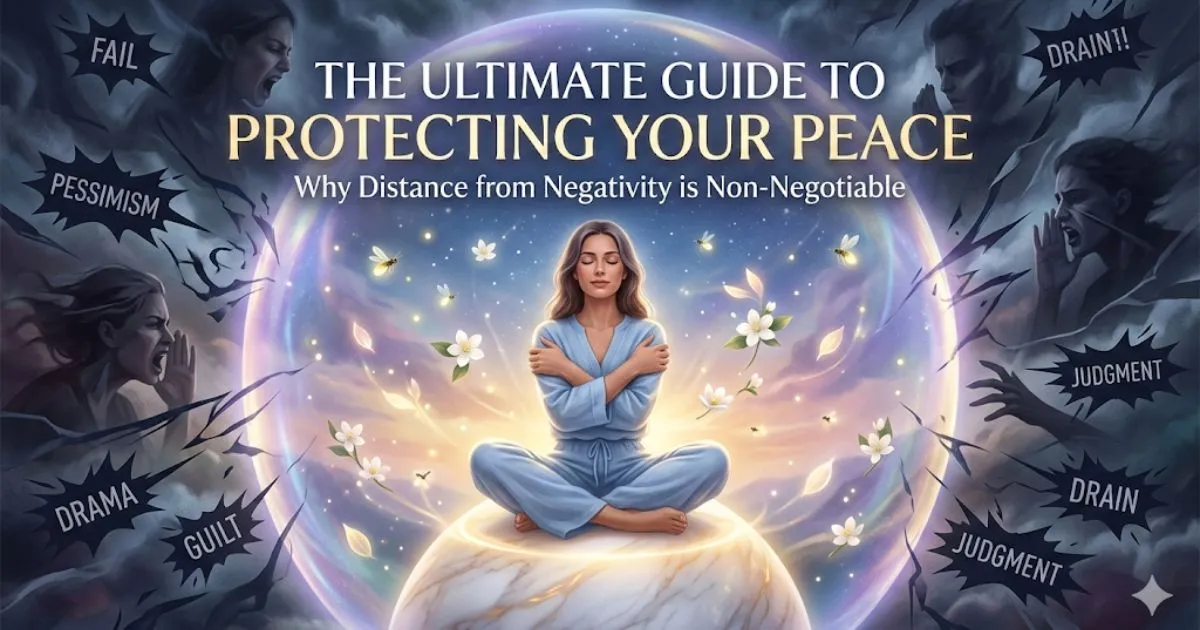
In the modern era, we are bombarded by a cacophony of digital noise, economic pressures, and social expectations. However, the most insidious threat to our mental health isn’t a global headline or a social media algorithm it is the persistent, localized presence of negativity within our immediate environment.
When we speak of “negativity,” we aren’t referring to the healthy expression of sadness or the navigation of life’s inevitable challenges. We are talking about a chronic state of pessimism, criticism, and emotional volatility that drains the energy of everyone in its orbit. When this negativity comes from our loved ones, the people who are supposed to be our sanctuary, it becomes a spiritual and psychological emergency.
This guide explores why distancing yourself from negativity is not just a self-help trend, but a non-negotiable requirement for a functional, successful, and happy life.
1. The Biology of Negativity: Why Your Body Can’t Ignore It
To understand why distance is necessary, we must first understand that negativity is not just “in your head.” It is a physiological event.
The Mirror Neuron System
Human beings are wired for empathy through a network of brain cells called mirror neurons. These neurons fire both when we perform an action and when we observe someone else performing that same action. If you sit across from a loved one who is constantly vibrating with anger, anxiety, or resentment, your brain literally begins to simulate those states. You aren’t just “hearing” their negativity; your body is practicing it.
The Cortisol Cascade
Chronic exposure to a negative environment keeps the body in a state of “High Alert.” When a family member or partner is perpetually critical or dramatic, your amygdala—the brain’s smoke detector—remains triggered. This leads to a constant drip of cortisol and adrenaline. Over time, this “weathering” effect leads to:
- Weakened immune response.
- Disrupted sleep patterns (insomnia or oversleeping).
- Cognitive decline (difficulty focusing or making decisions).
- Increased risk of cardiovascular issues.
Conclusion: Staying in a negative environment is a direct assault on your physical longevity. You cannot “tough it out” because your biology is working against you.
2. The Unique Trappings of “Loved One” Negativity
Distancing yourself from a toxic boss or a negative acquaintance is relatively straightforward. But when the source of negativity is a parent, a sibling, or a long-term partner, the situation is layered with complexity.
The Weaponization of History
Loved ones know your “buttons” because they helped install them. They know your insecurities, your past failures, and your deepest fears. In a negative dynamic, this information is often used consciously or subconsciously to keep you anchored to their level of emotional distress.
The Guilt of “Leaving the Tribe”
Evolutionarily, being cast out of the tribe meant death. This ancient fear manifests today as guilt. When you attempt to set boundaries or distance yourself from a negative family member, you feel like a “traitor.” However, it is essential to realize that a tribe that demands your mental destruction as the price of admission is no longer a tribe, it’s a cage.
The Enmeshment Trap
In many families, boundaries are nonexistent. This is known as enmeshment, where one person’s mood becomes everyone’s mood. If a parent is miserable, they expect the children to be miserable in solidarity. Breaking away from this requires a radical shift in perspective: You can love someone deeply without participating in their dysfunction.
3. Why Positive Thinking Is Not Enough
Many people try to “combat” negativity by being “twice as positive.” They believe that if they just bring enough light to the room, the darkness will fade. This is a fallacy known as The Savior Complex, and it often leads to burnout.
You Cannot Change a Person Who Doesn’t See a Problem
Negativity is often a deeply ingrained personality trait or a coping mechanism for the other person. If they are not actively seeking help or practicing self-awareness, your “positivity” acts only as a temporary bandage. Eventually, their vacuum of negativity will suck the air out of your lungs.
The Myth of the “Thick Skin”
We are told to grow “thick skin” to deal with difficult people. But thick skin eventually turns into a shell. When you harden yourself to block out the negativity of a loved one, you also harden yourself to the beauty, joy, and intimacy of the world. Distance allows you to keep your heart soft while keeping your environment safe.
4. The Pillars of Strategic Distance
“Distancing” does not always mean moving to a different continent (though sometimes that helps). It is a spectrum of behaviors designed to protect your internal state.
I. Emotional Disengagement (The Grey Rock Method)
The Grey Rock Method is a technique where you become as uninteresting as a plain grey rock. You offer short, non-committal answers (“Okay,” “I see,” “That’s interesting”). By removing the “emotional payoff” for the negative person, they eventually look elsewhere for their drama fix.
II. Time Management and “Low Information”
You don’t have to share every detail of your life with someone who uses that information to criticize you. Strategic distance involves:
- Reducing the frequency of calls/visits.
- Keeping conversations focused on “surface” topics (weather, sports, movies).
- Ending interactions as soon as the negativity begins (“I’m not in a place to discuss this right now, I have to go”).
III. The Physical Buffer
Environment dictates behavior. If your home is a battleground, your nervous system can never reset. Creating a physical buffer whether it’s moving out, locked doors, or designated “peace zones” is vital for recovery.
5. The Aftermath: What Happens When You Finally Step Away?
When you successfully distance yourself from negativity, you don’t just feel “better.” You undergo a profound transformation.
The Return of Creativity
When your brain is no longer occupied with “damage control” or predicting the next outburst, it begins to wander. This is where innovation, art, and problem-solving live. Many people find that their careers and hobbies flourish only after they have removed the negative weights from their ankles.
The Clarity of Self-Identity
In a negative environment, you are defined by your reaction to others. Once you are alone in the quiet, you start to ask: Who am I when no one is complaining at me? What do I actually like? This is the birth of true authenticity.
The Magnetism of Peace
Like attracts like. When you are no longer submerged in the drama of loved ones, you begin to attract people who value peace as much as you do. You start building a “Chosen Family” a group of people who provide the support the biological family could not.
6. Why This Message Matters Now
Search trends for “Mental Peace,” “Toxic Family Boundaries,” and “Emotional Intelligence” are at an all-time high. People are no longer willing to sacrifice their mental health for the sake of “tradition” or “duty.” By prioritizing your peace, you are participating in a global shift toward emotional maturity.
7. A Final Note on Compassion
Distancing yourself from a negative loved one is an act of tough love not just for yourself, but for them. By refusing to participate in their negativity, you stop enabling their behavior. You provide them with a mirror that says: “I love you, but I will not join you in this darkness.”
Your peace is your most valuable currency. Do not spend it on people who do not know how to treasure it, regardless of their title in your life.
The Content Cluster: Deep Dives into Protection
To further your journey, explore these five specialized articles that expand on the concepts introduced in this guide:
Article 1: The Art of the “Invisible Boundary”
The Core Idea: You don’t always have to announce a boundary for it to exist. Learn how to mentally exit a conversation while physically remaining in the room. This article covers the internal mantras and visualization techniques used to stay “untouchable” by external words.
Click to read more on Invisible Boundary
Article 2: De-Programming Parental Pessimism
The Core Idea: Many of us are running on “legacy software” installed by our parents. If you were raised by people who always expected the worst, this guide helps you identify and delete those thought patterns, replacing them with a realistic, empowered optimism.
Click to read more on parental pessimism and how to overcome it
Article 3: Choosing You: The Guilt-Free Guide to Limited Contact
The Core Idea: How to handle the “Family Guilt Trip.” We provide scripts for difficult conversations and a psychological breakdown of why your family might be reacting poorly to your growth—and why that reaction is proof that you’re doing the right thing.
Click to read more on guilt free guide to living
Article 4: Rewiring Your Brain After Long-Term Negativity
The Core Idea: Healing the nervous system. This article explores the science of neuroplasticity, offering a 30-day “Mental Detox” plan involving meditation, environment design, and digital hygiene to purge the echoes of negative voices.
Click to read more on how to rewire your brain
Article 5: Building a “Chosen Family” Support System
The Core Idea: Once you clear out the weeds, what do you plant? This article focuses on how to identify “Green Flag” individuals people who celebrate your wins, respect your boundaries, and contribute to your peace rather than subtracting from it.