What Highly Disciplined People Do Differently

Discipline isn’t about willpower. That’s the first illusion to drop.
Highly disciplined people don’t wake up every day feeling motivated. They don’t rely on bursts of inspiration or dramatic life changes. What they do instead is far less glamorous and far more effective. They build systems that make discipline almost automatic.
Here’s what they do differently.
1. They Don’t Rely on Motivation—They Build Systems
Motivation is unpredictable. It fades when things get hard, boring, or repetitive.
Disciplined people design routines that work without motivation. They reduce decision-making and create structure.
- Same wake-up time
- Same work blocks
- Pre-decided tasks
They don’t ask, “Do I feel like doing this?”
They ask, “Is this part of the system?”
That shift changes everything.
2. They Make Decisions Once, Not Every Day

Every decision drains mental energy. The more choices you make, the weaker your discipline becomes.
Highly disciplined people:
- Plan their day the night before
- Fix their routines
- Automate small choices (food, clothes, workouts)
This is why many successful people wear similar outfits or follow repetitive schedules.
They eliminate friction.
3. They Respect Time Like It’s Currency
For them, time isn’t something to “pass”—it’s something to invest.
They are intentional about:
- Where their hours go
- Who they spend time with
- What they consume (content, conversations, distractions)
They understand a hard truth:
Every wasted hour compounds into a wasted life.
4. They Do Things Even When They Don’t Feel Like It
This is the real separator.
Most people act based on feelings.
Disciplined people act based on commitments.
They show up when:
- They’re tired
- They’re bored
- They’re not in the mood
Because they know consistency beats intensity.
Missing once is human.
Repeating it is a pattern.
5. They Embrace Boredom (Instead of Escaping It)
We live in a dopamine-driven world—scrolling, binge-watching, constant stimulation.

Highly disciplined people train themselves to sit with boredom.
- They can focus without checking their phone
- They can work without needing constant entertainment
- They delay gratification
This gives them a massive advantage.
Because success often comes from doing the same thing repeatedly—without quitting.
6. They Set Clear, Non-Negotiable Boundaries
They don’t say yes to everything.
They protect:
- Their time
- Their energy
- Their focus
This means:
- Saying no without guilt
- Walking away from distractions
- Limiting access to things that drain them
Discipline isn’t just what you do.
It’s what you refuse to do.
7. They Focus on Identity, Not Just Goals
Most people chase outcomes:
- “I want to lose weight”
- “I want to be successful”
Disciplined people focus on identity:
- “I am someone who trains daily”
- “I am someone who shows up”
This aligns behavior with self-image.
When discipline becomes part of who you are, it stops feeling like a struggle.
8. They Track Progress (Even When It’s Small)
What gets measured improves.
Disciplined people:
- Track habits
- Monitor progress
- Reflect regularly
Not for perfection but for awareness.
Small wins build momentum.
Momentum builds discipline.
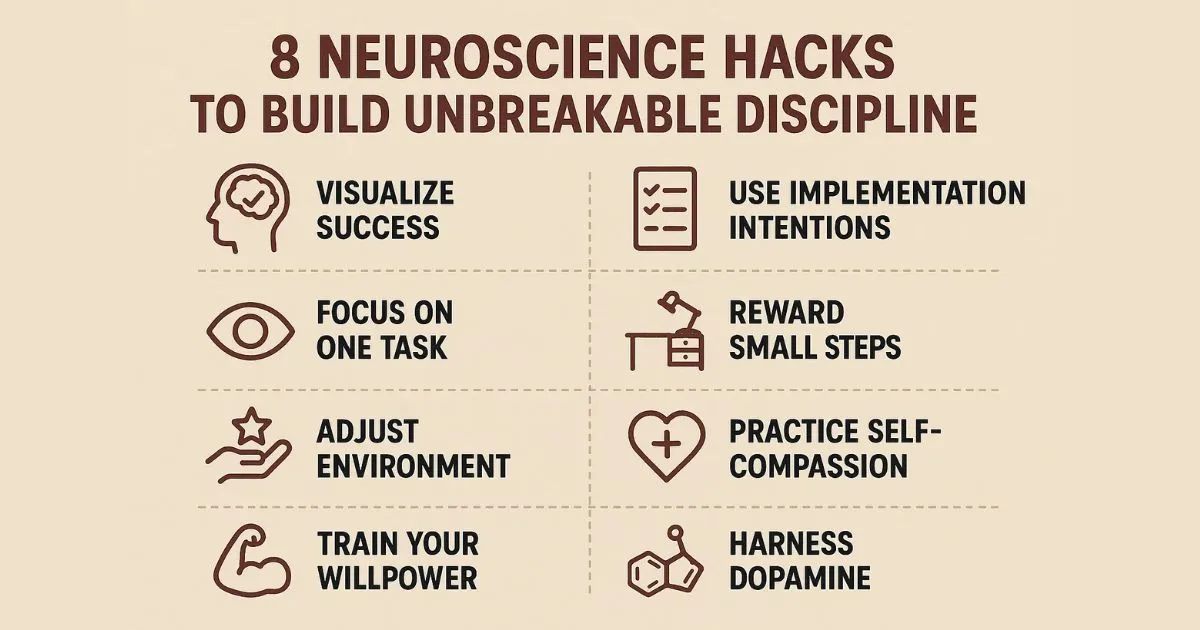
9. They Control Their Environment
They don’t rely on self-control alone—they design surroundings that make good behavior easier.
- Keep junk food out of reach
- Keep distractions away
- Keep tools ready (books, gym gear, workspace)
Environment beats willpower.
Always.
10. They Accept Discomfort as Part of Growth
Most people avoid discomfort.
Disciplined people expect it.
They understand:
- Growth is uncomfortable
- Progress is slow
- Results are delayed
They don’t quit when it gets hard.
They assume it will be hard.
And they keep going anyway.
The Bottom Line
Highly disciplined people aren’t superhuman.
They’re just less dependent on feelings and more committed to structure.
They don’t wait to feel ready.
They act, and let action shape their mindset.
A Brutal Truth to Leave You With
You don’t lack discipline.
You lack systems.
Fix your systems, and discipline will follow.