
8 Neuroscience Hacks to Build Unbreakable Discipline
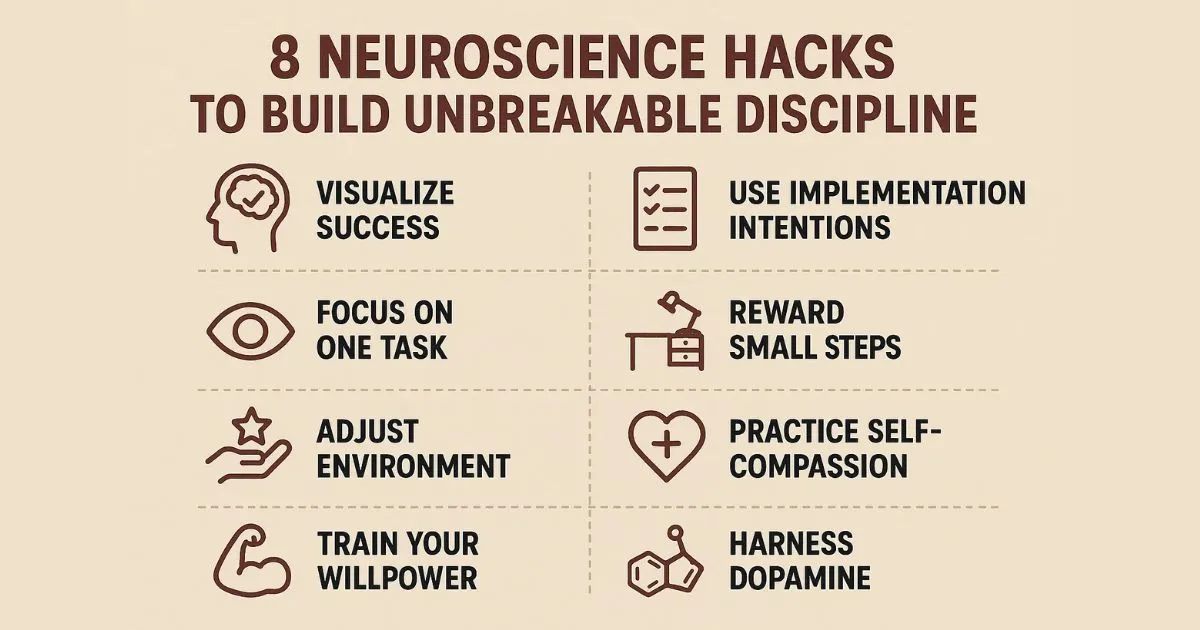
We often think discipline is about willpower alone, but neuroscience tells a very different story. Your brain is not built for endless self-control; it is designed to conserve energy and seek comfort. That is why discipline feels hard. But by understanding how the brain works, you can rewire it to make discipline natural instead of painful. Here are eight neuroscience-backed hacks that can help you build unbreakable discipline in 2025.
1. Train Your Prefrontal Cortex with Small Wins
The prefrontal cortex is the part of your brain that makes decisions, plans, and controls impulses. When you set tiny, achievable goals and accomplish them, you strengthen this muscle. Neuroscientists call this “neuroplasticity,” the brain’s ability to rewire itself. Something as small as making your bed daily or finishing a two-minute task builds neural pathways for bigger discipline later.
2. Use Dopamine the Right Way
Dopamine is not just the “pleasure chemical“; it is also the motivation chemical. Your brain releases dopamine when it anticipates a reward. Instead of waiting for big wins, give yourself micro-rewards. For example, listen to a favorite song after finishing a task or check off a to-do list. This conditions your brain to crave disciplined behavior.
3. Break Tasks Into “Implementation Intentions”
Your brain struggles with vague goals like “work out more.” But neuroscience shows that specific cues, called implementation intentions, activate memory and habit circuits. Replace “I’ll work out” with “I’ll go for a 20-minute walk at 7 AM after my coffee.” The clearer the plan, the easier your brain can follow through.

4. Practice Delayed Gratification with the 10-Minute Rule
Impulse control is tied to the brain’s ability to delay gratification. A simple hack is the 10-minute rule: when you crave something distracting, wait ten minutes before indulging. Often the urge fades because the brain’s reward center calms down. This method strengthens self-control circuits without feeling like deprivation.
5. Optimize Your Environment for Your Brain
Neuroscience research shows that willpower is not endless. Instead of relying on sheer grit, shape your environment. Keep your phone away while working, place healthy snacks within reach, or create visual cues for habits. By reducing “decision fatigue,” you free your prefrontal cortex for important tasks.
6. Use Habit Stacking for Automatic Discipline
Habit stacking uses the brain’s associative memory. When you link a new habit to an existing one, the brain pairs them together. For instance, after brushing your teeth, do two minutes of meditation. Over time, the association makes discipline automatic because your brain runs the behavior on autopilot.
7. Harness the Power of Sleep and Rest
A tired brain cannot be disciplined. The prefrontal cortex weakens without proper sleep, making you more impulsive. Neuroscience shows that deep sleep clears out toxins and strengthens neural connections. If you want unbreakable discipline, prioritize sleep as much as hustle. Rest is brain fuel.
8. Visualize the Future You
The brain struggles with long-term goals because it treats your future self like a stranger. Functional MRI studies show that when people visualize their future selves in detail, the brain activates empathy and connection regions. Writing a letter from your “future disciplined self” or visualizing your ideal lifestyle creates a neurological bond that motivates you to act today.
Why This Works
Discipline is not about punishing yourself or working harder than everyone else. It is about working with your brain instead of against it. By using neuroplasticity, dopamine, habit loops, and environmental design, you can create a lifestyle where discipline feels natural.
The truth is, unbreakable discipline is not built overnight. It is the result of thousands of small, brain-friendly choices. Once your brain learns that discipline brings more reward than distraction, success becomes inevitable.