The Loneliness No One Talks About: India’s Silent Relationship Crisis

Walk into any café in Mumbai, Delhi, or Bengaluru on a Friday evening and you’ll notice something curious.
Tables full of friends, couples, colleagues all laughing, chatting, sipping coffee. And yet, if you really look, you’ll see the distance in their eyes, a haunting loneliness. A quick scroll under the table. A distracted “hmm” in the middle of someone’s story. An unspoken fatigue hanging in the air.
We’re together, but not really with each other.
The Hidden Epidemic in a Crowded Country
India is often portrayed as a country where loneliness is rare — where the joint family system, vibrant festivals, and bustling neighbourhoods keep isolation at bay. But the numbers tell a different story.
A 2023 survey by Ipsos found that 43% of urban Indians report feeling lonely “often” or “always” — higher than the global average. Another study by the All India Institute of Medical Sciences (AIIMS) revealed that urban young adults aged 18–34 are the most affected, with loneliness strongly linked to anxiety, depression, and burnout.
“Loneliness in India is different from loneliness in the West,” says Dr. Rachna Khanna Singh, a Delhi-based relationship therapist. “Here, people may be surrounded by others but still feel deeply disconnected. It’s emotional loneliness, not social isolation.”
Lonely in a Crowd
It’s not the “I have no one” loneliness. It’s the “I have people, but I don’t feel understood” kind. The sort that creeps in after another shallow conversation, another WhatsApp “LOL” that doesn’t make you laugh, another evening where you’re physically present but emotionally absent.
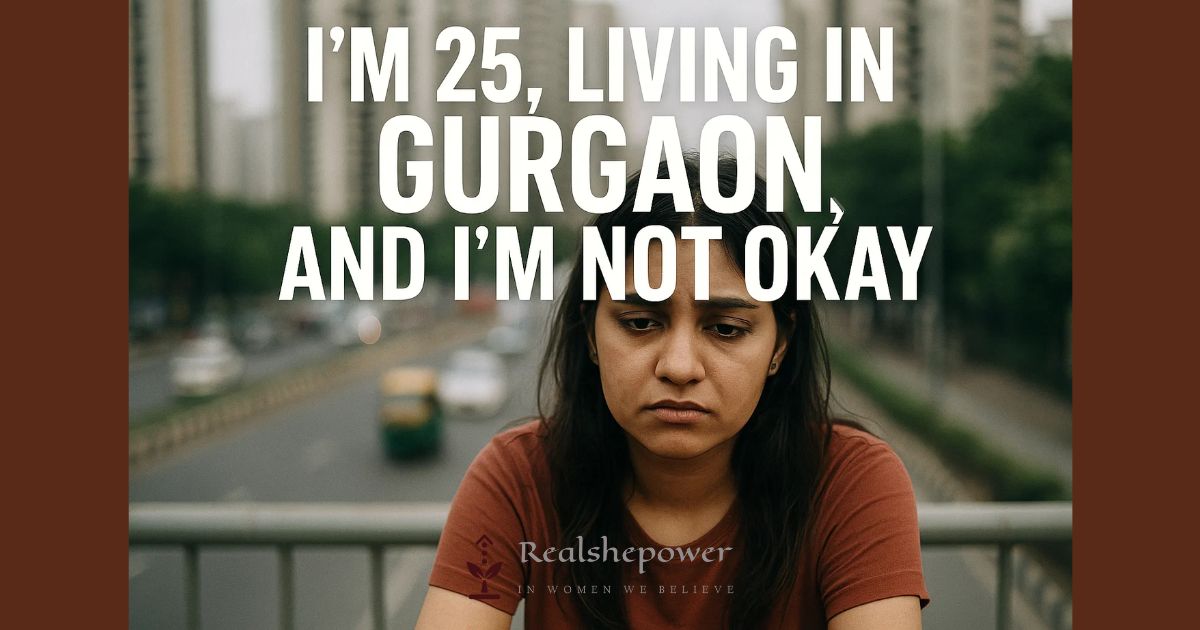
Twenty-seven-year-old Swati, a marketing professional in Gurugram, describes it perfectly: “I meet friends every weekend. We take selfies, we laugh. But I go home feeling empty. It’s like I’m performing friendship, not living it.”
Recommended Read

We’re All Busy, But for What?
We’ve built lives around being productive, not present.
The 9-to-9 work culture, endless side hustles, and the constant performance of social media leave little room for genuine connection.
In metro cities, commutes can eat up three to four hours a day. Add overtime and late-night Netflix, and the window for meaningful human interaction shrinks to a sliver.
“It’s not that we don’t care about people anymore,” says psychologist and author Dr. Shyam Bhat. “It’s that we’ve forgotten how to slow down enough to care deeply. Emotional intimacy requires time, and time is the one thing modern urban Indians guard fiercely for work, but not for relationships.”
Recommended Read

The Disappearance of Depth
When was the last time you had a conversation that wandered? One that didn’t have a quick purpose or a neat conclusion?
We’ve grown accustomed to efficiency in everything — even in our relationships. We want replies in seconds, resolutions in minutes, and bonding in the time it takes to finish a coffee. But deep connection doesn’t work on deadlines. You can’t speed-run intimacy.
A Cultural Shift No One Prepared Us For
Our parents lived in an India where relationships were built slowly — letters exchanged, train rides taken, hours spent waiting for a single meeting. Today, we can connect instantly with anyone, anywhere. And paradoxically, that very abundance has made connection feel… hollow.
We’ve traded scarcity for saturation. But like drinking saltwater, more doesn’t always mean satisfying.
Recommended Read
What We’re Losing
- The ability to sit in silence without reaching for our phones
- The patience to truly know someone beyond their Instagram persona
- The emotional stamina to work through the messy parts of relationships instead of ghosting, muting, or unfollowing
Thirty-one-year-old Ankit, an IT consultant in Pune, admits: “I’ve ended friendships over texts just because I didn’t have the energy to talk things out. It’s easier to block than to explain. But then I miss them, and I hate myself for it.”
The Mental Health Connection
Loneliness doesn’t just make us sad — it affects our physical health.
Studies link chronic loneliness to increased risks of heart disease, weakened immunity, and premature death. In 2022, the World Health Organization (WHO) identified social isolation and loneliness as “urgent public health concerns.”
In India, where therapy is still stigmatized, many suffer in silence. Mental health helplines like AASRA and Vandrevala Foundation have reported a spike in calls related to loneliness since the COVID-19 lockdowns, and the numbers haven’t dropped back to pre-pandemic levels.
Relearning Presence
Fixing this isn’t about grand gestures. It’s about small, stubborn choices.
- Saying no to that extra Zoom call so you can have chai with your spouse without rush
- Leaving your phone in another room when a friend comes over
- Asking “How are you really?” and sitting through the long, messy answer
These aren’t time-consuming acts — they’re attention-consuming ones. And attention is the new currency of love.
A Personal Plea
I’m not writing this from a pedestal. I’m guilty too. I’ve been the friend who cancels plans last minute, the sibling who listens with half an ear, the partner scrolling at midnight instead of reaching out.
But I’ve also felt the shift when I choose differently. The way a conversation deepens after the awkward phone-free silence. The way someone’s shoulders relax when they know they have your full attention.
We can’t bring back the India of handwritten letters and slow courtships. But we can bring back the one thing that made those relationships last — the art of showing up, fully.
Because if we don’t, we’ll wake up one day to realize that in the rush to stay connected, we’ve never felt more alone.