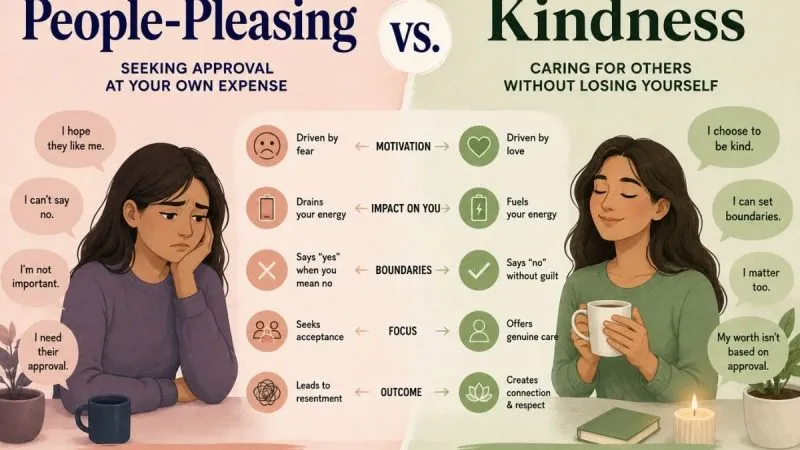
How “Adjust Kar Lo” is Killing Our Self-Respect

Adjust kar lo
In India, we grow up on a steady diet of compromise. It’s served to us at the dinner table when we’re told to eat what’s cooked even if we hate it. It’s stitched into our school uniforms when we accept rules that make no sense. And it’s hammered into our adult lives with the three deadliest words in the Indian vocabulary “Adjust kar lo.”
At first glance, it sounds harmless. A bit of flexibility here, a little sacrifice there, what’s the harm? But scratch the surface, and you’ll see that “adjust kar lo” has become a cultural weapon, one that trains us to silence our needs, abandon our boundaries, and stay small for the sake of keeping the peace.
Where it starts
Most Indian children hear “adjust” before they can spell it.
- Your cousin is sleeping in your bed tonight? Adjust.
- You didn’t get the bigger piece of cake? Adjust.
- You’re uncomfortable with that uncle’s touch? Adjust. (And here is where it gets dangerous.)
What begins as a social lubricant quickly morphs into a conditioning pattern: your comfort is negotiable, your voice is optional, and your needs are secondary to others.
How it grows into adulthood
By the time we’re in our 20s and 30s, “adjust kar lo” has evolved into something far more insidious.
- In workplaces, it means tolerating toxic bosses because “jobs are hard to find.”
- In relationships, it means staying in loveless or abusive marriages because “log kya kahenge.”
- In friendships, it means keeping people who drain you because “itna bhi bura nahi hai.”
We become experts at swallowing discomfort until it turns into bitterness.
Featured Fragrance

The mental health toll
Constantly adjusting takes a quiet but deadly toll on mental health. Suppressing your needs and emotions can lead to anxiety, depression, and chronic stress. The National Mental Health Survey of India 2016 reported that nearly 14% of the population suffers from mental disorders, yet most never seek help — partly because we’ve been trained to normalize suffering.
Psychologists say that repeated self-betrayal chips away at self-esteem. Each time you “adjust” instead of standing up for yourself, you reinforce the belief that you don’t deserve better. Over time, this becomes a self-fulfilling prophecy.
Why we keep doing it
- Fear of conflict – We’re taught that keeping the peace is more important than being honest.
- Cultural respect – “Elders know best” is so ingrained that questioning them feels like betrayal.
- Scarcity mindset – The idea that “this is the best you’ll get” makes us cling to bad situations.
The way forward: Unlearning ‘adjust kar lo’
Breaking this cycle requires radical self-awareness and practical courage:
- Name your discomfort. If something feels wrong, say it out loud — at least to yourself.
- Set micro-boundaries. Start with small things: refuse to share your plate if you don’t want to.
- Challenge ‘log kya kahenge’. Ask yourself: Will these people pay my bills, live my life, or feel my pain?
- Seek therapy. Especially if you’ve been adjusting your way through abuse or deep unhappiness.
- Teach the next generation differently. Tell children their feelings matter. Show them that “No” is a complete sentence.
The personal revolution
When you stop over-adjusting, you’ll meet resistance. People will call you difficult, selfish, even arrogant. That’s okay. Remember: every system resists change especially a cultural one that thrives on your silence.
But here’s the truth no one tells you: when you reclaim your boundaries, your life may get smaller at first, which means fewer friends, fewer invitations, fewer fake smiles, but it will get truer.
And in that truth, you will finally breathe.