Why Is Everyone Suddenly Taping Their Mouth Shut At Night? We Investigated
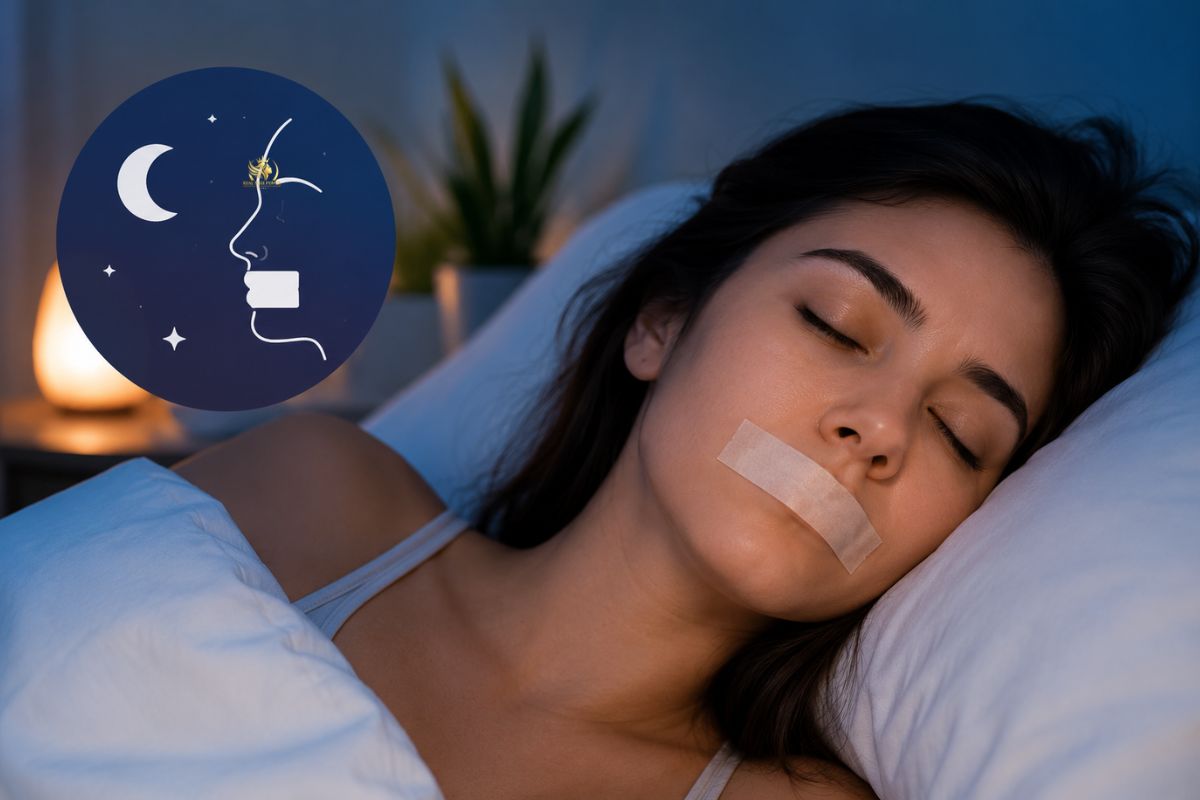
Somewhere in the last couple of years, “goodnight” started coming with an extra step for a very specific corner of the internet: a strip of tape, placed carefully over the lips, right before lights out. The hashtag #mouthtaping has racked up over 180 million views on TikTok alone, with influencers claiming it can fix your snoring, sharpen your jawline, clear your skin, and generally turn you into a more optimized, better rested version of yourself. We went looking for what actual sleep doctors think about millions of people voluntarily taping their mouths shut every night, and the consensus was considerably less enthusiastic than your For You page suggests.
What The Trend Actually Promises
The theory behind mouth taping is simple enough: place medical grade tape over your lips before bed, which forces you to breathe through your nose instead of your mouth while you sleep. Nasal breathing is genuinely considered healthier in several respects, it filters, warms, and humidifies air before it reaches your lungs, and proponents claim this switch delivers a genuinely impressive list of benefits, better sleep quality, reduced snoring, less morning dry mouth, clearer skin, more energy, and, according to some of the more ambitious corners of TikTok, an improved jawline over time.
Here’s What Actual Sleep Doctors Think
We went looking for the professional response, and it was remarkably consistent across the board. Dr. Jessica Camacho, a board certified sleep physician and assistant professor at CU Anschutz, put it plainly: “the evidence we have for mouth taping isn’t high quality.” That assessment isn’t a lone dissenting voice either. The American Academy of Sleep Medicine has gone further, strictly recommending against the practice, and a 2026 physician survey found that nearly half of doctors said they would never recommend mouth taping to a patient under any circumstance.
Dr. Brian Chen, a pediatric sleep medicine specialist at Cleveland Clinic, was similarly direct, noting that “there’s not strong enough evidence to support that mouth tape is beneficial.” The American Dental Association doesn’t include it in its guidelines either, which tells you something when both the sleep medicine world and the dental world have independently arrived at the same shrug.
Why This Isn’t Just Doctors Being Cautious For Fun
Here’s where the trend goes from “probably not doing much” to genuinely risky for a meaningful number of people. Mouth taping’s biggest danger isn’t the tape itself, it’s what it might be covering up. If someone has undiagnosed sleep apnea, a condition where the airway becomes obstructed during sleep, taping the mouth shut can make things considerably worse, not better, by forcing all airflow through a nasal passage that may already be partially blocked. One ENT physician surveyed on the physician platform Sermo summarized the core danger about as bluntly as it gets: “now you can’t breathe at all.”
This is not a hypothetical concern. Physicians surveyed on the same platform estimated that mouth taping could delay the diagnosis of a genuine sleep disorder in a meaningful share of users, precisely because the tape can temporarily mute the symptom, snoring, mouth breathing, without addressing whatever underlying issue is actually causing it. For someone with a deviated septum, chronic congestion, allergies, or actual sleep apnea, mouth tape isn’t a wellness hack. It’s a way of quietly ignoring a problem that needed a doctor, not a drugstore purchase.
Beyond the breathing risk, the more common complaints are considerably more mundane: skin irritation and allergic reactions from repeated adhesive use on delicate lip skin, and for some people, genuine anxiety or a feeling close to panic at having their mouth sealed shut overnight, which, unsurprisingly, tends to work against the entire goal of better sleep rather than toward it.
Is There Anything To The Nasal Breathing Idea At All
To be fair to the trend, it isn’t built on complete nonsense. Nasal breathing genuinely is associated with deeper, more diaphragmatic breathing, and some researchers have found modest benefits in very specific, narrow situations, particularly when mouth taping is combined with an actual prescribed treatment like a mandibular advancement device for diagnosed mild sleep apnea, under a doctor’s supervision. The problem isn’t the underlying physiology. It’s the leap from “nasal breathing has some real benefits” to “therefore taping shut an entire body function while you’re unconscious for eight hours is a good idea to try without medical guidance,” a leap the actual research simply doesn’t support yet.
What Actually Works If Your Sleep Genuinely Needs Help
If snoring, dry mouth, or poor sleep quality is a real, ongoing problem for you, the answer doctors consistently point back to is considerably less exciting than a viral hashtag, and considerably more effective. A consistent sleep and wake schedule, a cool and comfortable sleeping environment, cutting screens an hour before bed, and limiting alcohol and caffeine remain the actual evidence backed foundation of good sleep, the same unglamorous basics our Holistic Health guide already covers as the real, if less trend friendly, path to feeling rested. For nasal congestion specifically, a humidifier or nasal saline rinse addresses the actual airflow issue rather than working around it with tape. And if snoring, gasping, or persistent daytime fatigue are part of the picture, that combination is worth an actual conversation with a doctor about sleep apnea, not a trip to the pharmacy aisle for surgical tape.
The Verdict
Mouth taping is not, by the account of the sleep doctors, dentists, and ENTs we found on this, a proven wellness hack, and it carries real, non trivial risk for anyone with undiagnosed sleep apnea or nasal obstruction. It might be genuinely low risk for a small, specific group of people with no underlying airway issues who simply want to test whether nasal breathing feels more comfortable, but even then, the actual evidence for meaningful benefit remains thin. If your sleep has been rough lately, the unglamorous truth is that a proper diagnosis and the boring basics will get you further than a strip of tape ever will, and unlike the tape, they won’t come with a real risk of making a hidden problem worse while you’re asleep and unable to notice.
This article is for general informational purposes and does not replace personalized medical advice. If you snore loudly, gasp for air, or experience persistent daytime fatigue, consult a doctor about a possible sleep disorder before trying mouth taping or any other DIY sleep remedy.