
The Dark Psychology Behind Why People Ignore You
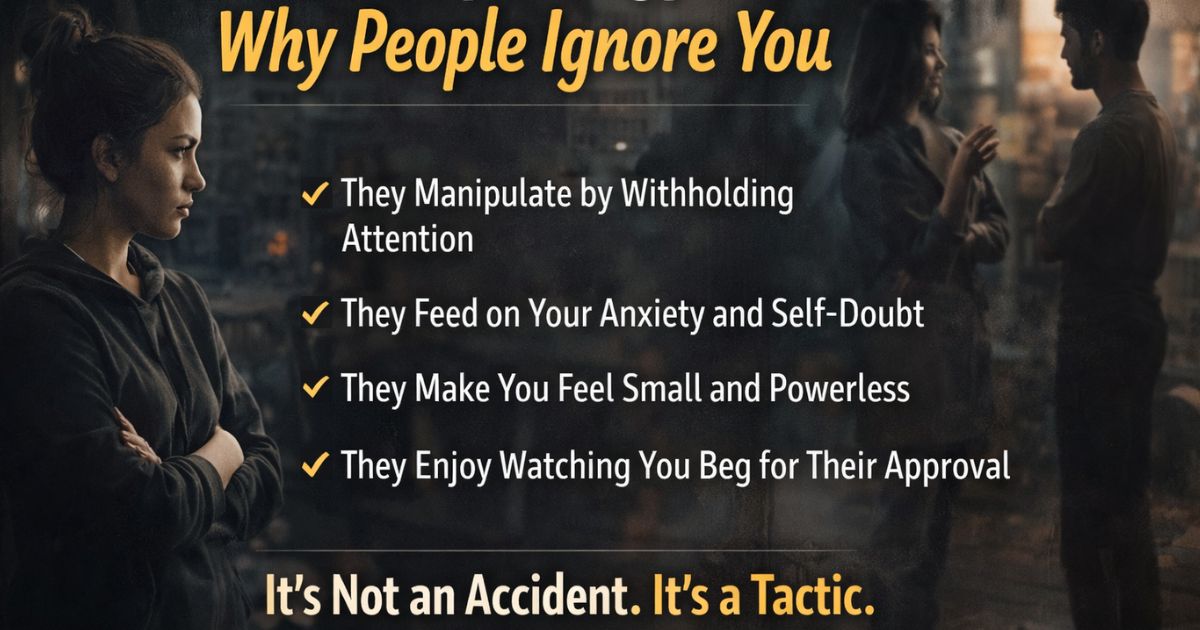
Being ignored or “ghosting” in modern parlance triggers the same neural pathways in the brain as physical pain. From a dark psychology perspective, silence is rarely about “forgetting” to reply; it is often a calculated or subconscious tool used to shift the power dynamic in a relationship.
When someone ignores you, they are usually employing one of three psychological maneuvers.
Table of Contents
1. The “Power of the Void”
In any interaction, the person who cares less holds the most power. By withdrawing communication, a person creates an information vacuum. Because the human brain is wired to seek closure (a phenomenon known as the Zeigarnik Effect), you will instinctively try to fill that vacuum by overthinking, over-explaining, or double-texting.
- The Goal: To make you chase them, thereby reaffirming their high social value and your lower relative position.
- The Result: You become “invested” in their silence, making you more likely to comply with their wishes once they finally do respond.
2. Intermittent Reinforcement
This is the same “dark” logic used in slot machines and social media algorithms. If someone ignores you for three days and then gives you intense, focused attention on the fourth, they are conditioning your brain via unpredictable rewards.
Dopamine Spike: Your brain releases significantly more dopamine when a reward is unpredictable than when it is guaranteed. By ignoring you, they make their eventual attention feel “earned” and much more intoxicating than consistent communication.
3. Passive-Aggressive Punishment
In dark psychology, silence is used as a “sanitary” weapon. Unlike shouting or arguing which requires emotional energy and leaves evidence of aggression—ignoring someone allows the perpetrator to remain “blameless.”
- The Plausible Deniability: “I was just busy,” or “I didn’t see the message.”
- The Psychological Impact: It forces the victim to self-gaslight. You begin to wonder if you did something wrong, leading to an internal cycle of guilt and anxiety that weakens your boundaries.
Comparison of Communication Tactics
| Tactic | Underlying Intent | Victim Experience |
| Healthy Boundary | “I need space to process.” | Clear, communicated timeline. |
| The Silent Treatment | “I want you to feel anxious until you apologize.” | Confusion, guilt, and “walking on eggshells.” |
| Ghosting | “I want to avoid the discomfort of a breakup/conflict.” | Sudden drop in self-esteem; lack of closure. |
Understanding these triggers is the first step in neutralizing them. The most effective counter-move to dark silence is matching the energy. When you stop chasing the “void,” the power dynamic shifts back to neutral.