History of Baisakhi 1699 | The Founding of the Khalsa Panth
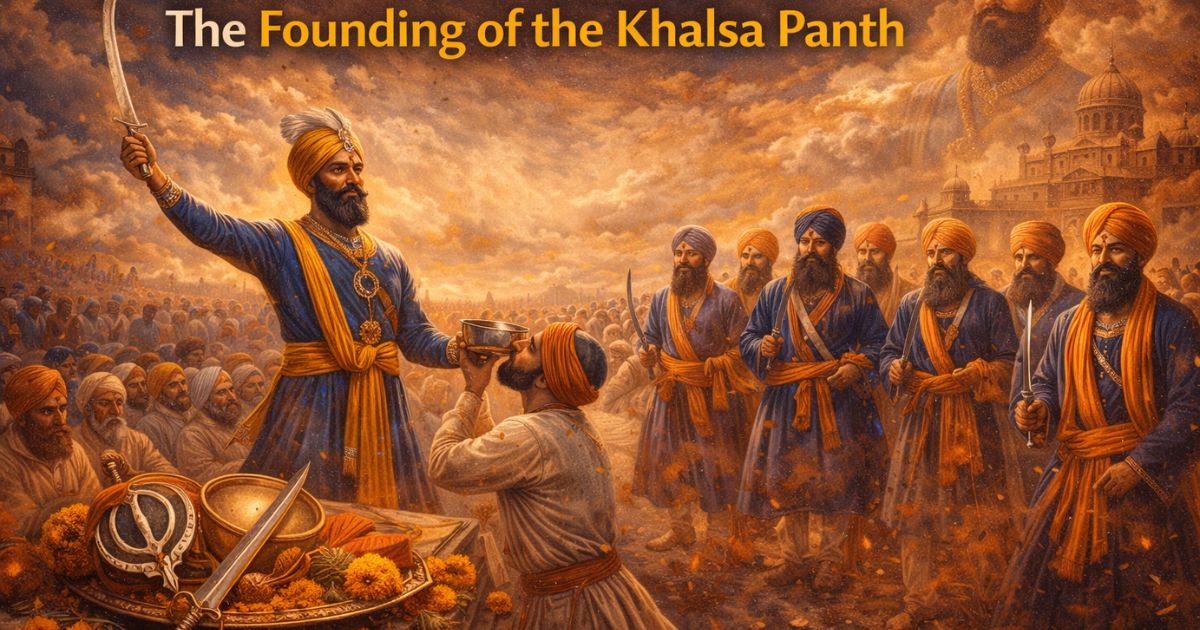
The Day of the Sword: April 13, 1699
By the late 17th century, the Sikh community faced intense persecution from the Mughal Empire. Guru Gobind Singh Ji sought to create an identity that was physically recognizable and psychologically unbreakable. He summoned his followers to Anandpur Sahib for the annual Baisakhi gathering, where a massive crowd of nearly 80,000 had assembled.
- The Ultimate Test
Morning
Standing before the congregation, the Guru drew his sword and demanded a head for sacrifice to prove devotion to Dharma. After a long silence, five men from different castes and regions stepped forward one by one. Each was led into a tent, and the Guru returned each time with a bloodied sword.
- The Panj Pyare Revealed
Mid-morning
To the crowd’s amazement, all five men emerged unharmed, dressed in new saffron robes. These were the Panj Pyare (Five Beloved Ones), representing the new foundation of the faith.
- Khande Di Pahul
Afternoon
The Guru initiated them using water stirred with a double-edged sword (Khanda) in a steel bowl, sweetened with sugar crystals (Patashas) added by his wife, Mata Jito Ji. This nectar was called Amrit.
- The Guru Becomes the Disciple
Evening
In a revolutionary act of humility, the Guru then knelt before the Five Beloved Ones and asked them to initiate him. This abolished the gap between the leader and the followers, birthing the phrase: “Waho Waho Gobind Singh, Aape Gur Chela” (Hail Gobind Singh, who is both Guru and Disciple).
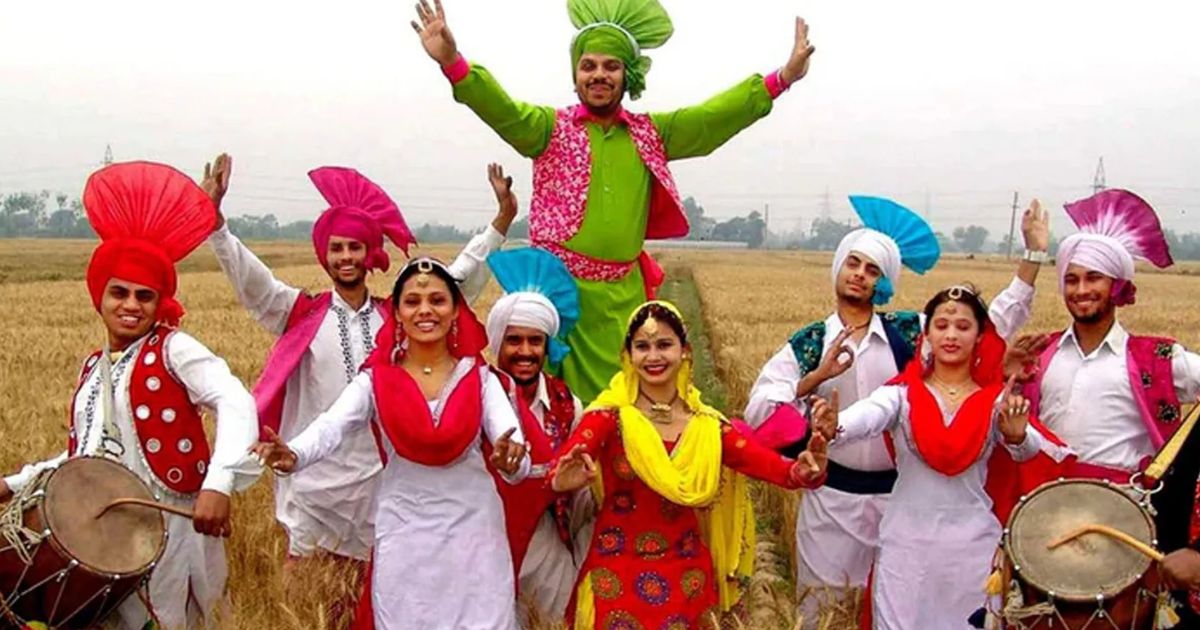
Baisakhi 2026: History & Global Celebrations
From Punjab’s vibrant harvest fields to global Sikh parades, discover how :contentReference[oaicite:0]{index=0} blends history, faith, and celebration across the world.
Read Full Article →Why 1699 Defines Baisakhi Identity
Before this moment, Baisakhi was primarily an ancient solar New Year and harvest festival. After 1699, it became the “Birthday of the Khalsa,” codifying three pillars of identity that remain the heartbeat of the festival today:
1. The Abolition of Caste
The Panj Pyare came from diverse backgrounds: a Khatri from Lahore, a Jat from Hastinapur, a washerman from Dwarka, a water-carrier from Jagannath Puri, and a barber from Bidar. By drinking from the same bowl, they shattered the centuries-old caste system. To cement this, the Guru mandated the surnames Singh (Lion) for men and Kaur (Princess) for women, stripping away the family names that traditionally signaled social status.
2. The 5 Ks (The Uniform of the Spirit)
The Guru established five articles of faith to ensure a Sikh could never hide their identity, even in the face of death:
- Kesh: Uncut hair, symbolizing holiness and acceptance of God’s will.
- Kara: An iron bracelet, symbolizing an unbreakable bond with the Divine.
- Kanga: A wooden comb, symbolizing physical and mental discipline.
- Kachera: Tailored cotton undergarments, symbolizing agility and self-control.
- Kirpan: A ceremonial sword, symbolizing the duty to protect the weak and fight tyranny.
3. Spiritual Sovereignty
The Khalsa was taught to recognize no earthly king as superior to the Truth. This created a community of Sant-Sipahi (Saint-Soldiers) — individuals who were deeply meditative yet trained in martial arts to defend the civil rights of all people, regardless of their religion.
The Spirit of Chardi Kala: The events of 1699 birthed the concept of Chardi Kala — a state of eternal optimism and high spirits, even in the face of impossible odds. It is this spirit that turns Baisakhi into a global celebration of resilience and joy every year.
Baisakhi 2026: History & Global Celebrations
From Punjab’s vibrant harvest fields to global Sikh parades, discover how :contentReference[oaicite:0]{index=0} blends history, faith, and celebration across the world.
Read Full Article →