“No Mother Abandons Her Child by Choice”: Rekha Mody on 42 Years of Fighting for Women

A Women’s Day Feature on Shakti, Leadership, and the Historic Opportunity for Women
For over four decades, Rekha Mody has been part of a quiet but determined effort to reshape how society sees women: not as dependents, not as symbols, but as leaders capable of shaping the future of communities and nations.
Her work has moved across multiple worlds: art and literature, grassroots social work, women’s leadership initiatives, and policy advocacy. But the motivation behind her activism did not emerge from ideology or institutional training.
It began with a moment of shock.
A moment that forced her to confront how easily society can become numb to human suffering.
That moment, she says, changed the course of her life.
Who Is Rekha Mody?
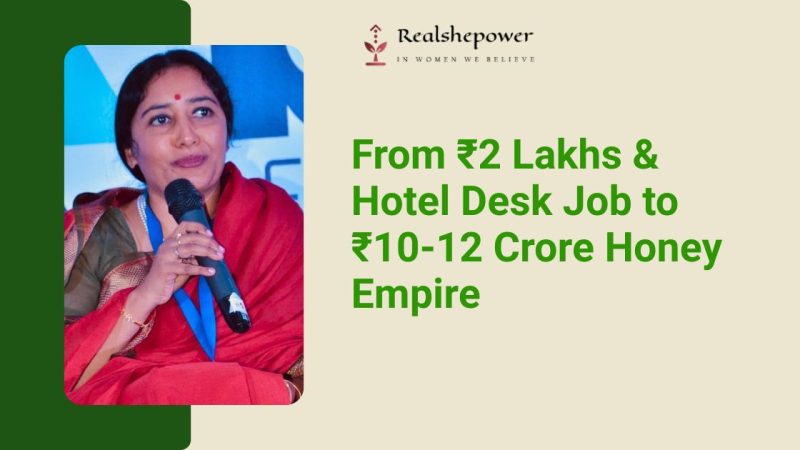
Rekha Mody is widely regarded as one of India’s longstanding voices in women’s empowerment, cultural advocacy, and social entrepreneurship.
Born in 1955 to industrialist Shri Gujarmal Modi and Dayawati Modi, she grew up in an environment that valued enterprise and public responsibility. Over time, she transformed that legacy into a deeply personal mission focused on community development and women’s leadership.
Over the past four decades, she has founded and led several initiatives that connect social activism, cultural exchange, and women’s empowerment.
Among them is Divya Chaya Trust, established in 1984, which works with underprivileged children and vulnerable women through community outreach programs.
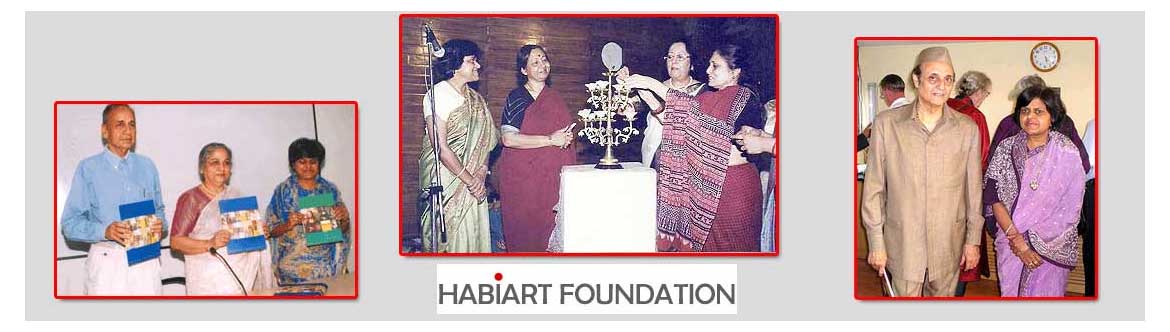
In 1987, she founded the Habiart Foundation, a platform dedicated to promoting visual arts and supporting women artists while fostering cultural dialogue across borders.
Perhaps her most influential initiative emerged in 1998 with Stree Shakti – The Parallel Force, a movement that seeks to amplify women’s voices in leadership and policymaking through conferences, awards, and training programs.
Through Stree Shakti, she also established the Dayawati Modi Stree Shakti Samman, an award recognizing Indian women who have demonstrated extraordinary courage and vision in transforming their communities.
Her commitment to documenting women’s achievements also led her to write the book “Quest for Roots,” which chronicles the lives of 300 influential Indian women from ancient history to the modern era.
Mody’s work has been recognized internationally through honors such as the Vijaya Raje Scindia Award for Excellence, the Social Impact Fellowship in Singapore, and recognitions from organizations including Asha Women UK and Akanksha Trust in Uttar Pradesh.
Beyond India, she has participated in global forums on women’s leadership, including sessions of the Commission on the Status of Women (CSW) in New York and programs held at the United Nations in cities such as Doha, Dubai, and Geneva.
She has also organized international women’s conferences in the United States and the United Kingdom, expanding conversations on empowerment beyond national borders.
Yet despite this long list of achievements, Mody describes her journey not as a career but as a responsibility.
The Incident That Changed Everything
Years ago, while walking along the busy Park Street in Kolkata, Rekha Mody encountered something she still remembers vividly.
A naked dead body lay on the street.
People walked past.
Cars moved around it.
Shops remained open.
No one stopped.
“No one cared,” she recalls quietly. “People walked past as if a dead animal was lying there.”
The indifference stunned her.
She rushed into a nearby shop, grabbed a cloth, and returned to cover the body.
It was a small act. But the emotional impact was immense.
That moment made her confront a question that would later guide much of her social work:
How had society become so insensitive to human life?
When Poverty Forces Mothers Into Impossible Decisions
Through her work with community organizations, Rekha Mody soon began encountering stories that were even more disturbing.
She started interacting with children living in shelters and orphanages.
Many of these children remembered their parents. They knew their villages. They could describe their homes.
Yet when attempts were made to reunite them with their families, the responses were heartbreaking.
Parents refused to take them back.
The reason was simple and brutal: poverty.
The situation was particularly tragic for girls.
Many of the girls living in shelters had been abandoned not only because of poverty but because they were considered “undesirable.”
Some had disabilities.
Some were not considered attractive enough.
Others had simply been born in families that could not afford another daughter.
These experiences forced Rekha Mody to confront a painful truth about society.
“No mother willingly abandons her child. She does it only when society leaves her with no choice.”
That realization fundamentally shaped her understanding of social change.
Charity alone would never solve the problem.
The real solution had to be empowerment.
Why She Chose “Shakti,” Not “Power”
In many global conversations, the language of women’s empowerment revolves around the word “power.”
Rekha Mody prefers a different word.
Shakti.
The difference, she explains, is profound.
Power implies dominance over someone else.
Shakti, in Indian philosophical tradition, refers to energy, capacity, and creative force.
“Power is domination. Shakti is capacity. Women don’t need power over men they need the freedom to create.”
For centuries, Indian culture has symbolically revered feminine energy through the concept of divine feminine forces.
But symbolic reverence has not always translated into real equality.
Bridging that gap between symbolism and reality has been a central focus of her work.
The Economics of Women’s Freedom
One of the most practical insights Rekha Mody has developed over decades of activism concerns the basic economics of women’s lives.
According to her, a woman’s monthly financial burden typically revolves around three essentials:
• Rent
• Food
• Travel
Transportation, in particular, becomes a major barrier for working women especially those from lower-income communities.
Daily travel to work can consume a large portion of a woman’s income.
That is why she has consistently advocated policies such as subsidized or free public transport for women.
The logic is simple.
When structural barriers are removed, opportunities expand.
“When money comes into the hands of women, children get educated and families become prosperous.”
Economic independence changes not only a woman’s life, but the trajectory of entire families.
The Silent Revolution of Education
Despite persistent challenges, Rekha Mody believes one transformation in India deserves far more recognition.
India often celebrates agricultural milestones like the Green Revolution and the White Revolution.
But according to her, the most transformative shift has been what she calls the “black-and-white revolution.”
The revolution of literacy and education.
Across India today, daughters are studying more than their mothers and grandmothers ever did.
Even domestic workers are making sacrifices to ensure their children receive education.
This shift, she believes, will reshape the social structure of the country in ways that are still unfolding.
The Misconceptions That Continue to Hold Women Back
Yet progress alone does not eliminate prejudice.
Rekha Mody believes one of the biggest obstacles women still face is the persistent belief that women are less capable leaders.
In many cultures, women are still perceived primarily in relation to men.
They are expected to serve, support, or remain secondary.
This mindset often translates into subtle but powerful forms of discrimination.
Women are spoken to condescendingly.
Their competence is questioned.
Their leadership is underestimated.
Breaking these attitudes requires confidence and participation.
Women must not only succeed individually but also challenge these perceptions publicly.
Son Preference and Its Consequences
One of the most visible examples of gender bias, according to Mody, is the cultural preference for sons.
Even today, celebrations often follow the birth of a son, while the birth of a daughter may pass quietly.
“If a fourth son is born, sweets are distributed,” she says. “But when a second daughter is born, people behave as if nothing happened.”
Over time, such biases have created demographic imbalances in several regions of India.
The consequences of decades of discrimination are now becoming visible.
Societies are beginning to experience the social costs of undervaluing daughters.
Preparing Women for Leadership
While economic independence and education are essential, Rekha Mody believes the next stage of empowerment must focus on leadership.
Women must not only participate in society they must shape it.
That is why she has been working on initiatives that encourage women to step into political and institutional leadership roles.
These programs involve collaborations with universities, research institutions, and leadership networks.
Her aim is to prepare women for positions of influence across sectors.
She broadly identifies three groups of women in contemporary India:
- Women who are already empowered
- Women who are on the path toward empowerment
- Women who are still struggling and unsure how to begin
Helping women move from the third category to the second and eventually to leadership is one of the defining challenges of the coming decades.
5 Lessons from Rekha Mody’s 42 Years of Activism
1. Financial independence is the foundation of empowerment
Without economic freedom, women remain vulnerable to social and family pressures.
2. Education is the most powerful social revolution
Every educated girl transforms the future of her family.
3. Women must enter decision-making spaces
Voting is not enough. Leadership matters.
4. Empowerment requires collective action
Movements succeed when communities act together.
5. Social respect begins with self-respect
Women must recognize their own worth before society changes.
A Historic Opportunity for Women
After 42 years in the field, Rekha Mody believes the present moment represents a historic turning point.
Women today are more educated, more economically active, and more politically aware than previous generations.
But opportunities alone do not guarantee transformation.
They must be seized.
“This is a historic opportunity for women. If we fail to step forward now, history will not forgive us.”
The responsibility, she says, belongs not only to activists or policymakers.
It belongs to every woman who understands the importance of collective progress.
A Vision for the Next Generation
Looking ahead, Rekha Mody hopes to see a world where women participate fully in leadership.
Not simply for representation.
But for balance.
In a world increasingly shaped by conflict, competition, and geopolitical tensions, she believes women bring something essential to leadership.
Empathy.
Compassion.
Human perspective.
Societies that include women in decision-making, she argues, tend to be more stable, more inclusive, and more forward-looking.
Her Message This Women’s Day
As another International Women’s Day approaches, Rekha Mody’s message is both simple and urgent.
Women must recognize the moment they are living in.
They must participate, lead, and shape the future of society.
Because empowerment, she believes, is not something that will simply be granted.
It must be built.
Collectively.
And once women fully recognize their strength, the pace of change will surprise everyone.
“The moment women realize their collective strength,” she says, “society will change faster than we imagine.”