
A Critical Analysis of the Indian Judiciary: Systemic Challenges and Gender Disparities
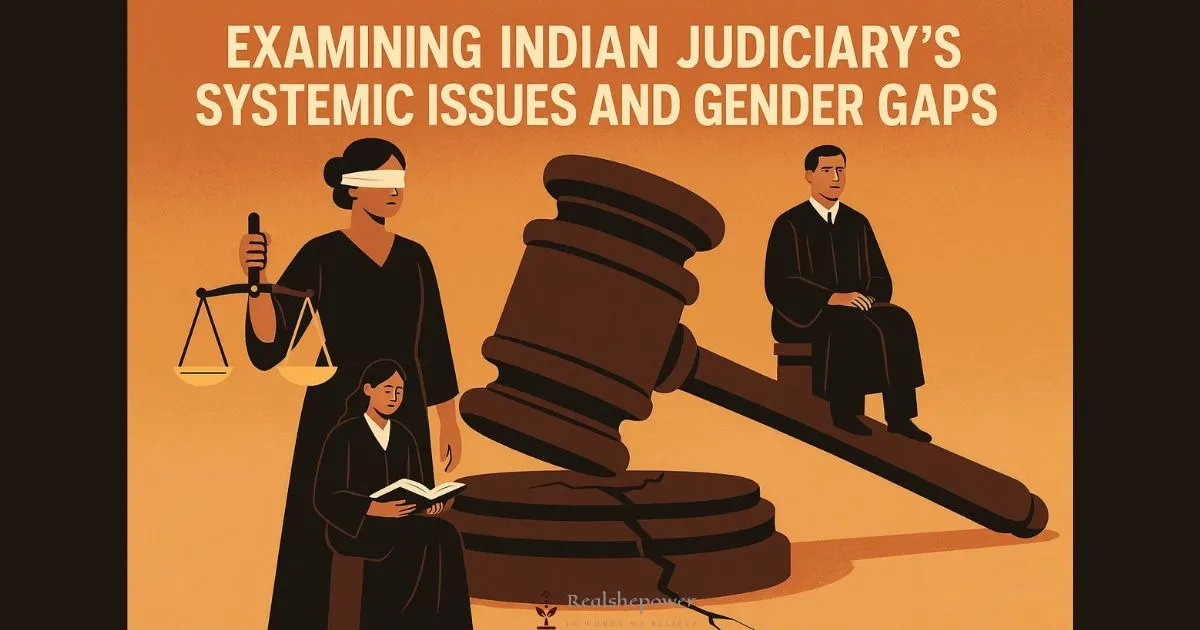
The Indian judiciary, often hailed as the guardian of the Constitution and a cornerstone of democracy, is a complex institution with a rich history and significant challenges. While it has played a pivotal role in upholding constitutional values, delivering landmark judgments, and protecting fundamental rights, it faces systemic issues that undermine its efficiency, accessibility, and inclusivity. This critique examines key aspects of the Indian judiciary, including its structural inefficiencies, judicial appointments, backlog of cases, and gender disparities, with a particular focus on recent developments concerning women’s issues.
Structural Inefficiencies and Backlog of Cases
One of the most pressing issues facing the Indian judiciary is the staggering backlog of cases, which compromises access to timely justice. As of 2025, over 50 million cases are pending across Indian courts, with approximately 80,000 in the Supreme Court, 6 million in High Courts, and the rest in subordinate courts. The judge-to-population ratio in India remains abysmally low at around 21 judges per million people, compared to over 50 in many developed nations. This shortage, coupled with inadequate infrastructure and limited budgetary allocation (only 0.09% of GDP is spent on judicial infrastructure), results in delays that can span decades. For instance, cases in subordinate courts often take 5–20 years to resolve, eroding public trust and disproportionately affecting marginalized groups who rely on the judiciary for redress.
Efforts like the National Mission for Justice Delivery and Legal Reforms (2011) and the establishment of alternative dispute resolution mechanisms (e.g., Lok Adalats and Gram Nyayalayas) have been introduced to address this issue. However, these measures have been insufficient to tackle the scale of pendency. The reliance on outdated procedural frameworks, such as the Code of Civil Procedure (1908), and bureaucratic inefficiencies further exacerbate delays. While initiatives like e-Courts and virtual hearings have improved access post-COVID, technological adoption remains uneven, particularly in rural areas, limiting their impact.

Opaque Judicial Appointment Process
The collegium system, which governs judicial appointments to the Supreme Court and High Courts, has been widely criticized for its lack of transparency and accountability. Comprising senior judges, the collegium operates without codified criteria, leading to allegations of nepotism, favoritism, and regional biases. The rejection of the National Judicial Appointments Commission (NJAC) in 2015, which sought to involve the executive in appointments, has left the judiciary in a self-regulating echo chamber. This opacity is particularly detrimental to diversity, as it often perpetuates the dominance of upper-caste, male judges from privileged backgrounds. The Law Commission of India (2009) recommended greater collaboration between the judiciary and executive to ensure merit-based appointments, but no significant reforms have been implemented.
Patriarchal and Social Biases
The judiciary’s composition reflects deep-seated societal biases, particularly patriarchy. As of 2024, women constitute only 9.3% of Supreme Court judges and 13.4% of High Court judges, despite women making up nearly 50% of India’s population. In contrast, the lower judiciary fares slightly better, with 36.3% women judges, largely due to entrance examinations and reservation policies in states like Assam and Telangana. However, the lack of reservations in higher courts and the opaque collegium system hinder women’s elevation. Familial responsibilities, societal expectations, and a lack of gender-sensitive infrastructure (e.g., inadequate washrooms or childcare facilities in court complexes) further impede women’s retention and advancement.
Judicial decisions have occasionally reflected patriarchal biases, undermining the judiciary’s role as a champion of gender equality. For example, former Chief Justice S.A. Bobde’s 2021 suggestion that a rape accused could marry the survivor to avoid jail time sparked outrage for trivializing sexual violence. Similarly, the judiciary’s reluctance to criminalize marital rape, despite India being one of only 36 countries where it remains legal, highlights a disconnect between constitutional ideals and judicial interpretations. Such instances reveal a persistent patriarchal mindset that normalizes violence against women and undermines their bodily autonomy.
Landmark Judgments and Progressive Steps
Despite these challenges, the Indian judiciary has delivered transformative judgments that have advanced women’s rights and social justice. Cases like CB Muthamma v. Union of India (1979), which struck down discriminatory service rules for women in the Indian Foreign Service, and The Secretary, Ministry of Defence v. Babita Puniya (2020), which granted women equal opportunities for permanent commissions in the armed forces, demonstrate the judiciary’s potential to drive change. The 2021 Aparna Bhat v. State of Madhya Pradesh case criticized inappropriate bail conditions in sexual assault cases, reinforcing the need for gender-sensitive jurisprudence. More recently, the 2025 Maatr Sparsh v. Union of India judgment recognized breastfeeding as integral to the right to life under Article 21, mandating facilities like feeding rooms in public spaces.
The judiciary has also addressed broader social issues through public interest litigations (PILs), such as decriminalizing adultery (Joseph Shine v. Union of India, 2018) and recognizing transgender rights (NALSA v. Union of India, 2014). These rulings reflect the judiciary’s ability to uphold constitutional values and promote inclusivity, though their implementation often lags due to societal resistance and inadequate enforcement mechanisms.
Judicial Activism vs. Overreach
Judicial activism has been a double-edged sword. While it has enabled progressive rulings, it has also led to accusations of judicial overreach, particularly when the judiciary encroaches on legislative or executive domains. For instance, the Supreme Court’s handling of the sexual harassment allegations against former Chief Justice Ranjan Gogoi in 2019 raised concerns about impartiality, as Gogoi presided over his own case, violating principles of natural justice. Such incidents damage the judiciary’s credibility and highlight the need for internal accountability mechanisms.
Women in the Indian Judiciary: A Focused Critique
The underrepresentation of women in the Indian judiciary is not merely a statistical anomaly but a systemic failure that undermines the institution’s legitimacy and ability to deliver gender-sensitive justice. Women constitute only 15% of registered advocates and a mere 9.3% of Supreme Court judges, with only 11 women having served on the apex court since its inception in 1950. This stark disparity stems from deeply ingrained patriarchy, which manifests in hostile courtroom environments, harassment, and the silencing of women’s voices. The collegium system’s opacity exacerbates this issue, as it often favors male candidates, with only 17 of 37 recommended women candidates appointed to High Courts in recent years. The absence of reservation policies in higher judiciary, unlike in states with 40–50% women judicial officers, further limits progress. Former Justice Hima Kohli has highlighted unconscious gender biases, noting that women judges are often sidelined in administrative roles, and infrastructure needs (e.g., creches or sanitary facilities) are deprioritized. This public-private divide, as theorized by Carole Pateman, underscores how the judiciary, a traditionally male-dominated public sphere, fails to accommodate women’s unique needs. Increasing women’s representation is critical not only for equity but also for enriching judicial reasoning with diverse perspectives, as seen in landmark rulings by women judges like Justice B.V. Nagarathna in Maatr Sparsh. Achieving gender parity requires affirmative action, such as a proposed 33% reservation for women and gender-variant persons, transparent appointment processes, and gender-sensitization training to dismantle systemic barriers and foster an inclusive judiciary that truly reflects India’s diverse population.