
Missing in Uniform: Why Delhi Police May Take 17 Years to Reach Its Women’s Quota Target
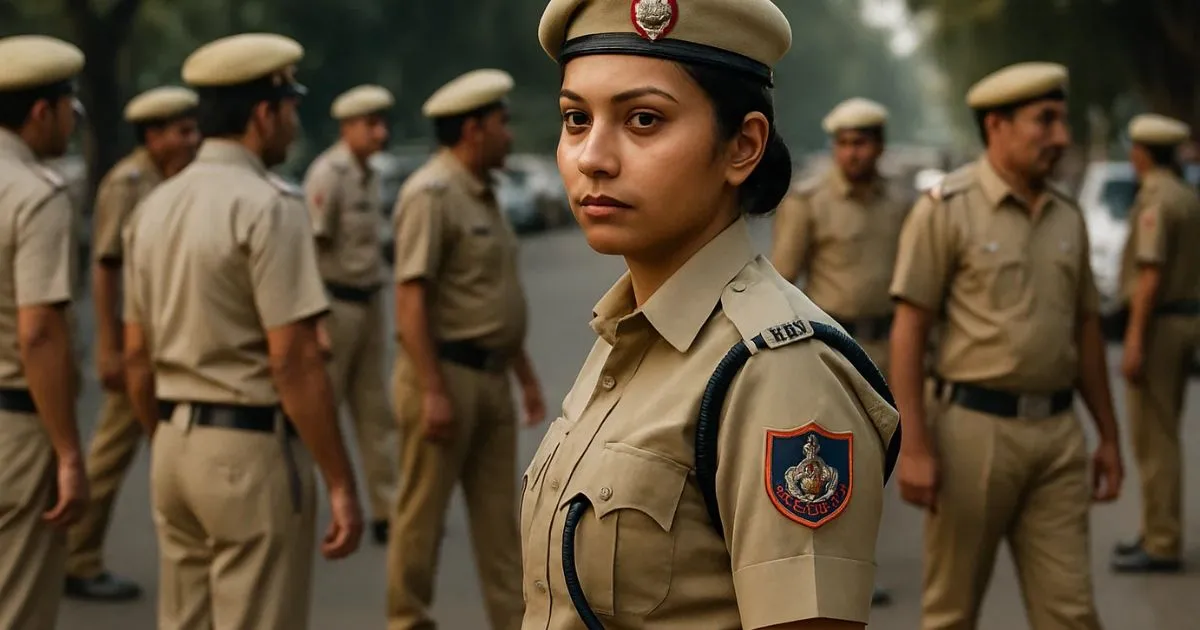
A Silent Emergency in Khaki: The Stark Gender Gap in India’s Police Forces
In the bustling corridors of justice and law enforcement, where equality is presumed to be a foundational value, women remain glaringly underrepresented. Nowhere is this more evident than in the latest India Justice Report 2025, which reveals that the Delhi Police—India’s capital force—may take over 17 years to meet its modest target of one-third women representation.
Despite a slow but visible rise in the participation of women in police services across India, they still constitute less than 13% of the national police force. For a nation priding itself on democratic values and equality, this number is not just a statistic—it’s a silent indictment.
The Ground Reality: Numbers That Shock
The India Justice Report 2025, prepared by Tata Trusts in collaboration with multiple civil society organizations, paints a grim picture of the gender imbalance in law enforcement. Here are the numbers that should serve as a wake-up call:
- Total police personnel in India: 20.3 lakh
- Number of women police personnel: 2.42 lakh
- Percentage of women in police force nationwide: 11.9%
- Senior women officers (DGP to SP rank): Only 960
At the current rate of recruitment and growth, many states are decades—even centuries—away from achieving the 33% target of women in the police force:
| State/UT | Years to Reach 33% Quota |
|---|---|
| Tripura | 222.1 years |
| Jharkhand | 175.1 years |
| Assam | 119.6 years |
| Karnataka | 115.7 years |
| Rajasthan | 92.0 years |
| West Bengal | 80.2 years |
| Madhya Pradesh | 80.0 years |
| Uttar Pradesh | 44.9 years |
| Himachal Pradesh | 34.3 years |
| Tamil Nadu | 20.4 years |
| Delhi | 17.2 years |
| Gujarat | 13.1 years |
| Maharashtra | 12.0 years |
| Bihar/Andhra Pradesh | 3.3 years (fastest) |
While Bihar and Andhra Pradesh have shown rapid improvement and may achieve their targets within 3.3 years, Delhi—India’s capital and symbolic seat of governance—lags with a 17-year delay forecasted.
Why This Matters: Safety, Sensitivity, and Justice
The lack of women in police isn’t just about numbers. It deeply impacts how law enforcement interacts with half the population. Studies consistently show that:
- Women are more likely to report crimes to women officers, especially in cases of domestic violence, sexual assault, and trafficking.
- Female officers handle cases involving women and children with greater empathy, often reducing the chances of secondary victimization.
- A diverse police force fosters community trust, especially in areas where gender-based violence is rampant.
Yet, the existing structure seems indifferent to these facts. How can women feel safe when they don’t see themselves in uniform?
Also Read

No State or UT Has Achieved 33% Participation
Despite policy announcements, gender parity remains a dream across India. Not a single state or union territory has achieved the 33% benchmark for women in policing, despite multiple state-level initiatives and court directives mandating affirmative action.
In many states, reserved posts for women go unfilled due to:
- Lack of proactive recruitment drives
- Unsafe or unsupportive work environments
- Poor infrastructure (e.g., absence of women’s barracks or toilets)
- Skewed promotion policies
- Gender-based harassment
Invisible at the Top: Only 960 Women in Leadership
The pipeline problem is acute at the top. Out of thousands of senior-ranking positions, only 960 women officers serve in posts such as Director General of Police (DGP), Inspector General (IG), or Superintendent of Police (SP).
This vacuum at the leadership level prevents systemic reforms from being championed. Without women decision-makers, there is little chance of structural change to make the workplace more inclusive.
You May Also Like
Beyond Policing: Justice Also Slows Down in Courts
The report doesn’t stop at policing. It highlights another alarming statistic—India has only 15 judges per 10 lakh population, while the Law Commission had recommended 50 judges per 10 lakh way back in 1987. In nearly four decades, the progress toward judicial accessibility and equality has been stagnant.
A clogged judiciary, combined with an under-represented police force, leads to delayed justice, loss of public faith, and increased vulnerability for women.
What Needs to Change?
- Mandated Recruitment Quotas
States must enforce and fill the reserved 33% quota for women with urgency and transparency. - Safe Workplaces for Women Officers
Infrastructure, internal complaint mechanisms, and gender sensitization must be prioritized. - Incentivized Leadership Pathways
Encourage and train women for leadership roles with tailored programs and fast-track promotions. - Mass Awareness Campaigns
Break cultural stereotypes discouraging women from joining the police. - Gender Audits and Accountability Reports
Annual audits should be mandatory to track progress on gender parity, state by state.
Conclusion: The Clock Is Ticking
Delhi Police, despite being in the heart of India’s power corridors, reflects a national failure to bring women into law enforcement meaningfully. The idea of waiting 17 years to achieve something as basic as one-third representation in the force is not just unacceptable—it is unjust.
Women are not asking for favors. They are asking for space—in police stations, in leadership, and in justice delivery. Until the khaki becomes truly inclusive, India’s justice system will remain deeply unequal.
Let us not wait two more decades to give half the population their rightful place in the forces meant to protect them.