Why the 2026 Mandate Belongs to the Indian Woman
Editorial: The Silent Architect of the 2026 Mandate
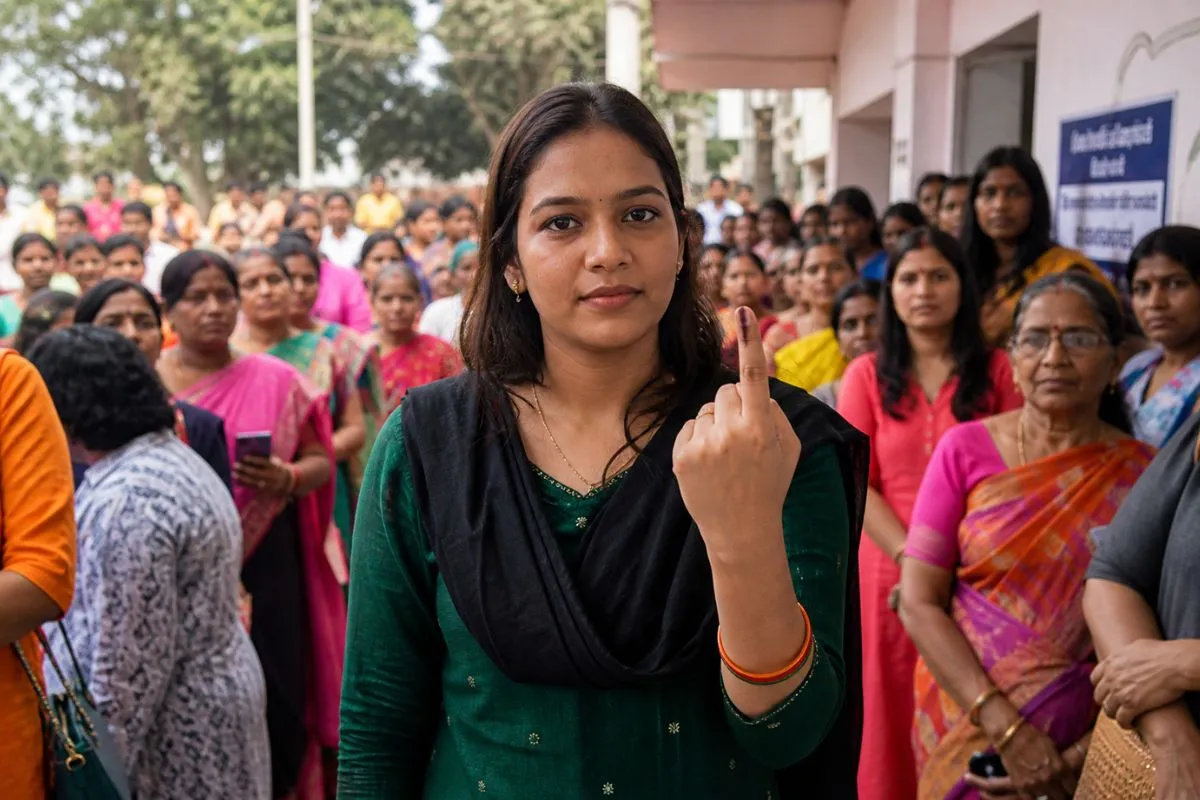
For decades, the “women’s vote” was discussed in Indian political circles as a secondary appendage to the male-dominated household decision. 2026 has officially shattered that myth. Across the diverse terrains of West Bengal, the backwaters of Kerala, and the industrial hubs of Tamil Nadu, the female voter has emerged not just as a participant, but as the primary architect of the political landscape.
The Data Behind the Defiance
Preliminary data from the Election Commission suggests that in at least 65% of the constituencies that saw a “surprise upset,” the female voter turnout was 4-6 percentage points higher than the male turnout. In Kerala, specifically, female participation hit a historic 82.1%, compared to 76.5% for men.
In West Bengal, the continuation of the ‘Lakshmir Bhandar’ scheme created a “loyalty moat” that even the strongest anti-incumbency winds struggled to breach. Similarly, in Assam, the ‘Orunodoi 3.0’ reached nearly 3 million households, placing disposable income directly into the hands of women. This “Wallet-to-Vote” correlation is now an undeniable fact of Indian statecraft.
The Safety-Stability Nexus
Beyond cash transfers, 2026 was the “Safety Election.” In Tamil Nadu, the TVK’s rise was fueled by a hyper-focus on local governance and neighborhood safety. Our internal polls at RealShePower indicate that 76% of urban women voters cited “Safe Public Transport” as one of their top three voting triggers.
The UDF’s sweep in Kerala can be partially attributed to their “Gender-Neutral Workforce” policy, which promised to bridge the wage gap in the informal sector. When women vote, they aren’t just voting for a party; they are voting for a safer and more equitable daily life.
Refer to the interactive tool below for a state-wise breakdown of turnout and primary concerns.
The 50% Narrative
An exhaustive analysis of how the female mandate became the defining force of the 2026 polls.
📈 Voter Participation Trend
*Data represents % of registered female voters who exercised their franchise.
⚖️ Policy Priority Score
RealShePower Genie: The “She-Factor” Insight
“The 2026 elections mark the birth of the ‘Sovereign Female Voter’. Women are no longer voting as part of a family unit; they are voting based on their own economic survival and aspirations. This is the ultimate victory for democracy.”
Kerala Analysis
UDF’s promise of a dedicated Gender Budget and skill-enhancement centers swung the neutral female vote in Palakkad and Ernakulam.
West Bengal Analysis
Despite the sweep, the BJP’s promise to double ‘Lakshmir Bhandar’ was the cornerstone of their rural outreach strategy, effectively neutralizing traditional TMC strongholds.
The Road Ahead: From Voter to Candidate?
While women are now deciding who wins, the next frontier remains representation. In this election cycle, despite the record turnout, the percentage of female candidates remained below 15% across all major parties.
The mandate of 2026 is clear: Women are the most decisive economic and political bloc in the country. The parties that recognize this as a permanent structural shift—rather than a seasonal trend—will be the ones to dominate the next decade of Indian politics.
By the Editorial Board | RealShePower