The Selective Outrage: How Al Jazeera, BBC, and Western Media Weaponize “Democracy” Against BJP Wins in India
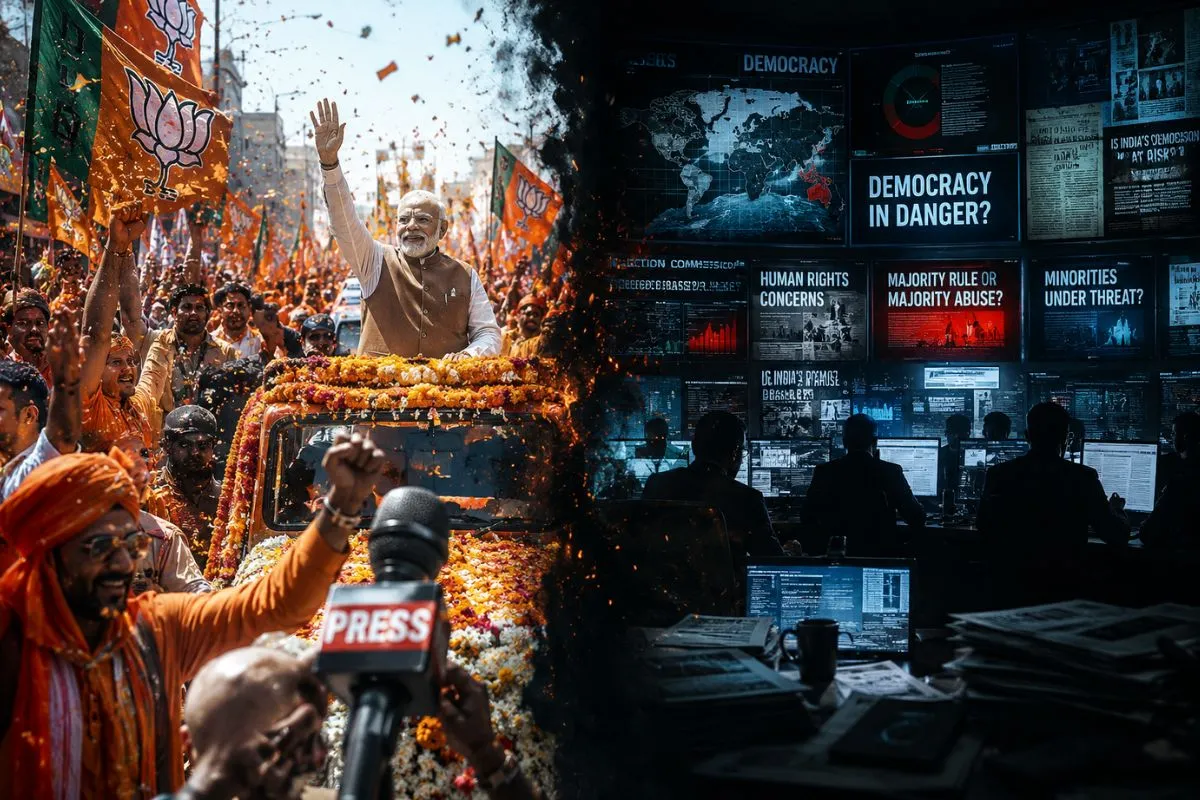
International outlets like Al Jazeera and the BBC have developed a predictable script for Indian elections. When the Bharatiya Janata Party (BJP) wins, it is never a straightforward democratic verdict by voters. It becomes an “attack on democracy,” “erosion of secularism,” “rise of Hindu nationalism,” or “majoritarian threat.” Headlines scream warnings about minorities, press freedom, and the soul of India. But when regional parties, Congress, or others win — even with violence, dynastic politics, or minority consolidation — the tone shifts to neutral analysis or quiet approval. This is not journalism. It is narrative warfare.
The Bengal Example: BJP Win Triggers Alarm, Violence Blamed on Winners
Take the recent 2026 West Bengal Assembly elections. BJP secured a historic first win, defeating long-ruling Trinamool Congress (TMC) led by Mamata Banerjee. Al Jazeera’s coverage was typical. One piece warned of what Modi’s “big win” means for “its democracy.” Another reported “Four killed in post-election violence” right after the BJP victory, framing unrest as gripping the state following the “Hindu nationalist” triumph.
Read the details carefully. Al Jazeera noted BJP claims of two workers killed and TMC claims of two of theirs. But the headline and lead tied the violence directly to the BJP win, with little emphasis on TMC’s history of goonda politics and targeted killings of opponents. Reports from the ground showed BJP karyakartas (workers) targeted in areas like New Town and Madhyamgram, including the shooting of a top BJP leader Suvendu Adhikari‘s aide. Post-poll violence in Bengal has long been a TMC specialty — recall the widespread attacks on BJP workers after 2021 elections. Yet international coverage often presents BJP victories as the spark for chaos, not the losing side’s refusal to accept defeat.
This is a factual inconsistency repeated across cycles. Media amplifies TMC or opposition claims of “rigging” while downplaying Election Commission of India processes. When BJP wins despite decades of TMC dominance and alleged voter intimidation in the state, it cannot simply be voter rejection of incumbency, anti-incumbency, or governance failures. It must be “hegemonic power” or polarization.
Contrast this with Congress wins in states like Himachal Pradesh, Karnataka (in past cycles), or other regional victories. Coverage is muted: “Congress makes comeback,” “voters reject BJP,” or straightforward results reporting. No flood of op-eds on “erosion of democracy.” No hand-wringing over secularism when dynastic parties or Dravidian outfits consolidate power.
Tamil Nadu and TVK: Joseph Vijay’s Win Gets a Pass
Now look at Tamil Nadu 2026. Actor Joseph Vijay (C. Joseph Vijay), a Christian, led his new party Tamilaga Vettri Kazhagam (TVK) to a stunning debut as the single largest party, disrupting the DMK-AIADMK duopoly with around 108 seats. This is a major shift — breaking decades of Dravidian dominance.
Where was the Al Jazeera deep dive on “threat to democracy”? Where were the BBC pieces on Christian consolidation, church influence in vote banks, or “majoritarianism” by a film star entering politics with massive fan following? Coverage was lighter, focusing on the “disruptor,” “star power,” or historic nature without the alarmist framing reserved for BJP.
Vijay’s campaign involved temple visits but also visible church outreach, kneeling in prayer, and appeals that consolidated certain votes. His party opposes aspects of Hindutva, aligns against BJP ideology, and fits the “secular” Dravidian ecosystem. No international outrage about “emotional democracy,” dynastic-style fan base politics, or risks to India’s unity. Silence or mild positivity.
The double standard is glaring: A “Hindu party” winning equals danger. A Christian-led party winning in the south equals vibrant democracy.
Patterns of Bias: What the Record Shows
This is not isolated. Al Jazeera pieces on BJP victories routinely frame them with terms like “Hindu supremacist,” “anti-Muslim,” or fears of “undermining secular democracy.” Modi’s wins are tied to “aggressive Hindu nationalism,” uniform civil code worries, or Kashmir moves.
Reports highlight alleged voter list changes affecting Muslims disproportionately or post-poll incidents selectively.
BBC has faced repeated accusations of Hinduphobic framing, from documentaries on Modi to election coverage emphasizing polarization only when saffron rises. Foreign media often relies on a narrow set of English-speaking, left-leaning Indian voices or activists with clear ideological slants, ignoring ground realities of development, welfare schemes, or voter priorities like jobs, security, and anti-corruption that drive BJP support.
When Congress or allies win, the narrative flips to “resilient democracy” or “setback for Modi.” Losses for BJP get celebratory “Modi humbled” treatment. Wins get democracy-in-peril warnings. This selective lens ignores that India has held regular elections, peaceful power transfers at the center and states, a robust (if noisy) federal structure, and an independent Election Commission — one of the world’s largest democratic exercises. BJP has won and lost elections multiple times. So have others. Democracy functions.
Layers Behind the Narrative: Motives and Players
Why this pattern? Several layers:
- Ideological Lens: Many Western outlets and Qatar-funded Al Jazeera view Hindu assertion through a post-colonial, Abrahamic, or leftist frame. Hinduism as “nationalism” threatens the “secular” (often minority-appeasing) model they prefer. A confident Hindu-majority India challenges narratives of perpetual victimhood or third-world fragility. Christian or Muslim-led wins fit “diversity” boxes better.
- Geopolitical and Funding Interests: Al Jazeera operates from a Gulf context with complex ties to Islamist networks and views on India-Pakistan dynamics. BBC reflects British establishment tendencies. Funding, access journalism, and activist sourcing (NGOs, academia with anti-Modi bent) shape output. Negative India stories under BJP generate clicks, fit editorial priors, and pressure the government on issues like trade, Kashmir, or foreign policy.
- Domestic Indian Ecosystem: Sections of English media, academia, and opposition amplify these lines for relevance and funding. International validation helps opposition narratives of “fascism” despite losing elections fairly. BJP’s success in directly reaching voters via social media, welfare delivery, and cultural resonance bypasses gatekeepers — which infuriates them.
- Colonial Hangover and Ratings: Projecting “Hindu India” as problematic sells in certain audiences. It positions outlets as brave watchdogs. When non-BJP parties win with similar or worse flaws (dynasty, corruption, caste violence, appeasement), it does not trigger the same “threat” reflex.
Factual cherry-picking abounds: Violence numbers without context of who started it or perpetrator history; minority fears without data on schemes reaching all communities; “press freedom” indices influenced by subjective scoring. BJP governments have faced fierce criticism, protests, court cases, and electoral losses — signs of healthy democracy, not dictatorship.
Time to Question Journalistic Integrity
Indian voters — Hindu, Muslim, Christian, Sikh, rich, poor — repeatedly elect BJP in larger numbers when they prioritize governance over fear-mongering. Dismissing this as “false consciousness” or manufactured majoritarianism insults their agency. Painting every BJP victory as an existential crisis while staying silent on TVK or Congress wins exposes bias, not balanced reporting.
Al Jazeera, BBC, and peers have every right to editorialize. They do not have the right to masquerade selective outrage as objective journalism. Their credibility suffers when patterns show they apply “democracy in danger” only when Hindus consolidate politically under BJP, but not when others do the same. India’s democracy is messy, vibrant, and voter-driven. It does not need foreign outlets to define its success or failure based on who wins.
The real story is Indian voters asserting choices despite elite resistance and international narrative machines. BJP wins reflect aspirations for cultural confidence, development, and security — not the death of democracy. Ignoring this while amplifying inconsistencies reveals more about the outlets than about India. Honest journalism would report victories and flaws across the board without ideological filters. Until then, readers should treat such coverage with deep skepticism. Democracy in India thrives — not because of these narratives, but often in spite of them.