
West Bengal After the 2026 Mandate: Ending a Decade of Bloodshed, Appeasement, and Institutional Collapse
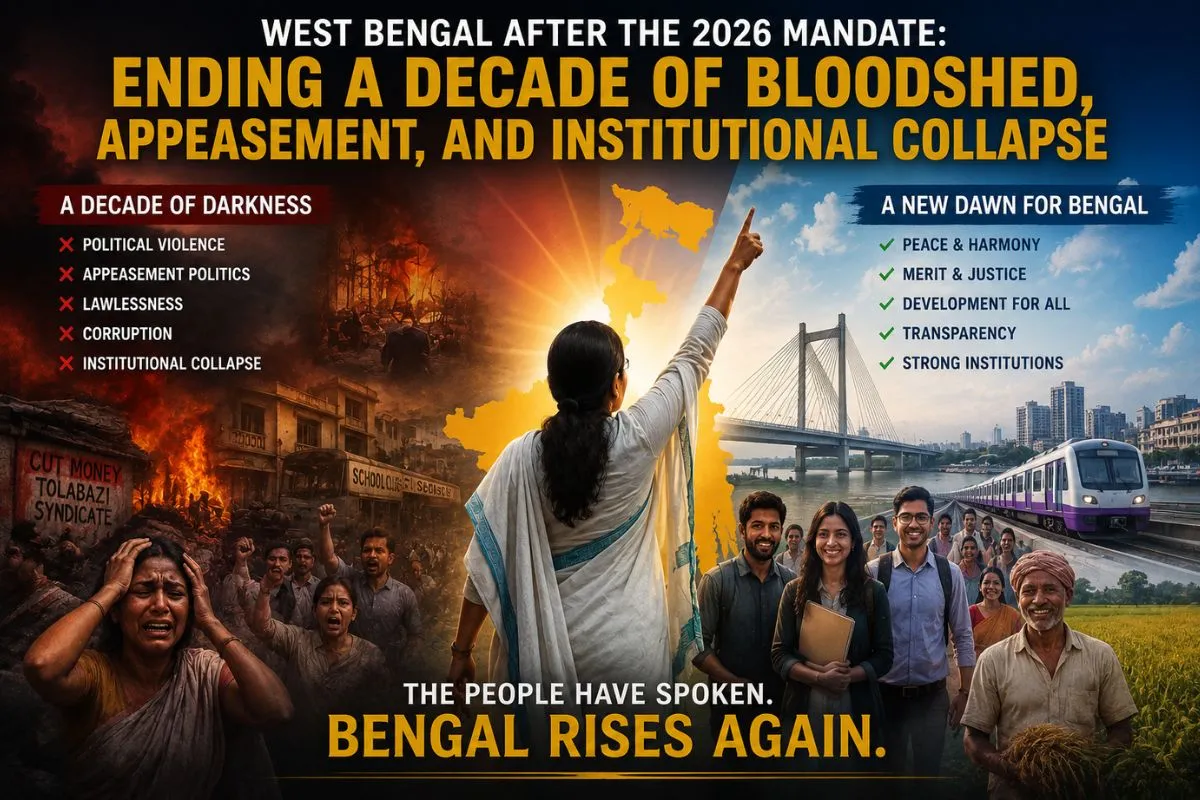
In a decisive verdict in May 2026, the BJP secured a clear majority with approximately 207 seats in the West Bengal Assembly, ending 15 years of Trinamool Congress (TMC) rule under Mamata Banerjee. Suvendu Adhikari, a pivotal figure in the BJP’s resurgence, stands as a key leader in the new order. Yet, even before the government takes full charge, the state’s entrenched machinery of political violence has struck again.
The Targeted Assassination of Chandranath Rath
On May 6, 2026, Chandranath Rath, Suvendu Adhikari’s personal assistant and a former Indian Air Force veteran, was shot dead in Madhyamgram, North 24 Parganas. Motorcycle-borne assailants trailed his vehicle, forced it to slow, and fired four rounds at point-blank range. Three bullets hit Rath, killing him on the spot; the driver was critically injured. The attackers used a vehicle with tampered number plates. This was a cold, professional hit preceded by days of reconnaissance.
This murder is not an isolated act. Under TMC rule, BJP karyakartas faced systematic targeting: murders, beatings, and intimidation became routine tools of dominance. Rath’s killing, days after TMC’s electoral rout, reveals elements unwilling to accept defeat and determined to terrorize the incoming dispensation. Police have formed SITs, but Bengal’s track record of partisan investigations offers little immediate hope.
The Brutal Record of TMC Rule
West Bengal under Mamata Banerjee became synonymous with political murders and selective enforcement. Hundreds of BJP workers were killed in the years leading to and following the 2021 elections. Post-poll violence in 2021 saw documented cases of brutal attacks, including targeted killings and sexual violence. The pattern repeated after every setback for TMC.
Particularly horrific were the targeted rapes of Hindu women. The Sandeshkhali scandal exposed how TMC-linked strongmen, often from specific communities, systematically assaulted women, grabbed land, and operated with impunity. Victims described religious targeting—Hindu women singled out for gang rapes and humiliation while local administration looked away. Similar incidents occurred in other districts, where minority appeasement trumped justice. RG Kar, Kolkata Law College, and multiple rural cases underscored a broader collapse in women’s safety. TMC’s governance prioritized vote banks over law and order.
Demographic engineering through unchecked illegal immigration from Bangladesh compounded this. Porous borders allowed massive infiltration, altering population ratios in districts like Murshidabad, Malda, and North 24 Parganas. This fueled “land jihad,” love jihad, and consolidated pockets resistant to integration. Hindu residents faced displacement and everyday insecurity.
Islamist Undercurrents and Separatist Signals
Jamaat-e-Islami’s strong performance in Bangladesh’s border districts opposite West Bengal has heightened alarms. These wins signal ideological consolidation and potential spillover through radical networks, madrasas, and cross-border ties. Fringe voices linked to such ecosystems have openly discussed greater autonomy or separation for Muslim-majority areas in West Bengal—reviving dangerous old partitions. These are not yet mass movements but thrive where appeasement politics created parallel power structures. TMC’s tolerance of such elements for electoral gains left the state vulnerable.
Post-Poll Reality Check
Violence erupted on both sides after the results, with attacks on TMC offices and workers in several districts. Jubilant or vengeful mobs acted in some places. However, the precision targeting of a top BJP leader’s aide differs sharply from scattered retaliation against the defeated. Bengal’s history shows the ruling dispensation long weaponized police and cadres for one-sided suppression. The new reality demands accountability across the board, but the deeper rot originated in TMC’s model of governance.
What Lies Ahead: The Reckoning
The BJP’s victory is a rejection of mayhem, economic neglect masked by doles, and minority-first politics that endangered the majority. The incoming administration must act decisively:
- Deliver swift, transparent justice in Rath’s murder and prior cases of political killings and rapes.
- Enforce zero tolerance for cadre violence, regardless of affiliation.
- Secure borders, identify and deport illegal infiltrators, and restore demographic balance.
- Reform police and administration to end politicization.
- Prioritize women’s safety and protect Hindu communities from targeted atrocities.
- Revive industry and genuine development beyond patronage networks.
Challenges remain severe. Entrenched TMC loyalists in bureaucracy, local muscle, and radical pockets will resist. Retaliatory cycles risk derailing the mandate. Central support, Governor’s role, and relentless public pressure are essential.
West Bengal has bled enough. Years of brutal killings, gang rapes of Hindu women, demographic invasion, and appeasement have exacted a heavy toll. The electorate has spoken for change. Half-measures or false equivalences will fail. The new government must dismantle the culture of impunity with iron resolve. Only then can Bengal emerge from this cycle of violence and division. The coming months will determine if 2026 marks a genuine turning point or another missed opportunity.