Saga Dawa: The Sacred Month Where Silence Becomes Devotion
A Festival That Does Not Seek Attention
Not every festival announces itself through sound, color, or spectacle. Some unfold quietly, almost gently, inviting reflection instead of excitement. Saga Dawa is one such celebration.
Observed across Sikkim and other Himalayan regions, this sacred month marks three significant events in the life of the Buddha. His birth, his enlightenment, and his passing into nirvana.
Among the many summer festivals in India, Saga Dawa stands apart because it does not ask you to watch. It asks you to pause.
What Is Saga Dawa
Saga Dawa is one of the most important festivals in the Buddhist calendar. It is observed during the fourth lunar month and holds deep spiritual meaning.
The festival is widely celebrated in Sikkim, particularly in the capital city of Gangtok and at various monasteries across the region.
Rather than being limited to a single day, Saga Dawa extends across a period, allowing devotees to engage in acts of compassion, prayer, and reflection.
It is not just a celebration. It is a practice.
The Processions: Movement with Meaning

One of the most visible aspects of Saga Dawa is the procession led by monks. Sacred texts are carried through the streets, accompanied by chants and prayers.
The movement is calm, deliberate, and deeply symbolic. It represents the spreading of wisdom and compassion.
There is no rush, no urgency. Only presence.
Prayer Flags and Silent Intentions

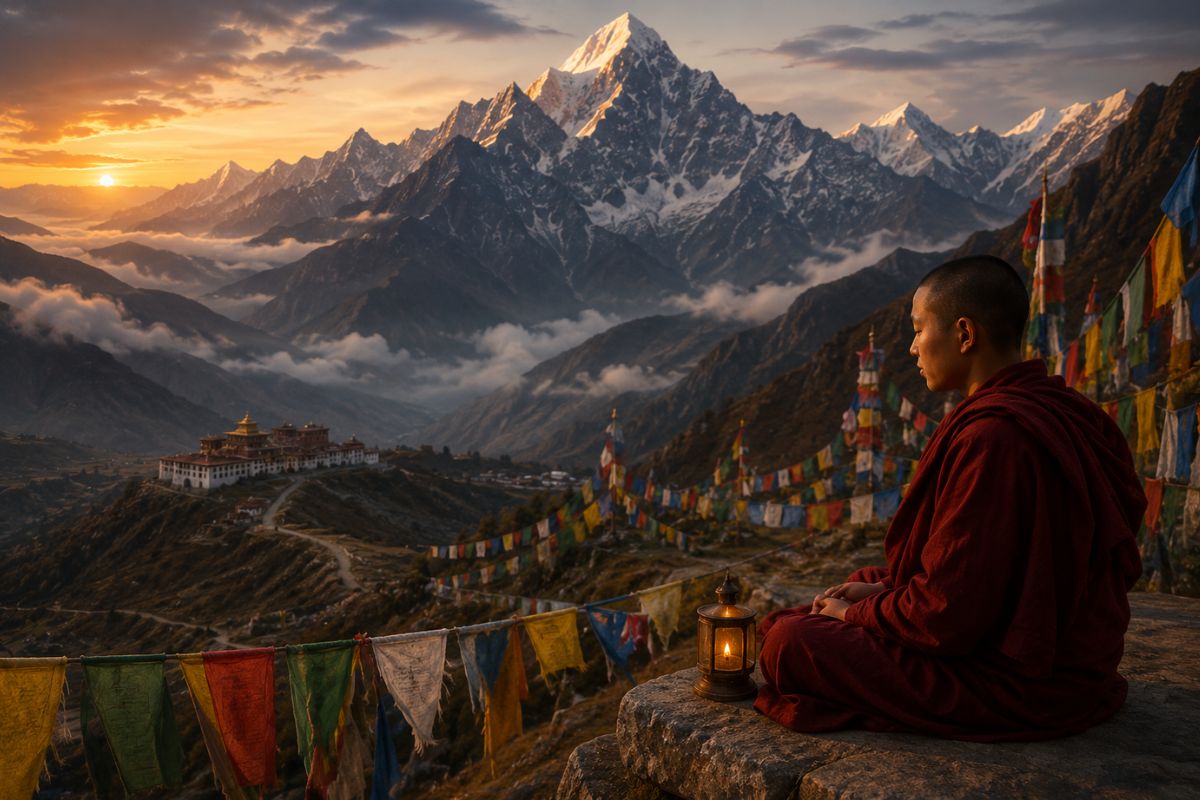
During Saga Dawa, prayer flags are raised across homes, monasteries, and mountain paths.
Each flag carries prayers and intentions that are believed to spread with the wind.
The act is simple, yet meaningful. It reflects a belief that compassion can move beyond boundaries, carried by something as subtle as air.
Acts of Compassion and Giving
Saga Dawa emphasizes not just prayer, but action.
Devotees engage in acts of kindness, charity, and service. Many choose to follow vegetarian diets, release animals, and avoid harm in any form.
The focus shifts from ritual to responsibility.
It is about how one lives, not just what one believes.
A Different Experience of Celebration
Saga Dawa challenges the usual idea of what a festival looks like.
There are no loud performances or grand displays. Instead, there is stillness, repetition, and reflection.
For those who attend, the experience often feels inward.
You do not leave with noise in your ears. You leave with a quiet sense of clarity.
The Landscape: Sikkim as a Space of Reflection

The setting of Saga Dawa enhances its meaning.
Sikkim’s mountains, monasteries, and open skies create an environment that naturally encourages reflection.
The stillness of the landscape mirrors the intention of the festival.
It feels as though the surroundings are part of the experience, not separate from it.
Experiencing Saga Dawa
Attending Saga Dawa requires a different mindset. It is not about capturing moments. It is about observing them.
Early mornings and monastery visits offer the most meaningful experiences. Respecting local customs and maintaining quiet awareness is essential.
For a wider perspective on seasonal celebrations, explore
👉 summer festivals in India
A Festival That Leaves You Quietly Changed
Saga Dawa does not overwhelm. It settles.
It invites you to slow down, to observe, and to reflect on what truly matters.
In a world that often celebrates noise, it offers silence.
And in that silence, there is a different kind of clarity.
FAQs
What is Saga Dawa
It is a Buddhist festival marking the birth, enlightenment, and nirvana of Buddha.
Where is Saga Dawa celebrated
It is widely celebrated in Sikkim, especially in Gangtok and monasteries across the region.
When does Saga Dawa take place
It takes place during the fourth lunar month, usually in May or June.
What makes Saga Dawa unique
Its focus on reflection, compassion, and quiet spiritual practice sets it apart from other festivals.