Celebrate Bihu Festival in Assam With RealShePower
Bihu Festival of Assam
If you arrive in Assam during Rongali Bihu, you notice something almost immediately. The air feels different. There is a sense of anticipation that does not come from a single event, but from many small, shared moments.
People are preparing, music is beginning to echo, and conversations seem lighter.
Bihu does not begin with a grand announcement. It builds slowly, like a rhythm finding its pace.
Among all summer festivals in India, Bihu feels the most personal. It is not something you simply observe. It draws you in, even if you do not fully understand it yet.
Understanding Bihu: More Than One Festival
Bihu is often spoken of as a single celebration, but it actually refers to three festivals observed at different times of the year in Assam.
Rongali Bihu, celebrated in April, marks the Assamese New Year and the beginning of the agricultural cycle.
Bhogali Bihu, observed in January, is associated with harvest and feasting.
Kongali Bihu, in October, reflects a quieter phase of the agricultural season.
Among these, Rongali Bihu is the most vibrant. It celebrates new beginnings, fertility of the land, and the energy of youth.
Look no further — you’re exactly where you need to be. Real Shee Power is your ultimate travel genie, granting your wanderlust wishes with everything you need to know for the perfect journey.
The First Day: Honoring the Land and Cattle
The festival begins with Goru Bihu, a day dedicated to cattle.
At first glance, this may seem unusual. But in an agrarian society, cattle are not just animals. They are partners in cultivation and survival.
They are bathed, decorated, and cared for with attention. This ritual is both practical and symbolic. It acknowledges the connection between humans and the land they depend on.
There is a quiet respect in this beginning. A recognition that celebration starts with gratitude.
The Shift: From Ritual to Celebration
As the days progress, the tone of Bihu changes.
Homes are cleaned. New clothes are worn. Families come together.
There is laughter, movement, and an openness that defines the rest of the festival.
The transition feels natural. From honoring the land, the focus moves to celebrating life itself.
Bihu Dance: Expression Without Hesitation

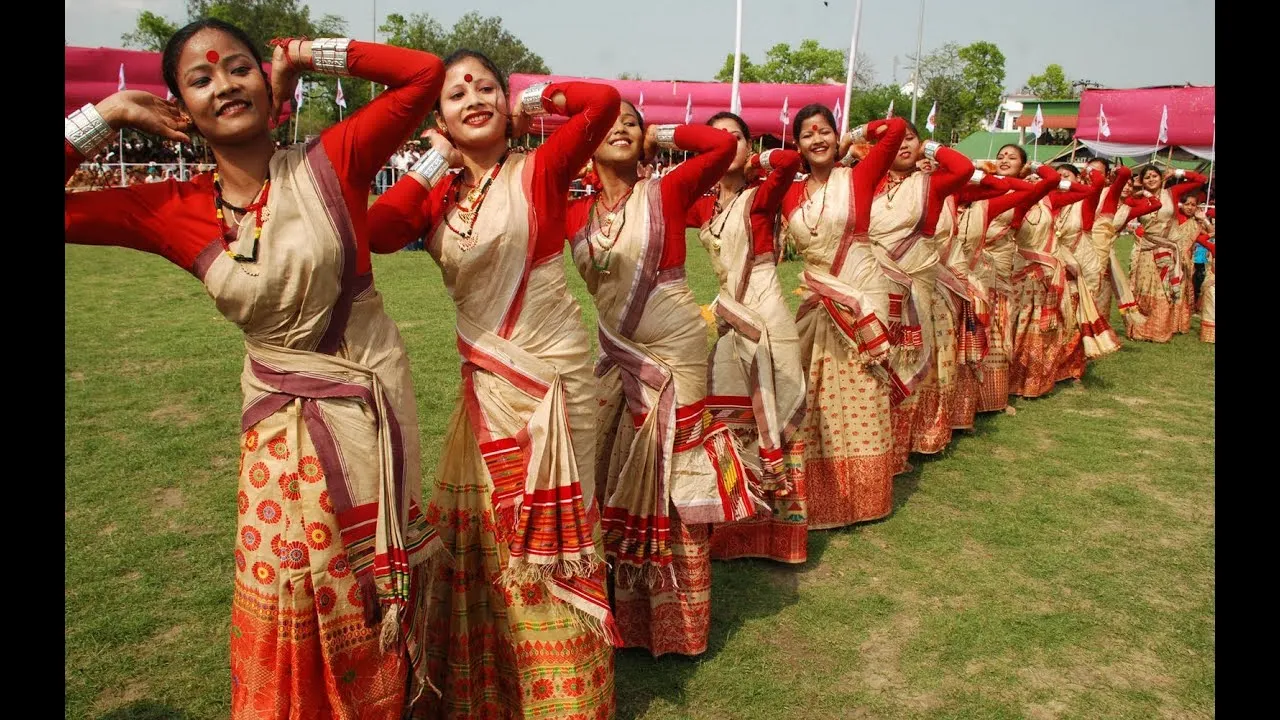
Bihu dance is perhaps the most visible expression of the festival.
What makes it unique is not just the movement, but the attitude. There is confidence, playfulness, and a sense of ease.
Young men and women dance in groups, often in open fields or village spaces. The steps are rhythmic but not rigid.
You can sense that the dance is not performed for an audience alone. It is performed for the joy of participation.
This openness is what makes Bihu feel alive.
The Music: A Sound That Stays With You

The music of Bihu is immediate. It does not take time to understand.
The dhol sets a strong, grounding rhythm. The pepa, made from buffalo horn, adds a distinct tone that cuts through the air.
Songs are often about love, longing, and everyday experiences. They feel familiar, even if you are hearing them for the first time.
There is something about the combination of rhythm and melody that makes you want to move, even if you do not know the steps.
Food: Simplicity with Meaning

Food during Bihu is not elaborate in the way some other festivals are. It is simple, but deeply connected to tradition.
Pitha, a type of rice cake, and laru, small sweet balls, are prepared in homes. These are not just dishes. They are part of memory.
Preparation itself becomes a shared activity. Families cook together, talk, and pass down methods that have remained unchanged for generations.
The act of eating becomes a continuation of the celebration.
Community: The Heart of Bihu

If there is one element that defines Bihu, it is community.
People visit each other’s homes, exchange greetings, and participate in gatherings that feel open and inclusive.
There is no strict boundary between performer and audience. Everyone is part of the experience.
This sense of belonging is what makes Bihu stand out among summer festivals in India.
Experiencing Bihu as a Traveler
For someone visiting Assam during Bihu, the experience can feel immersive.
The best way to understand the festival is not through large organized events, but through smaller community gatherings.
Villages, local celebrations, and informal performances often offer the most authentic glimpse into the spirit of Bihu.
Comfortable clothing, openness to interaction, and a willingness to participate can make a significant difference.
For a broader context of seasonal celebrations across the country, you can explore
👉 summer festivals in India
Conclusion: A Festival That Feels Close
Bihu does not rely on scale alone. It draws its strength from connection.
It is present in music, in movement, in shared meals, and in small interactions that build a larger sense of belonging.
It reminds you that celebration does not need to be distant or formal. It can be immediate, accessible, and deeply human.
And perhaps that is why it stays with you. Not as a spectacle, but as a feeling.
FAQs
What is Bihu Festival
Bihu is a set of festivals in Assam, with Rongali Bihu marking the New Year and spring season.
Where is Bihu celebrated
It is celebrated across Assam and by Assamese communities worldwide.
What makes Bihu unique
Its dance, music, food, and strong community participation make it distinctive.
When is Rongali Bihu celebrated
It is celebrated in April.