Sanskrit: The Language of the Gods, and the West’s Reluctant Acceptance of It

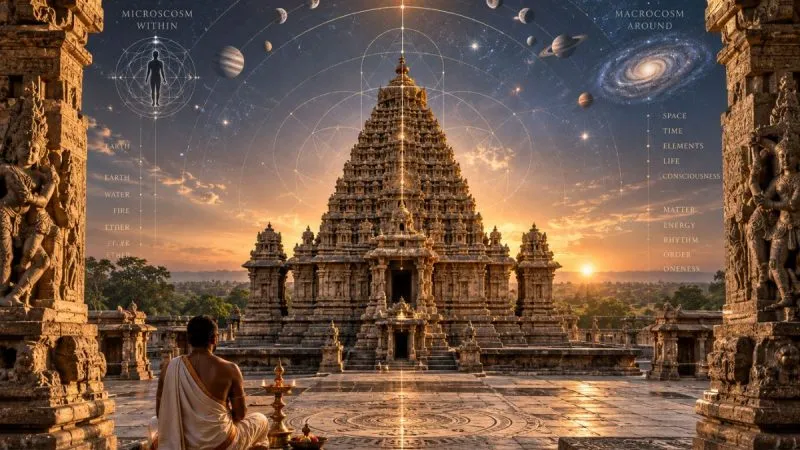
For centuries, Sanskrit has been revered in India as Devabhāṣā the “language of the gods.” It was the medium through which the Vedas, the Upanishads, the Mahabharata, the Ramayana, and countless other foundational works of philosophy, science, and spirituality were composed. In the Indian worldview, Sanskrit is not just a “language” in the utilitarian sense; it is a vibration, a science of sound, a codified system of consciousness.
Yet, when we speak of Sanskrit’s divine status, the reflexive response from modern academia, much of it rooted in Western frameworks is either condescension or dismissal. Suddenly, the onus is on us to “prove” that Sanskrit is divine, usually in English, and preferably by citing NASA or some Western scholar. This is not scholarship. This is colonial hangover.
The West claims neutrality, but its epistemic arrogance is evident: truths are acknowledged only when they are certified in the laboratories of MIT or in the archives of Oxford. When NASA engineers speculate that Sanskrit is the “most suitable language for computers” (a statement later downplayed), Indians rush to circulate it as gospel truth as if Sanskrit needed a foreign stamp to regain dignity in the land of its birth.
The hypocrisy is glaring: Europe can still speak of Latin as a “sacred tongue,” the Jews can preserve Hebrew as “the holy language,” and the Church can call Greek the “language of theology” without ridicule. But when Indians assert the divinity of Sanskrit, suddenly it becomes superstition.
This double standard is not incidental, it is systemic. Let us unpack it.
Sanskrit as Devabhāṣā: What Does “Language of the Gods” Mean?
When Sanskrit is called Devabhāṣā, the phrase is not metaphorical hyperbole. In Indic tradition, the divine is not external; it manifests in sound, in rhythm, in vibration. Sanskrit is designed around this principle:
- Phonetic Precision: Unlike English, where spelling and pronunciation are chaotic, Sanskrit letters map perfectly onto sounds. The human vocal apparatus: throat, tongue, palate, lips is mirrored in Sanskrit’s sound chart (varṇamālā). Each letter is placed based on where and how it resonates physically.
- Mantric Science: Mantras are not prayers; they are sound formulas. Reciting AUM activates specific frequencies in the body-mind field. The ṛṣis discovered that sound is not symbolic but causal — vibrations alter consciousness. Sanskrit is the only language fully systematized on this principle.
- Generative Grammar: Panini’s Ashtadhyayi (5th–4th century BCE) is still the most sophisticated grammar system in the world. Modern linguists (including Noam Chomsky) recognize Panini as the forerunner of generative grammar. His rules compress infinity into a finite algorithm, an echo of cosmic order.
- Semantic Universality: Sanskrit roots (dhātus) are not arbitrary. They encode fundamental actions of existence: gam (to go), jñā (to know), bhū (to be). Every word is a crystallization of being.
Thus, to call Sanskrit divine is not mysticism; it is a recognition that sound, meaning, and reality are one continuum in this language.
Colonial Erasure: How the West Dismissed Sanskrit’s Sacredness
When British Orientalists first encountered Sanskrit in the 18th century, they were awestruck. Sir William Jones declared in 1786 that Sanskrit was “more perfect than Greek, more copious than Latin, and more exquisitely refined than either.” This should have elevated Sanskrit globally. Instead, colonial powers systematically downgraded it. Why?
- Control of Knowledge: Colonial rule required not only economic plunder but epistemic dominance. Sanskrit, with its treasure of philosophy, mathematics, astronomy, and law, threatened Western claims of civilizational superiority.
- Secularization Strategy: The divinity of Sanskrit was deliberately stripped. European scholars rebranded it as an “Indo-European language,” reducing it to a branch in their own linguistic family tree. The sacred was erased; the “Aryan invasion” narrative was invented.
- Institutional Silencing: Macaulay’s infamous 1835 “Minute on Indian Education” declared Indian knowledge worthless compared to “a single shelf of a good European library.” Sanskrit institutions were defunded; English became the language of prestige.
This deliberate desacralization created the lasting inferiority complex: Indians began to doubt their own heritage unless validated by Western institutions.
The NASA Syndrome: Why Do We Crave Western Validation?
Every few years, WhatsApp forwards claim “NASA has declared Sanskrit the best language for computers.” Whether true, false, or exaggerated is not the point. The real question is: Why do we care?
When Sanskrit is validated by NASA, Indians swell with pride. But when Sanskrit is affirmed by thousands of years of living tradition through priests chanting in temples, yogis meditating with mantras, poets composing epics, we shrug.
This is the psychological residue of colonization. We believe truth is only truth when stamped by white coats and Western labs. Yet, no one questions when the Bible is called “God’s word” or when Greek philosophy is exalted as rational canon. Why the double standard?
The West has its sacred languages Hebrew, Greek, Latin and no one laughs. But the moment Indians say Sanskrit is divine, it becomes “mythology.”
The Scientific Basis for Sanskrit’s Sacredness
The sacredness of Sanskrit is not just cultural faith; it has empirical grounding:
- Cognitive Science: Studies at the National Brain Research Centre (India) and other labs suggest that chanting Sanskrit mantras increases concentration and memory by altering brainwave patterns.
- Neuroscience of Sound: MRI scans show that repetitive Sanskrit chanting activates the hippocampus and frontal lobes areas linked with cognition and emotional regulation.
- Mathematics and Algorithmic Structure: Panini’s grammar is so precise that modern computer scientists study it as a model of natural language processing. Unlike English, Sanskrit sentences are resistant to ambiguity, making it ideal for AI.
- Philosophical Coherence: The Vedic insight that “sound is Brahman” (Śabda Brahman) anticipates quantum physics’ recognition of vibration as the substratum of matter.
Thus, Sanskrit bridges spirituality and science seamlessly, something Western paradigms struggle with.
Calling Out Western Hypocrisy
The West glorifies its own ancient languages while denigrating ours. Consider:
- Latin is still taught as the “language of law, medicine, and the Church.”
- Hebrew was revived in the 20th century and is now the national language of Israel.
- Ancient Greek is revered as the foundation of European philosophy.
Yet Sanskrit, older, more systematic, still vibrantly alive is dismissed as “dead.” Why? Because acknowledging its sacredness would dismantle the West’s cherished myth of superiority.
The hypocrisy deepens when Western academia monetizes what it mocks. Yoga studios in California chant Sanskrit mantras without understanding; mindfulness practices are repackaged from Buddhist-Sanskrit texts; Ayurvedic herbs are patented by Western pharma companies. Sacredness is erased in theory but exploited in practice.
Breaking the Chains of Validation
The tragedy is not that the West dismisses Sanskrit as divine. The tragedy is that we still wait for their approval.
Sanskrit does not need NASA’s certificate. It does not need Oxford’s stamp. It has been alive in our chants, in our rituals, in our consciousness for 3,000 years, long before modern nations or labs existed.
To call Sanskrit the “language of the gods” is not superstition; it is an acknowledgment that in this tongue, sound and spirit converge, science and soul embrace.
The West’s dismissal is not scholarship; it is civilizational insecurity. Their empire was built not only on plunder of wealth but on plunder of dignity. It is time to stop seeking validation from those who once told us our knowledge was worthless.
The real task before us is decolonizing the Indian mind. To reclaim Sanskrit is not only to reclaim a language but to reclaim a worldview where the sacred and the scientific are not enemies, but one.