
The R.G. Kar Medical College Rape and Murder Case: A Detailed Examination of Facts
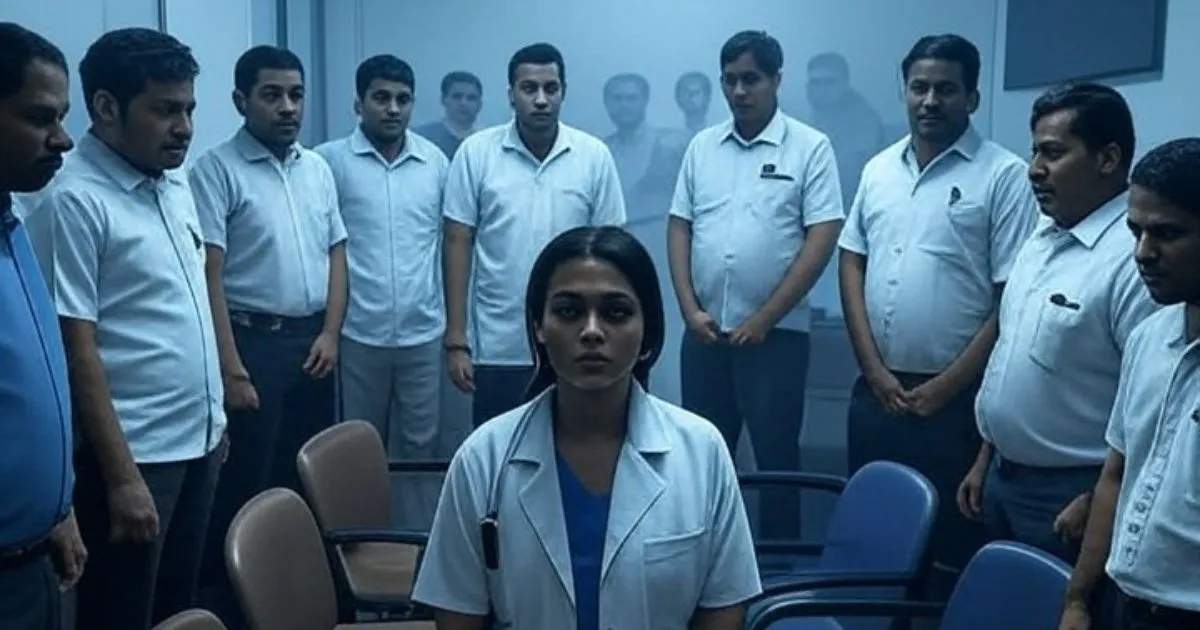
The rape and murder of a 31-year-old female postgraduate trainee doctor at R.G. Kar Medical College and Hospital in Kolkata, West Bengal, on August 9, 2024, shocked India and sparked widespread outrage. The case, marked by its brutality, allegations of institutional cover-up, and subsequent legal proceedings, has raised critical questions about workplace safety for medical professionals, particularly women, and the integrity of investigative processes.
The Incident: August 9, 2024
On the morning of August 9, 2024, the body of a 31-year-old postgraduate trainee doctor was discovered in a seminar room on the third floor of R.G. Kar Medical College and Hospital in Kolkata. The victim, whose identity is protected under Indian law, was on duty and had been working a night shift. An autopsy conducted later that day revealed horrific details: the doctor had been raped and sexually assaulted before being killed by strangulation. The postmortem report, spanning four pages, documented deep wounds to her genital tract, lips, left leg, right hand, ring finger, neck, and face. Scratch marks on her face were attributed to the perpetrator’s fingernails, and the report noted bleeding from her eyes, mouth, and genitals, with injuries in the genital area linked to “perverted sexuality” and “genital torture.” The autopsy also revealed approximately 150 mg of semen in the vaginal swab, indicating the severity of the assault. The cause of death was confirmed as strangulation, with a fracture of the thyroid cartilage noted.
The discovery of the body triggered immediate outrage among the hospital’s staff, students, and the public, as it highlighted the vulnerability of medical professionals, particularly women, in their workplaces. The seminar room, meant to be a secure space, became the site of a crime that would expose systemic failures in hospital safety and law enforcement response.
Initial Investigation and Arrest
On August 10, 2024, Kolkata Police arrested Sanjay Roy, a 33-year-old civic volunteer working with the police’s disaster management force, who was posted at a police outpost near the hospital. Roy was identified as the prime suspect based on critical evidence: a Bluetooth neckband earphone found at the crime scene, which was linked to him, and call detail records from his mobile phone, which placed him at the hospital during the time of the crime. According to Kolkata Police, Roy initially confessed to the crime, though he later claimed he was “framed” and maintained his innocence in court.
The police registered the case as an unnatural death initially, a decision that drew significant criticism for its apparent attempt to downplay the severity of the incident. Allegations of evidence tampering and institutional cover-up soon emerged, particularly targeting the hospital administration and the local police. The hospital’s former principal, Dr. Sandip Ghosh, and the officer-in-charge of the Tala police station, Abhijit Mondal, were later implicated in mishandling evidence and delaying the registration of a First Information Report (FIR). A General Diary (GD) entry made by Sub-Inspector Subrata Chatterjee, timestamped at 10:10 a.m. on August 9, was found to be ante-dated, as Chatterjee was not physically present at the police station at that time. This raised suspicions of deliberate obfuscation by the police.

Transfer to CBI and Judicial Oversight
Due to public outcry and concerns over the Kolkata Police’s handling of the case, the Calcutta High Court, on August 13, 2024, transferred the investigation to the Central Bureau of Investigation (CBI). The court cited a lack of confidence in the state police’s investigation and flagged the possibility of evidence destruction. On August 18, the Supreme Court of India took suo motu cognizance of the case, with a three-judge bench led by Chief Justice D.Y. Chandrachud, along with Justices J.B. Pardiwala and Manoj Misra, overseeing proceedings. The Supreme Court expressed concern over the “virtual absence of safe working conditions for doctors in public hospitals” and established a nine-member National Task Force (NTF) to formulate a national protocol for the safety of medical professionals.
The CBI filed a chargesheet on October 7, 2024, naming Sanjay Roy as the sole accused in the rape and murder. The 45-page document listed 11 pieces of evidence, including the Bluetooth earphone, the victim’s mobile phone and laptop, Roy’s blood sample, and forensic evidence such as nail cuttings, vaginal swabs, and pubic hair combings sent to the Central Forensic Science Laboratory (CFSL) in Kolkata, New Delhi, and Chandigarh. A psycho-analysis test conducted by the CFSL in Delhi noted that Roy showed “no remorse” and was “unflustered” while narrating the incident. The CBI also conducted a polygraph test on Roy and the former principal, Dr. Sandip Ghosh, to further probe their involvement.
Allegations of Cover-Up and Additional Arrests
The investigation uncovered disturbing allegations of a cover-up by the hospital administration and local police. The Sealdah Sessions Court, in its 172-page judgment, reprimanded the hospital authorities, led by Dr. Sandip Ghosh and the Medical Superintendent and Vice-Principal (MSVP), for attempting to portray the death as a suicide to avoid liability. The court noted that protests by junior doctors and the public thwarted this “illegal dream.” Dr. Ghosh resigned amid the controversy but was controversially appointed as principal of Calcutta National Medical College shortly after, a move that sparked further outrage and was later reversed, with the Calcutta High Court directing that he be placed on extended leave.
On September 25, 2024, the CBI arrested Dr. Ghosh and Abhijit Mondal, the former officer-in-charge of Tala police station, on charges of tampering with evidence and misleading the investigation. The Supreme Court, on September 17, described the CBI’s status report as “disturbing” but withheld details to avoid hampering the investigation. The court also criticized the Kolkata Police for the delay in registering the FIR and the state government for inadequate crowd control during vandalism at the hospital on August 14, when a mob damaged the emergency ward, nursing station, medicine store, and parts of the outpatient department. The Calcutta High Court called this vandalism an “absolute failure of state machinery” and noted that 19 individuals were arrested in connection with the incident.

Legal Proceedings and Verdict
The trial commenced on November 11, 2024, at the Sealdah Sessions Court under Additional District and Sessions Judge Anirban Das. Charges were framed against Sanjay Roy under sections 64 (punishment for rape), 66 (punishment for causing death or resulting in a persistent vegetative state), and 103 (punishment for murder) of the Bharatiya Nyay Samhita. The trial, conducted in-camera, ran on a day-to-day basis from Monday to Thursday, with 50 witnesses examined and 43 statements recorded by January 9, 2025.
On January 18, 2025, the court pronounced Sanjay Roy guilty of the rape and murder of the trainee doctor. On January 20, 2025, Roy was sentenced to life imprisonment until the end of his natural life and fined ₹50,000. The court also directed the West Bengal government to pay ₹1,700,000 in compensation to the victim’s family, including ₹1,000,000 for the death and ₹700,000 for the rape committed while the victim was on duty. The court declined to impose the death penalty, stating that the case did not meet the “rarest of the rare” threshold, as Roy had no prior criminal history, and sentencing must be based on evidence rather than public sentiment.
The verdict drew mixed reactions. West Bengal Chief Minister Mamata Banerjee expressed dissatisfaction, stating that she had demanded the death penalty and believed the Kolkata Police could have secured it had the case not been transferred to the CBI. The victim’s parents, supported by senior doctors and political leaders like BJP’s Suvendu Adhikari, called for further investigation into a possible “larger conspiracy,” alleging that others may have been involved. The CBI, however, informed the Calcutta High Court on March 28, 2025, that forensic evidence, including DNA profiling, confirmed Roy as the sole perpetrator, ruling out gang rape. A 14-member medical board, chaired by Dr. Adarsh Kumar of AIIMS, New Delhi, supported this finding, stating that the spectrum of injuries could have been inflicted by a single person.
Ongoing Investigations and Broader Implications
As of April 2025, the CBI’s investigation into potential conspiracies and evidence tampering remains ongoing. The Calcutta High Court, on March 29, 2025, questioned the CBI about delays in the probe and discrepancies between the inquest and autopsy reports, directing the agency to submit the Kolkata Police’s case diary and a list of interviewed witnesses by April 23. The court also allowed the victim’s parents to visit the crime scene, except the seminar room, to aid their pursuit of justice.
The case has had far-reaching implications. It sparked a 42-day strike by junior doctors in West Bengal, who demanded a thorough probe and enhanced hospital security. Nationwide protests highlighted the systemic issue of violence against women and the lack of safe working conditions for doctors. The Supreme Court’s National Task Force submitted recommendations to improve workplace safety, which were distributed to all states and union territories. The case also reignited debates about the efficacy of India’s judicial and investigative systems, with allegations of political interference and institutional failures fueling public distrust.
Conclusion
The R.G. Kar Medical College rape and murder case is a stark reminder of the vulnerabilities faced by women, particularly in high-pressure environments like hospitals. The conviction of Sanjay Roy marks a step toward justice, but lingering questions about potential accomplices, evidence tampering, and systemic failures continue to cast a shadow. The case underscores the need for robust safety protocols, transparent investigations, and accountability at all levels of institutional authority. As the CBI continues its probe and the courts oversee further proceedings, the pursuit of truth and justice remains paramount, not only for the victim and her family but for the millions who demand a safer, more equitable society.
Sources:
- Supreme Court Observer
- Wikipedia
- Indian Express
- NDTV
- LiveLaw
- The Hindu
- Hindustan Times
- India Today
- Times of India
- LiveMint
- Amar Ujala
- Supreme Court of India